
Best Knee Replacement Surgeon in Hyderabad
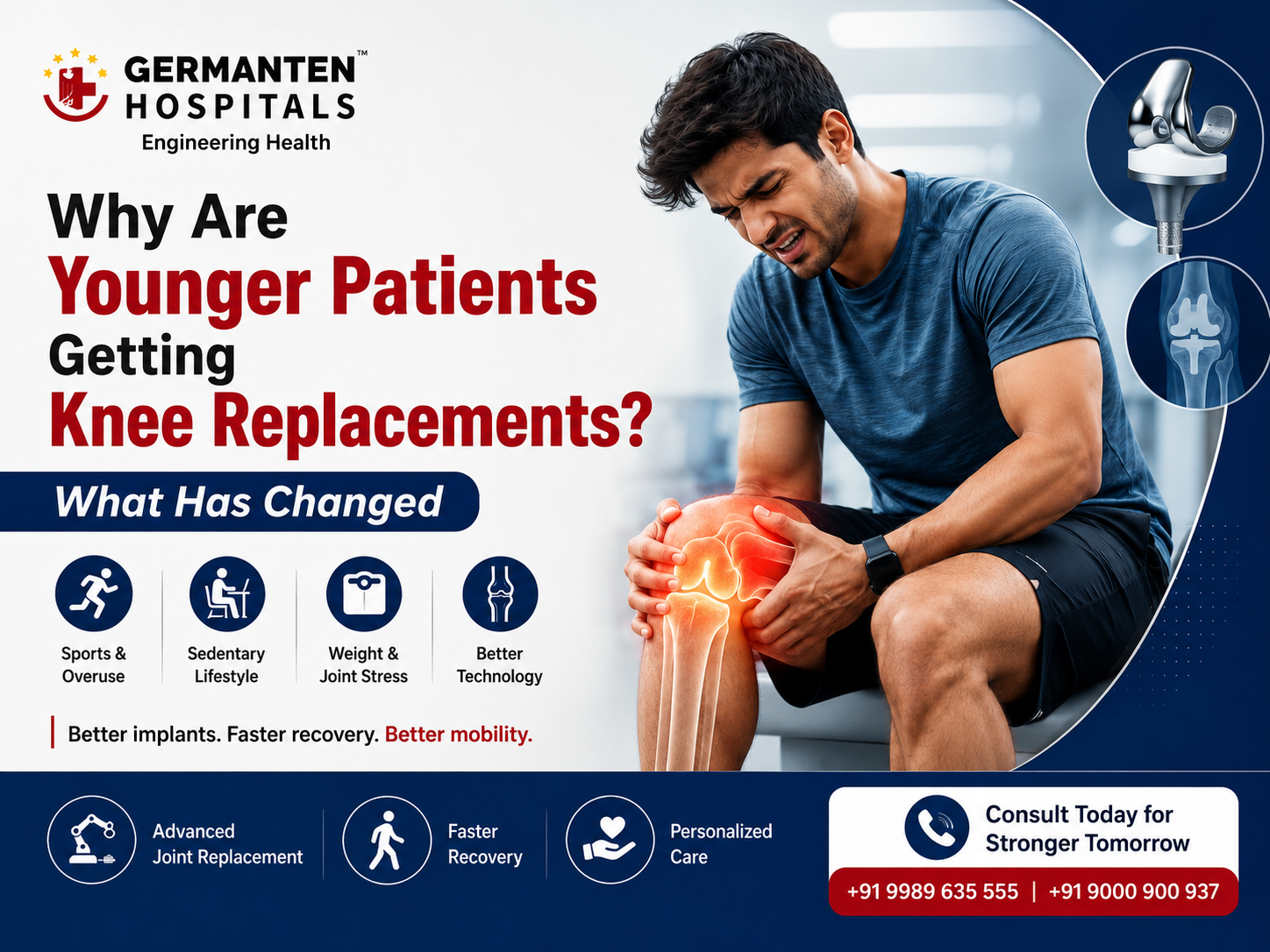
Searching for the best knee replacement surgeon in Hyderabad usually means one thing years of knee pain have made ordinary life difficult, and you want a surgeon whose training, experience and results you can trust before making a decision. If you are looking for the best doctor for knee replacement surgery in Hyderabad, Dr. Mir Jawad Zar Khan has performed knee replacement surgery in Hyderabad for over 26 years, using robotic and computer-navigated technology, at Germanten Hospitals widely regarded as the best knee replacement hospital in Hyderabad.
Understanding total knee replacement
Total knee replacement surgery in Hyderabad, medically known as total knee arthroplasty, resurfaces the ends of the thigh bone and shin bone along with the underside of the kneecap. Damaged cartilage and bone are removed in thin layers and replaced with a metal and plastic implant that recreates smooth, pain-free movement. It is the most common form of joint replacement performed worldwide.
The surgery is usually considered once arthritis has worn down most of the joint and non-surgical treatment is no longer providing meaningful relief.
Signs you may need a knee replacement
Patients often wait too long before consulting a specialist. If you are unsure whether your symptoms warrant a visit, speaking with the best dr for knee pain early can help you explore all available options. Watch for these signs:
- Knee pain that limits walking, climbing stairs or getting up from a chair
- Swelling and stiffness that does not settle with rest
- A grinding or clicking sensation inside the joint
- Visible bowing of the leg, common in advanced osteoarthritis
- Pain that wakes you up at night
- Reduced response to painkillers, physiotherapy or knee injections over time
Non-surgical treatment is tried first
Not every patient with knee pain needs surgery immediately. A proper evaluation usually starts with weight management, targeted physiotherapy, activity modification and medication. Some patients benefit from injections that reduce inflammation inside the joint. Procedures such as arthroscopy or non-surgical spine and joint treatments may also be explored before considering knee surgery in Hyderabad. Surgery is recommended only when these measures stop being effective and X-rays confirm significant joint damage.
For patients whose arthritis is limited to only one section of the knee, a partial knee replacement may be an alternative that preserves more of the natural joint. If damage extends to the hip as well, Dr. Jawad also performs hip replacement surgery at Germanten Hospitals.
Robotic and computer-navigated knee replacement
Implant alignment is one of the biggest factors in how a knee replacement feels and how long it lasts. Robotic knee replacement in Hyderabad at Germanten uses computer navigation and robotic-assisted systems that map the knee in three dimensions before a single cut is made, allowing the surgeon to position the implant with a precision that is difficult to match using manual instruments alone.
Implants are sourced from established global manufacturers, including Johnson & Johnson, DePuy, Smith & Nephew, Zimmer and Exactech, with Oxinium options available for patients who need a metal alternative due to allergy concerns. Germanten is one of the few centres offering robotic knee replacement in Hyderabad with this full range of implant choices.
The knee replacement procedure
A total knee replacement typically takes one to two hours under spinal or general anesthesia. Minimally invasive technique is used wherever suitable to reduce muscle disruption and post-operative pain. Many patients are supported to stand and take their first steps on the same day as surgery, a practice that has become one of the more recognizable aspects of care at Germanten.
Recovery timeline after knee replacement
In the first two weeks after surgery, the focus is on wound care, pain control and regaining basic range of motion with the help of a physiotherapist. Most patients are walking with a walker or stick by the time they are discharged, generally around three to five days after surgery.
Between weeks three and six, physiotherapy shifts toward strengthening the muscles around the knee and improving how far the joint can bend. Many patients are managing stairs and short outdoor walks by this stage.
By around three months, most people have returned to normal daily activities such as driving, shopping and light household work, with continued improvement in strength and stamina for up to a year after surgery.