Cervical & Lumbar Spondylosis Treatment in Hyderabad
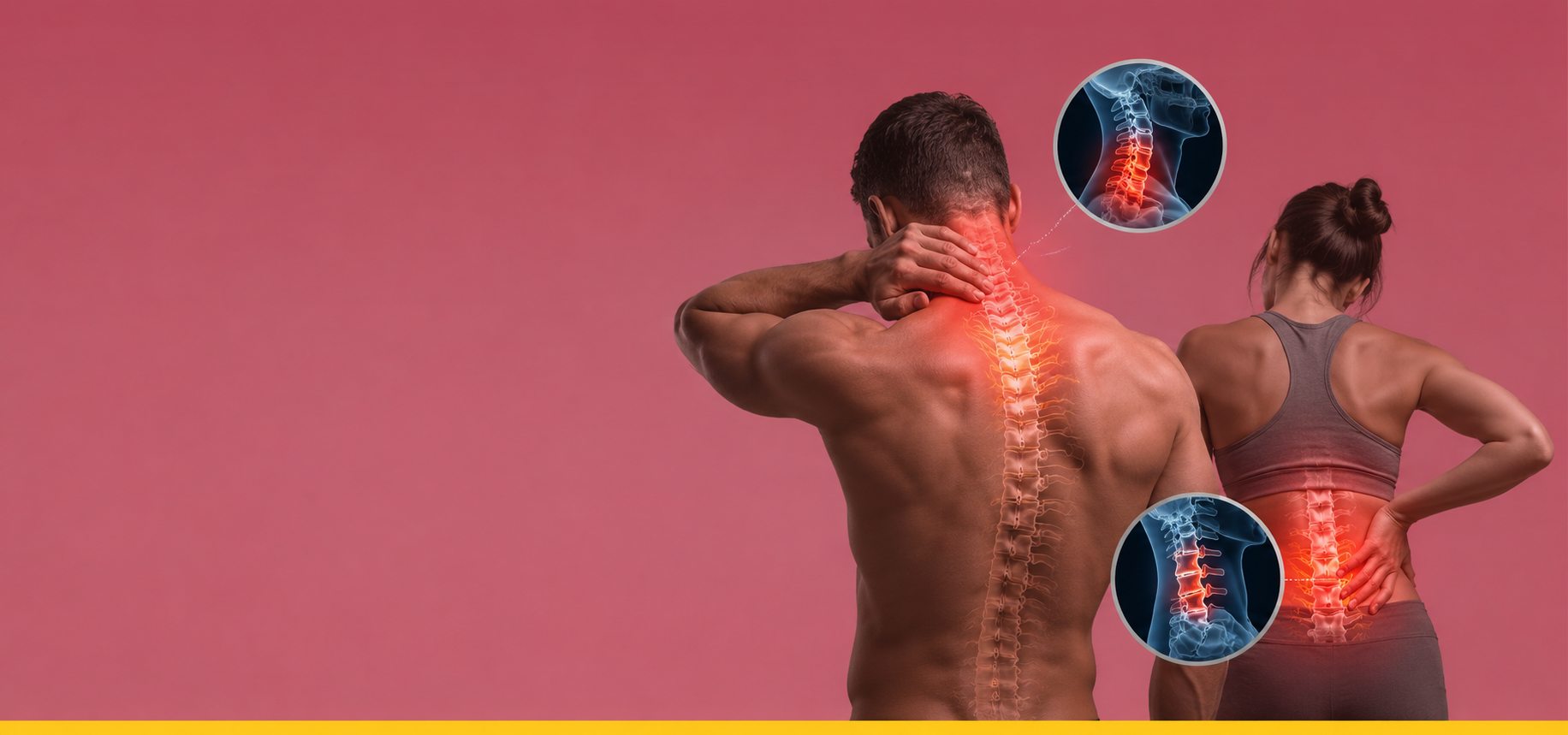
Neck Stiffness. Back Pain. Morning Aches That Never Leave. This Is Spondylosis.
If you wake up every morning with a stiff neck or an aching lower back, if your arms or legs
feel heavy and numb at random moments during the day, or if you have been told your spine is
showing "wear and tear changes," you are dealing with spondylosis. It is one of
the most common yet most undertreated spinal conditions in adults over 40, and it is
entirely manageable when addressed by a specialist with the right expertise.
Dr. Mir Jawad Zar Khan is widely recognised as the best doctor for cervical spondylosis in
Hyderabad and for lumbar spondylosis treatment, with over 26 years of dedicated experience
managing the full spectrum of spinal degenerative conditions. Patients from across Hyderabad
and India come to this facility for cervical and lumbar spondylosis treatment that delivers
real, lasting relief and not just temporary pain management.
Book a consultation today and receive a complete spondylosis evaluation with an
expert diagnosis and personalised treatment plan.
What Is Cervical and Lumbar Spondylosis?
Spondylosis is a broad term for age-related degenerative changes that occur in the spine.
These changes affect the intervertebral discs, the vertebral bones, the facet joints, and
the ligaments that connect them. Over time, discs lose height and hydration, bone spurs
(osteophytes) form at vertebral edges, and the spaces through which nerve roots exit the
spine (the neural foramina) can narrow. All of these changes can irritate or compress spinal
nerves, causing pain, stiffness, and neurological symptoms.
Spondylosis most commonly affects two regions. Cervical spondylosis refers to degenerative
changes in the neck (C1 to C7 vertebrae). Lumbar spondylosis refers to degenerative changes
in the lower back (L1 to L5 vertebrae). Some patients develop changes in both regions
simultaneously, a condition referred to as cervical and lumbar spondylosis or multilevel
spondylosis of the spine.
The condition is extremely common. Studies show that by the age of 60, over 90 percent of
adults have some degree of spinal degeneration on imaging. However, imaging findings alone
do not determine treatment. What matters clinically is whether those changes are causing
symptoms that affect your function and quality of life.
Cervical Spondylosis vs Lumbar Spondylosis: Understanding the Difference
Cervical Spondylosis (Neck): Degeneration of the cervical spine primarily
affects the C5-C6 and C6-C7 levels, which bear the most mechanical load in the neck.
Cervical spondylosis can cause neck pain and stiffness, pain radiating into the shoulder and
arm, tingling or numbness in the fingers, and in more advanced cases, spinal cord
compression (cervical myelopathy) causing weakness in the arms or legs, balance problems,
and difficulty with fine hand movements. Cervical spondylosis treatment in Hyderabad at our
centre covers the full range from structured conservative care to precise surgical
decompression.
Lumbar Spondylosis (Lower Back): Degeneration affecting the spondylosis
lumbar spine most commonly occurs at the L4-L5 and L5-S1 levels. Spondylosis in the lumbar
spine causes chronic lower back pain, stiffness that is worst in the morning or after
sitting for long periods, and pain or weakness radiating down one or both legs when nerve
compression is present. Lumbar spondylosis treatment ranges from physiotherapy and targeted
injections to lumbar spondylosis surgery when structural compression cannot be managed
conservatively.
Cervical and Lumbar Spondylosis Together: Many patients over 55 present
with degenerative changes in both the neck and the lower back simultaneously. Management
requires a careful assessment of which region is causing the primary symptoms, as treatment
is prioritised accordingly.
Symptoms That Bring Patients to Us
The following symptoms are consistently associated with cervical and lumbar spine
spondylosis and should prompt an evaluation with a spine specialist.
Chronic neck pain or lower back pain that has been present for weeks or months and has not
fully resolved with rest, stiffness in the morning that takes time to ease, pain that
worsens with prolonged sitting, standing, or a particular position, pain that radiates from
the neck into the arm or from the lower back into the leg, tingling or numbness in the hands
or feet, muscle weakness in the arms or legs, headaches originating from the base of the
skull in patients with cervical spondylosis, and loss of balance or coordination in patients
with cervical spinal cord involvement are all conditions we regularly diagnose and treat.
Do not wait until symptoms become severe. Early assessment ensures the widest range
of treatment options remains available to you.
Causes and Risk Factors for Spondylosis of the Spine
Spondylosis is primarily driven by age-related degeneration, but several factors accelerate
or worsen the process. Understanding your risk factors helps in both prevention and
management.
Age is the single greatest risk factor. Disc degeneration begins subtly in the third decade
of life and progresses with age. Occupation also plays a significant role. Jobs requiring
prolonged sitting (desk work, driving), heavy physical labour, or repetitive neck and back
strain accelerate degeneration. Poor posture, particularly the forward head position
associated with extended screen use, places abnormal load on the cervical spine and is
increasingly common in younger patients in Hyderabad.
Genetics contributes to the rate of disc and joint degeneration. Patients with a family
history of early-onset back or neck problems often develop spondylosis earlier and more
extensively. Previous spinal injuries including disc herniations, fractures, or surgeries
alter the mechanical environment of adjacent spinal segments and can accelerate localised
degeneration. Obesity places additional compressive load on lumbar vertebrae and discs.
Smoking reduces blood supply to spinal discs and accelerates their degeneration.
Cervical and Lumbar Spondylosis ICD-10 Classification
For medical records, referral letters, and insurance documentation, the cervical and lumbar
spondylosis ICD 10 classification helps clinicians, insurers, and hospitals align on
diagnosis codes. The following are the most frequently used ICD-10 codes in clinical
documentation for cervical and lumbar spondylosis.
M47.812 covers spondylosis with radiculopathy of the cervical region. M47.816 covers
spondylosis with radiculopathy of the lumbar region. M47.892 covers other spondylosis of the
cervical region without radiculopathy. M47.896 covers other spondylosis of the lumbar region
without radiculopathy. M47.1 covers spondylosis with myelopathy, used when the spinal cord
is involved. Patients requiring documentation for insurance pre-authorisation or referral
coordination can contact our administrative team for assistance with coding and clinical
summaries.
Why Dr. Mir Jawad Zar Khan Is the Best Doctor for Cervical Spondylosis in Hyderabad
Choosing the right specialist for spondylosis of the spine is critical because the condition
is chronic, progressive, and requires a treatment philosophy that balances pain relief,
functional restoration, and long-term spine health. Dr. Jawad brings that perspective
through 26 years of experience and an approach that treats the whole patient, not just the
imaging report.
His qualifications include an MBBS, MS (Ortho), M.Ch (Ortho), and a Fellowship in
Arthroplasty from Munich, Germany, with additional training at Breach Candy Hospital Mumbai
and Max Hospital Delhi. He has managed complex multilevel spondylosis cases involving both
the cervical and lumbar spine across thousands of patients. His treatment decisions are
driven by clinical findings and patient goals, not by a bias toward any particular
intervention.
Patients searching for the best hospital for cervical spondylosis in Hyderabad will find
that this facility provides far more than a surgical consultation. The diagnostic workup
here includes advanced MRI review, clinical neurological assessment, and a detailed
discussion of the natural history of your specific pattern of spondylosis before any
treatment is recommended.
He has been awarded the Times of India Award for Iconic Joint Replacement Surgeon of
Telangana, recognised in the Times Health Survey 2023 for excellence in orthopaedic care,
and honoured by the Hon'ble 14th President of India Shri Ram Nath Kovind for contributions
to healthcare.
Consult the best doctor for cervical spondylosis in Hyderabad. Book your appointment
today.
Cervical and Lumbar Spondylosis Treatment: Non-Surgical Options First
The majority of patients with cervical and lumbar spondylosis are treated successfully
without surgery. Our non-surgical spine treatment programme offers every evidence-based
conservative therapy for spondylosis management, applied in a structured sequence based on
your specific diagnosis and symptom severity.
Structured Physiotherapy: Spondylosis-specific physiotherapy combines
spinal mobilisation, postural correction, core strengthening, cervical traction, and
flexibility exercises tailored to the affected region. Regular physiotherapy slows
functional decline, reduces pain, and significantly improves quality of life in patients
with both cervical and lumbar spondylosis.
Epidural Steroid Injections: When spondylosis causes nerve root irritation
producing arm or leg pain, epidural steroid injections deliver anti-inflammatory medication
directly to the affected nerve pathway. Image-guided injections ensure precision. Relief
typically begins within 48 to 72 hours and can last weeks to months.
Facet Joint Injections: Spondylosis frequently involves facet joint
arthritis alongside disc degeneration. Facet joint injections deliver corticosteroid
directly into the inflamed joint under image guidance, providing targeted relief for
facet-mediated back and neck pain.
Radiofrequency Ablation: For patients with confirmed facet joint-mediated
chronic spondylosis pain, radiofrequency ablation uses heat energy to interrupt the pain
signal from the affected joint. This provides longer-lasting relief, often for 12 to 24
months, compared to steroid injections alone.
Extracorporeal Shock Wave Therapy (ESWT): For chronic muscular pain and
soft tissue involvement associated with cervical and lumbar spondylosis, ESWT stimulates healing at
the tissue level and reduces pain without any surgical intervention.
Traction Therapy: Cervical traction is particularly effective for cervical
spondylosis with radiculopathy, gently separating compressed cervical vertebrae and reducing
nerve root pressure. Lumbar traction serves the same purpose for lumbar spondylosis with
nerve involvement.
Medication Management: Nonsteroidal anti-inflammatory drugs, muscle
relaxants, nerve pain medications, and topical agents are used as short-term adjuncts to
active therapies. Long-term medication dependence is avoided through structured physical and
interventional management.
Lifestyle Modification and Ergonomic Counselling: Posture correction,
workstation ergonomics, weight management, activity modification, and neck and core exercise
programmes are integrated into every spondylosis treatment plan. These address the root
mechanical contributors to ongoing degeneration and symptom persistence.
Patients with additional musculoskeletal conditions including arthritis-related joint
involvement can explore our alternative treatments for knee arthritis and back problems page
and our pain
management service for complementary care alongside spondylosis treatment.
Lumbar Spondylosis Surgery and Cervical Spondylosis Surgery: When It Is Needed
Surgery for spondylosis is recommended when nerve compression is causing progressive
neurological deficit, when spinal cord compression is present in the cervical spine, or when
conservative treatment over an appropriate period has not provided acceptable pain relief.
Full details of all surgical procedures available are on our spine
surgical treatment page.
Decompression Surgery (Laminectomy or Laminotomy): When spondylosis narrows
the spinal canal and compresses the spinal cord or nerve roots (spinal stenosis),
decompression surgery removes the bone and tissue causing the compression. This is the most
commonly performed lumbar spondylosis surgery for stenosis-related leg pain and weakness.
Foraminotomy: When bone spurs caused by spondylosis narrow the neural
foramina (the openings through which nerve roots exit the spine), a foraminotomy removes the
obstructing bone to relieve nerve root compression. This is effective for both cervical and
lumbar spondylosis with radiculopathy that has not responded to injections.
Spinal Fusion: When spondylosis has caused significant instability between
vertebral segments, fusion surgery permanently stabilises the affected level using bone
grafts and implants. Minimally invasive approaches (TLIF, PLIF) are used wherever anatomy
permits, reducing recovery time compared to traditional open fusion.
Anterior Cervical Discectomy and Fusion (ACDF): For cervical spondylosis
causing spinal cord compression (myelopathy) or persistent nerve root pain, ACDF removes the
degenerated disc and compressive bone spurs through a small incision at the front of the
neck. The affected level is then stabilised with a cage and plate. Most patients experience
significant improvement in arm pain and neurological symptoms within days of surgery.
Cervical Laminoplasty: For multilevel cervical spondylosis with spinal cord
involvement, laminoplasty reshapes the posterior vertebral arch to create more space for the
spinal cord without fusing the vertebrae, preserving more cervical movement than fusion.
All surgical procedures at this facility are supported by 3D C-Arm intraoperative imaging,
surgical navigation for precision, and Intraoperative Neurophysiological Monitoring (IONM)
to track spinal cord and nerve safety in real time throughout the procedure.
Lumbar Spondylosis Surgery Cost in Hyderabad and India
Patients frequently ask about lumbar spondylosis surgery cost before deciding on a treatment
pathway. The following are indicative cost ranges for the most commonly performed
spondylosis procedures at well-equipped facilities in Hyderabad and across India.
Decompression surgery (laminectomy or foraminotomy) for lumbar or cervical spondylosis
typically costs between Rs. 1,00,000 and Rs. 2,50,000. Single-level spinal fusion for lumbar
spondylosis with instability ranges from Rs. 2,50,000 to Rs. 5,50,000. Multi-level lumbar
spondylosis surgery ranges from Rs. 4,00,000 to Rs. 9,00,000 depending on the number of
levels and implant selection. Cervical spondylosis surgery including ACDF for one level
typically ranges from Rs. 2,00,000 to Rs. 5,00,000. Lumbar spondylosis surgery cost in India
at reputable centres in Hyderabad, Chennai, and Bengaluru falls within comparable ranges,
making Hyderabad a preferred destination for quality spine care at accessible cost.
All cost estimates at our facility are provided in writing after clinical evaluation, with
no hidden charges at discharge. Major health insurance policies cover medically necessary
spondylosis surgery. Cashless hospitalisation is available with most major insurers. Our
team manages all insurance pre-authorisation and documentation. For a complete overview of
spine surgery costs and insurance guidance, visit our blog on spine surgery cost in Hyderabad.
Why This Is the Best Hospital for Cervical Spondylosis in Hyderabad
Patients looking for the best hospital for cervical spondylosis in Hyderabad or for
comprehensive cervical and lumbar spondylosis treatment in Hyderabad need a centre that
offers diagnostic depth, a full range of non-surgical and surgical options, and a specialist
experienced in managing both regions of the spine simultaneously.
This facility provides all of that. The treating specialist has 26 years of dedicated spine
and orthopaedic surgery experience with international fellowship training. The diagnostic
workup includes detailed clinical assessment alongside MRI and CT review. Every non-surgical
option is explored before any surgical discussion. When surgery is needed, the operating
environment includes 3D C-Arm imaging, surgical navigation, and continuous IONM monitoring
throughout the procedure.
For patients managing related conditions, our sciatica treatment in Hyderabad and slip
disc treatment in Hyderabad pages cover conditions that frequently coexist with
spondylosis. A complete overview of spine care expertise is available on our best
spine surgeon in Hyderabad page. Patients who want guidance on evaluating spine
specialists before committing to a centre can read our guide on who is the best doctor for spine surgery in Hyderabad.
For patients with broader musculoskeletal concerns, including knee arthritis and joint
problems alongside spinal degeneration, our joint replacement surgery and general
orthopaedics teams work in close coordination with the spine unit.
Book your cervical and lumbar spondylosis consultation today. Get an expert
diagnosis, a clear treatment plan, and a written cost estimate at the same
visit.
Frequently Asked Questions
Is cervical and lumbar spondylosis curable?
Spondylosis is a degenerative process and cannot be fully reversed. However, the
symptoms caused by spondylosis, including pain, stiffness, and nerve compression,
can be effectively managed and significantly reduced through structured treatment.
Most patients achieve excellent functional outcomes and return to a full, active
life without surgery.
What is the best treatment for cervical spondylosis in Hyderabad?
For most patients, structured physiotherapy combined with image-guided injections
and ergonomic counselling delivers excellent results. Surgery is considered only
when conservative treatment has failed or when spinal cord compression is present.
Early diagnosis and consistent non-surgical management give the best long-term
outcomes.
Can lumbar spondylosis cause leg pain?
Yes. When spondylosis causes sufficient narrowing of the spinal canal or neural
foramina, the nerve roots supplying the legs are compressed. This produces pain,
tingling, or weakness in one or both legs, a pattern called neurogenic claudication
or lumbar radiculopathy.
What is the ICD-10 code for cervical and lumbar spondylosis?
Cervical spondylosis with radiculopathy is classified under M47.812. Lumbar
spondylosis with radiculopathy is classified under M47.816. Spondylosis with
myelopathy falls under M47.1. Our administrative team can assist with the
appropriate coding for your specific clinical presentation.
How much does lumbar spondylosis surgery cost in Hyderabad?
Decompression surgery for lumbar spondylosis typically costs between Rs. 1,00,000
and Rs. 2,50,000. Fusion surgery ranges from Rs. 2,50,000 to Rs. 5,50,000 for a
single level. A detailed written estimate is provided after clinical evaluation.
How long does recovery take after spondylosis surgery?
Decompression procedures allow most patients to walk within 24 to 48 hours with a
hospital stay of one to three days. Fusion surgery requires a structured
physiotherapy programme over three to six months for full recovery.
Do you treat patients from outside Hyderabad?
Yes. Patients travel from across Telangana, Andhra Pradesh, Maharashtra, Karnataka,
and other Indian states. Teleconsultation, appointment coordination, and outstation
patient support are all available.
How do I book a spondylosis consultation?
Call the clinic directly, fill in the appointment form on this page, or use the
callback request option. Our team will confirm your appointment and advise on which
imaging reports to bring.