Scoliosis Treatment in Hyderabad
An Abnormal Spinal Curve Is Not Something to Wait On. Expert Correction Starts Here.
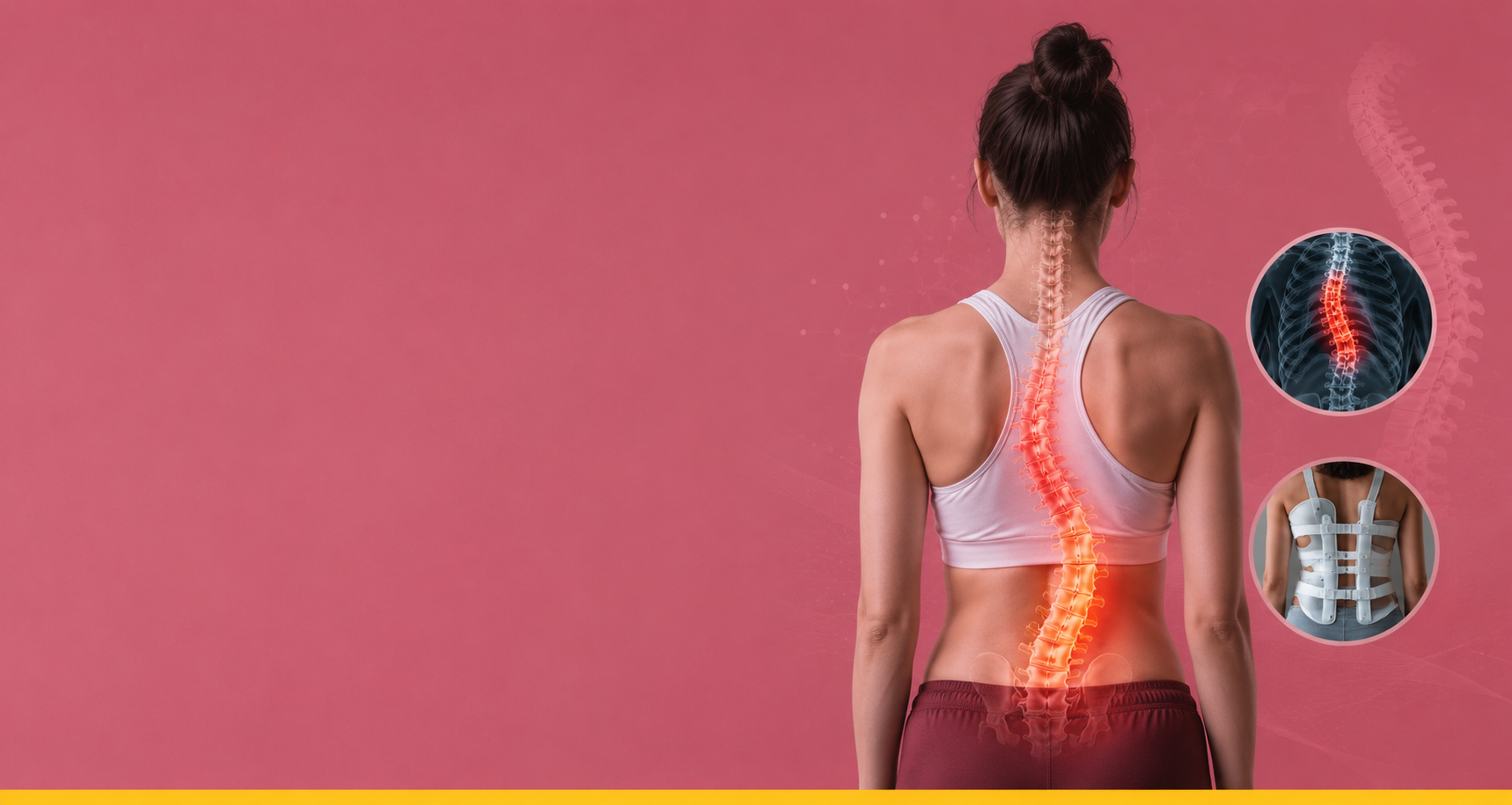
Scoliosis is not just about posture. When the spine curves sideways in a C or S shape, it
places uneven mechanical load on every structure it connects to: the vertebrae, the discs,
the ribs, the muscles, and the nerves running through it. Left unaddressed, scoliosis
progresses. Curves worsen over time, particularly during growth spurts in adolescents, and
can reach the point where breathing, nerve function, and quality of life are significantly
compromised.
If you or your child has been diagnosed with scoliosis, or if you have noticed uneven
shoulders, a prominent shoulder blade, an asymmetric waist, or a visible curve in the spine,
the first step is to see the right specialist without delay.
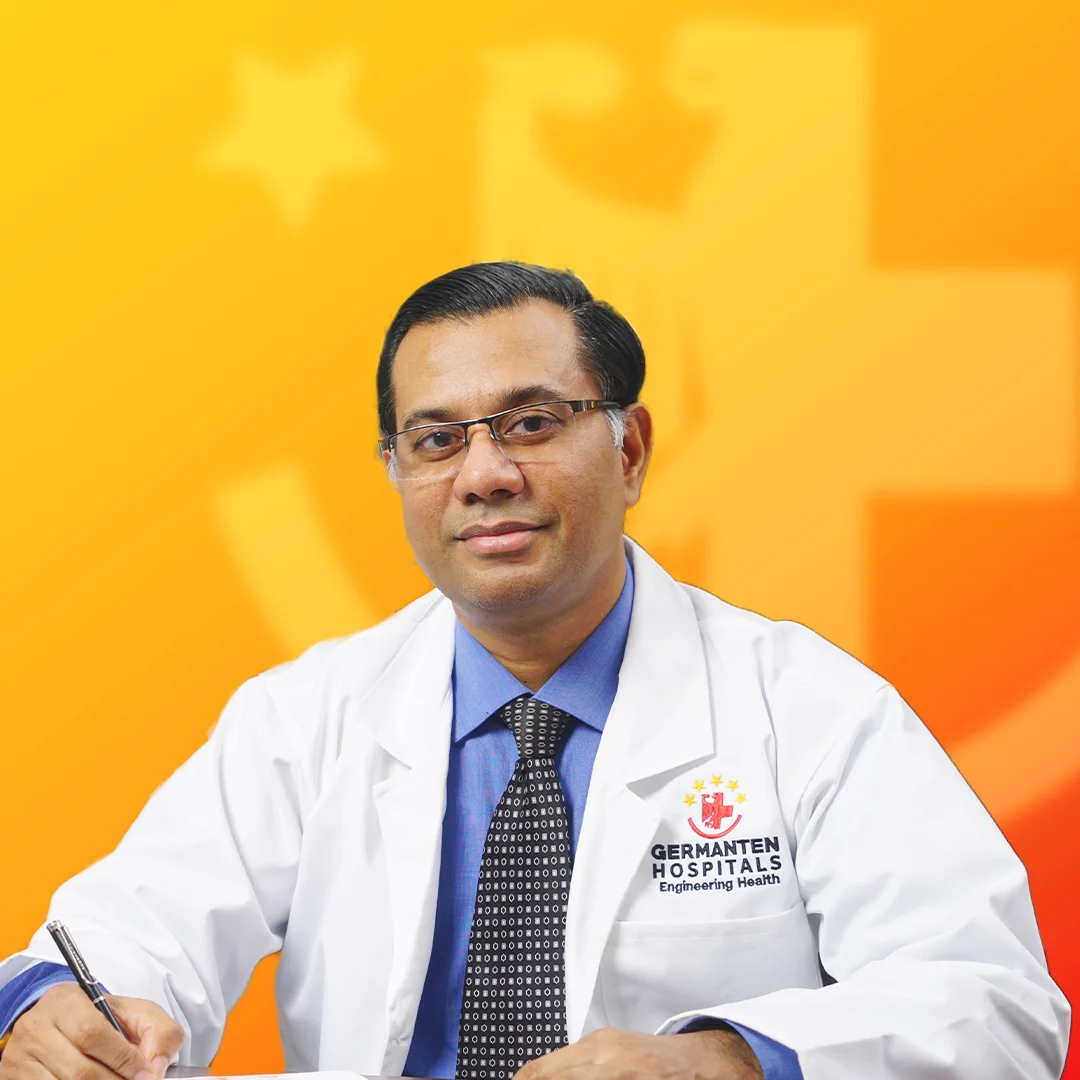
Dr. Mir Jawad Zar Khan is recognised as the best scoliosis surgeon in Hyderabad, with over
26 years of orthopaedic and spinal surgery experience, international fellowship training in
Germany, and a track record of delivering precise, effective scoliosis correction for
patients across all age groups. Patients from across Hyderabad, Telangana, Andhra Pradesh,
and the rest of India seeking scoliosis treatment in Hyderabad consistently choose this
facility for its diagnostic depth, treatment range, and surgical outcomes.
Book your scoliosis consultation today. Our team will confirm your appointment
within 24 hours.
What Is Scoliosis?
Scoliosis is a three-dimensional deformity of the spine in which the vertebrae curve
sideways and rotate, creating a visible lateral deviation from the normal straight
alignment. A spinal curve of more than 10 degrees on X-ray, combined with vertebral
rotation, is the clinical definition of scoliosis.
Scoliosis is not a single condition. It is a structural change that can arise from several
different causes. The degree of curvature, the patient's age, the rate of progression, and
the underlying cause all determine which treatment approach is appropriate. Some patients
require only monitoring. Others benefit from bracing. And for patients with severe or
progressive curves, scoliosis surgery delivers the best long-term correction and stability.
The condition affects people of all ages. Adolescent idiopathic scoliosis is the most common
form, appearing during the rapid growth phase between ages 10 and 18. Degenerative scoliosis
affects adults, typically those over 50, as the result of asymmetric disc and facet joint
degeneration. Congenital and neuromuscular scoliosis are present from birth or associated
with underlying neurological conditions respectively.
Types of Scoliosis Treated at Our Centre
Our facility manages all major types of scoliosis, with a treatment plan personalised to
each patient's age, curve pattern, and clinical goals.
Adolescent Idiopathic Scoliosis (AIS): The most common type, AIS develops
in otherwise healthy adolescents during the growth years. Curves can progress rapidly during
growth spurts and require careful monitoring, bracing when indicated, and surgical
correction for curves that reach or are progressing toward the surgical threshold.
Adult Degenerative Scoliosis: Also called de novo scoliosis, this type
develops in adults due to asymmetric degeneration of the lumbar discs and facet joints. It
causes chronic back pain, nerve compression, and postural imbalance. Adult degenerative
scoliosis treatment focuses on pain relief and functional restoration, with surgery reserved
for severe cases.
Congenital Scoliosis: Present from birth due to vertebral formation
abnormalities during fetal development, congenital scoliosis requires specialist evaluation
in childhood and early intervention in selected cases to prevent progressive deformity.
Neuromuscular Scoliosis: Arising from conditions such as cerebral palsy,
muscular dystrophy, or spinal muscular atrophy, neuromuscular scoliosis involves complex
multidisciplinary management. Surgical correction in carefully selected patients can
significantly improve posture, comfort, and respiratory function.
Symptoms and Warning Signs of Scoliosis
Many cases of scoliosis are first noticed by parents, teachers, or school screening
programmes rather than by patients themselves, because the condition is often painless in
its early stages. The following signs should prompt an evaluation with a scoliosis treatment
doctor in Hyderabad without delay.
Uneven shoulder height, with one shoulder visibly higher than the other, is one of the most
common early signs. A prominent shoulder blade on one side, an uneven waist or hip height,
one hip appearing higher or more prominent than the other, a visible curve or lean in the
spine when viewed from behind, and one side of the rib cage appearing higher than the other
when bending forward (the rib hump) are all warning signs that warrant clinical assessment.
In more advanced cases, back pain that is persistent and not explained by other causes,
fatigue in the back muscles, breathing difficulties in severe curves that compress the chest
cavity, and nerve-related symptoms including leg pain, numbness, or weakness indicate that
the curve is causing functional impact and requires prompt evaluation.
If you or your child has any of these signs, book a scoliosis evaluation today.
Early assessment leads to earlier treatment and better outcomes.
Why Dr. Mir Jawad Zar Khan Is the Best Scoliosis Doctor in Hyderabad
Scoliosis requires a specialist who understands spinal deformity not just as an imaging
finding but as a condition that affects the entire musculoskeletal system and quality of
life. Dr. Jawad brings that level of understanding to every patient he sees.
He holds an MBBS, MS (Ortho), and M.Ch (Ortho), and completed his Fellowship in Arthroplasty
at a leading institute in Munich, Germany, with further training at Breach Candy Hospital
Mumbai and Max Hospital Delhi. His surgical exposure to advanced spinal deformity correction
techniques at international and national centres gives him a foundation that is rare among
orthopaedic spine surgeons in Hyderabad.
His approach to scoliosis treatment is conservative first and surgical only when necessary.
For adolescent patients with mild to moderate curves, structured bracing and physiotherapy
programmes are used to slow progression and avoid surgery. For adult patients with
degenerative scoliosis, comprehensive non-surgical management provides meaningful pain
relief and functional improvement. Surgical correction is reserved for patients whose curves
are severe, rapidly progressing, or causing neurological or respiratory compromise.
When surgery is needed, Dr. Jawad performs scoliosis correction using the latest spinal
instrumentation systems, 3D C-Arm intraoperative imaging for real-time guidance, surgical
navigation for precision, and Intraoperative Neurophysiological Monitoring (IONM) to
continuously track spinal cord and nerve function throughout the procedure. This level of
surgical safety infrastructure makes this facility the best scoliosis treatment centre in
Hyderabad for patients requiring operative correction.
He has been awarded the Times of India Award for Iconic Joint Replacement Surgeon of
Telangana, recognised in the Times Health Survey 2023 for excellence in orthopaedic care,
and honoured by the Hon'ble 14th President of India Shri Ram Nath Kovind for contributions
to healthcare.
Consult the best scoliosis doctor in Hyderabad. Book your appointment
today.
How Scoliosis Is Diagnosed
Accurate diagnosis is the foundation of effective scoliosis management. At our centre, every
scoliosis patient receives a thorough evaluation that goes beyond simply measuring the curve
on an X-ray.
The clinical assessment includes a detailed history of symptom onset and duration, a
physical examination including the Adam's forward bend test to assess rib cage symmetry and
rotational deformity, a neurological assessment to evaluate strength, sensation, and
reflexes in the limbs, and an assessment of skeletal maturity in adolescent patients to
determine growth potential and progression risk.
Imaging begins with full-length standing X-rays of the spine, which allow precise
measurement of the Cobb angle (the degree of curvature), vertebral rotation, and global
spinal balance. MRI is used when neurological symptoms are present, when an unusual curve
pattern suggests an underlying cause, or when surgical planning requires detailed assessment
of the neural structures.
Based on the clinical and imaging findings, a personalised treatment plan is developed and
explained to the patient and family in clear terms, covering all available options, expected
outcomes, and the rationale behind the recommended approach.
Best Treatment for Scoliosis: Non-Surgical Options
For the majority of scoliosis patients, particularly those with mild to moderate curves,
non-surgical treatment is the most appropriate initial approach. Our non-surgical spine treatment programme covers every evidence-based
conservative option for scoliosis management.
Observation and Monitoring: For curves below 25 degrees in adolescent
patients, regular clinical and radiological monitoring is the standard approach. X-rays are
taken at scheduled intervals to track whether the curve is stable or progressing. This
approach is active management, not neglect, as it ensures that treatment escalation happens
at the right time.
Scoliosis-Specific Physiotherapy: Physiotherapy programmes designed
specifically for scoliosis, including the Schroth method and SEAS (Scientific Exercises
Approach to Scoliosis), use targeted exercises to correct the three-dimensional deformity
through active self-correction, breathing re-education, and postural control. These
programmes are effective in reducing curve progression and improving posture and pain in
both adolescent and adult scoliosis patients.
Bracing: For adolescent patients with curves between 25 and 45 degrees who
still have significant growth remaining, bracing is the established non-surgical treatment
to halt curve progression. A custom-fitted brace worn for the prescribed number of hours per
day can prevent a curve from reaching the surgical threshold during the remaining growth
period. The effectiveness of bracing depends on compliance and careful monitoring.
Pain Management for Adult Scoliosis: Adult degenerative scoliosis
frequently causes chronic back and leg pain. Our pain management
team provides image-guided epidural steroid injections, facet joint injections, and nerve
blocks to control scoliosis-related pain effectively without surgery.
ESWT: For patients with chronic muscular pain related to the asymmetric
loading caused by scoliosis, ESWT uses focused acoustic energy to relieve muscle pain and
improve mobility as part of a broader scoliosis management programme.
Scoliosis Correction Surgery: When It Is the Right Step
Surgical correction of scoliosis is recommended in the following situations: curves
exceeding 45 to 50 degrees in adolescent patients with growth remaining, curves continuing
to progress despite bracing, curves causing significant pain or neurological symptoms in
adult patients, and severe curves with respiratory compromise. Our spine
surgical treatment team performs all major scoliosis correction procedures with
precision and care.
Posterior Spinal Fusion with Instrumentation: This is the gold-standard
surgical procedure for adolescent idiopathic scoliosis and for most forms of adult scoliosis
requiring correction. Pedicle screws are inserted into the vertebrae above and below the
curve, connected by rods that are bent to the desired corrected alignment. The curve is then
progressively corrected by applying forces through the instrumentation. Bone graft is placed
along the instrumented segment to achieve permanent fusion. The result is a significantly
reduced curve, improved spinal balance, and long-term stability.
Minimally Invasive Scoliosis Surgery: For selected adult patients with
degenerative scoliosis, minimally invasive approaches using smaller incisions and tubular
retractors achieve the necessary decompression and stabilisation with reduced blood loss,
less muscle trauma, and faster recovery compared to traditional open surgery.
Vertebral Body Tethering (VBT): For carefully selected adolescent patients
with curves in the 40 to 65 degree range who still have significant growth remaining, VBT is
a newer non-fusion surgical technique. Screws are placed in the vertebral bodies and
connected by a flexible cord on the outside (convex side) of the curve. This creates
asymmetric growth pressure that gradually corrects the curve while preserving spinal
movement and avoiding fusion.
Decompression Surgery for Degenerative Scoliosis: When adult scoliosis is
primarily causing nerve compression and leg pain from stenosis, decompression surgery alone
or combined with limited fusion can provide excellent relief of neurological symptoms.
All scoliosis surgery at our centre is performed with continuous IONM monitoring and 3D
C-Arm imaging as standard. These are non-negotiable safety elements during deformity
correction surgery and are among the key reasons our facility is consistently identified as
the best hospital for scoliosis treatment among patients and referring clinicians across the
region.
India's Best Surgery Treatment for Scoliosis: Why Patients Choose Hyderabad
Hyderabad has emerged as one of the leading destinations offering India best surgery
treatment for scoliosis that matches global standards, combining internationally trained
surgeons, advanced intraoperative technology, and significantly lower costs compared to
Western countries. Patients from across India and from abroad seek scoliosis treatment in
Hyderabad at this facility because it offers international standards of surgical safety and
outcomes at a cost that remains accessible.
The cost of scoliosis surgery in India is a fraction of what the same procedure costs in the
United States, the United Kingdom, or Australia, without any compromise in surgical
technique or implant quality. Our facility uses internationally validated pedicle screw and
rod instrumentation systems from established implant manufacturers. Surgical planning uses
the same preoperative imaging and simulation tools used by leading spine centres globally.
For a detailed overview of spine surgery costs at this facility, visit our blog on spine surgery cost in Hyderabad. For guidance on evaluating spine
surgeons and what to look for before committing to scoliosis correction, read our guide on
who is the best doctor for spine surgery in Hyderabad.
Why This Is the Best Scoliosis Treatment Centre in Hyderabad
Patients looking for the best scoliosis treatment center in Hyderabad and the best scoliosis
correction treatment in Hyderabad will find that this facility delivers on every dimension
that matters.
The treating specialist has 26 years of dedicated orthopaedic and spine surgery experience
with international fellowship training. Every patient receives a thorough clinical and
imaging-based evaluation before any treatment is recommended. The full spectrum of
non-surgical options is available and offered first. Scoliosis surgery is performed with 3D
C-Arm imaging, surgical navigation, and continuous IONM monitoring as standard. The facility
is recognised nationally for excellence in orthopaedic care.
Patients with related spinal conditions alongside scoliosis can access our sciatica treatment in Hyderabad, slip
disc treatment in Hyderabad, and cervical and lumbar spondylosis treatment pages for information on
conditions that frequently coexist with spinal deformity in adult patients. A complete
overview of the specialist's spine expertise is available on our best
spine surgeon in Hyderabad page.
For patients with musculoskeletal conditions beyond the spine, our joint replacement surgery and general
orthopaedics teams provide coordinated care under one roof.
Book your scoliosis consultation today. Our team will confirm your appointment
within 24 hours and advise you on which imaging to bring.
Frequently Asked Questions
Can scoliosis be treated without surgery?
Yes. The majority of scoliosis patients, particularly those with curves below 40 to
45 degrees, are managed effectively without surgery through a combination of
observation, physiotherapy, and bracing where appropriate. Surgery is recommended
for curves that are severe, rapidly progressing, or causing neurological or
respiratory symptoms.
What is the best treatment for scoliosis in India?
The best treatment for scoliosis depends on the patient's age, curve severity, and
rate of progression. For adolescents with mild to moderate curves, bracing and
scoliosis-specific physiotherapy are the established first-line approaches. For
curves above 45 to 50 degrees, posterior spinal fusion with instrumentation is the
gold-standard surgical treatment and delivers excellent long-term correction.
At what curve angle is scoliosis surgery recommended?
In adolescent patients, surgery is typically recommended for curves above 45 to 50
degrees with growth remaining, or for any curve that is rapidly progressing despite
bracing. In adult patients, surgical thresholds depend on symptoms, progression,
neurological involvement, and overall spinal balance rather than on curve angle
alone.
How long does recovery from scoliosis surgery take?
Most patients are walking within 24 to 48 hours of surgery. Hospital stay is
typically four to seven days depending on the complexity of the procedure. A
structured physiotherapy programme begins after discharge. Most patients return to
school or light activity within six to eight weeks and to full activity within six
to twelve months.
What does scoliosis surgery cost in India?
Scoliosis surgery cost in India varies by procedure complexity, number of levels
fused, and implant choice. A detailed written cost estimate is provided after
clinical evaluation at this facility. All estimates cover in-hospital costs with no
hidden charges. Health insurance covers medically necessary scoliosis surgery at
most major insurers.
Is scoliosis hereditary?
Adolescent idiopathic scoliosis has a genetic component and can run in families.
However, most patients with a family history do not develop significant curves.
Monitoring children and adolescents with a known family history of scoliosis is
recommended.
Do you treat adult scoliosis patients?
Yes. Adult degenerative scoliosis is a common and frequently undertreated condition.
Our team provides comprehensive assessment and management for adult patients,
including pain relief through targeted injections, structured physiotherapy, and
surgical correction for patients with severe curves or progressive neurological
symptoms.
How do I book a scoliosis consultation?
Call the clinic directly, fill in the appointment form on this page, or use the
callback request option. Our team will confirm your appointment within 24 hours and
advise on which imaging reports to bring to your first visit.