

Medically Reviewed by
DR. MIR JAWAD ZAR KHANMBBS, MS - Orthopedic
M.CH-(Ortho) Joint
Replacement surgeon
Why Are Younger Patients Getting Knee Replacements? What Has Changed
Knee replacement was once considered a procedure for patients in their late sixties or seventies. That picture has changed. Across India and globally, orthopedic surgeons are now performing knee replacement for younger patients in their forties and fifties at a rate that would have been unusual even a decade ago. A 2026 trend report found that hip replacements for patients aged 45 to 64 increased by 123 percent over the past decade, and knee replacement numbers are following the same trajectory.
So what changed? The answer is not that joints are failing earlier. It is that patients, surgeons and implant technology have all moved in the same direction toward treating the problem rather than enduring it.
The old advice: wait as long as you can
For years, the standard recommendation was to delay knee replacement surgery until a patient was at least 60, ideally older. The reasoning was straightforward older implants had a lifespan of 10 to 15 years, and a younger patient risked needing a second, more complex revision surgery later in life.
This created a generation of patients in their forties and fifties who were told to manage their pain with medication, physiotherapy and reduced activity. Many adjusted their entire lifestyle around a failing knee avoiding stairs, giving up exercise, declining social invitations rather than considering surgery.
What changed: implants last longer now
Modern implant materials have fundamentally shifted the equation. A landmark study published in The Lancet tracked joint replacement outcomes over 25 years and found that over 82 percent of total knee replacements were still functioning well after 25 years. Ten-year survival rates now exceed 96 percent. Highly cross-linked polyethylene, oxidized zirconium surfaces like Oxinium, and improved locking mechanisms mean today's implants are built for decades, not just years.
For a 45-year-old patient, this means a knee replacement done today has a strong chance of lasting into their seventies without needing revision. The old logic of "wait until 65" was based on implant limitations that no longer apply.
Younger patients refuse to adjust their life around pain
The biggest shift is not medical it is cultural. Patients in their forties and fifties today are more physically active, more informed and less willing to accept chronic pain as a normal part of aging. They research their condition online, watch recovery videos, read patient reviews and come to consultations already aware that early knee replacement is an option.
The question has moved from "am I too young for surgery?" to "why should I lose five more years of active life waiting for an arbitrary age?" A 48-year-old who cannot play with their children, exercise or travel comfortably is not well served by advice to wait another 15 years.
Robotic precision makes early intervention safer
Robotic knee replacement technology has made the surgery more precise, which matters especially for younger patients who will use their new joint more actively and for a longer period. Robotic and computer-navigated systems map the knee in three dimensions and guide the surgeon in positioning the implant with millimetre accuracy.
Better alignment means more natural movement, less wear on the implant surface, and a lower chance of needing revision precisely the concerns that made surgeons hesitant about operating on younger patients in the past. At Germanten Hospitals, Dr. Jawad uses this technology as standard for all knee replacement procedures.
Recovery is faster than most patients expect
Another factor driving younger patients toward surgery is how much recovery has improved. With minimally invasive surgical techniques and structured same-day mobilization protocols, many patients are standing within hours of surgery, walking with support within days, and back to driving and light work within six to eight weeks.
For a working professional in their forties, the idea of returning to a normal routine within two months is far more acceptable than living with escalating pain for the next 15 to 20 years.
When is the right time for knee replacement?
There is no universal age cutoff. The right time depends on how much the joint has deteriorated and how much it is affecting daily life. If you experience any of the following, it may be worth consulting the best dr for knee pain:
- Knee pain that limits walking, stairs or getting up from a chair
- Stiffness or swelling that does not respond to medication
- X-rays showing bone-on-bone contact
- Reduced ability to work, exercise or enjoy daily activities
- Failed conservative treatment including physiotherapy and injections
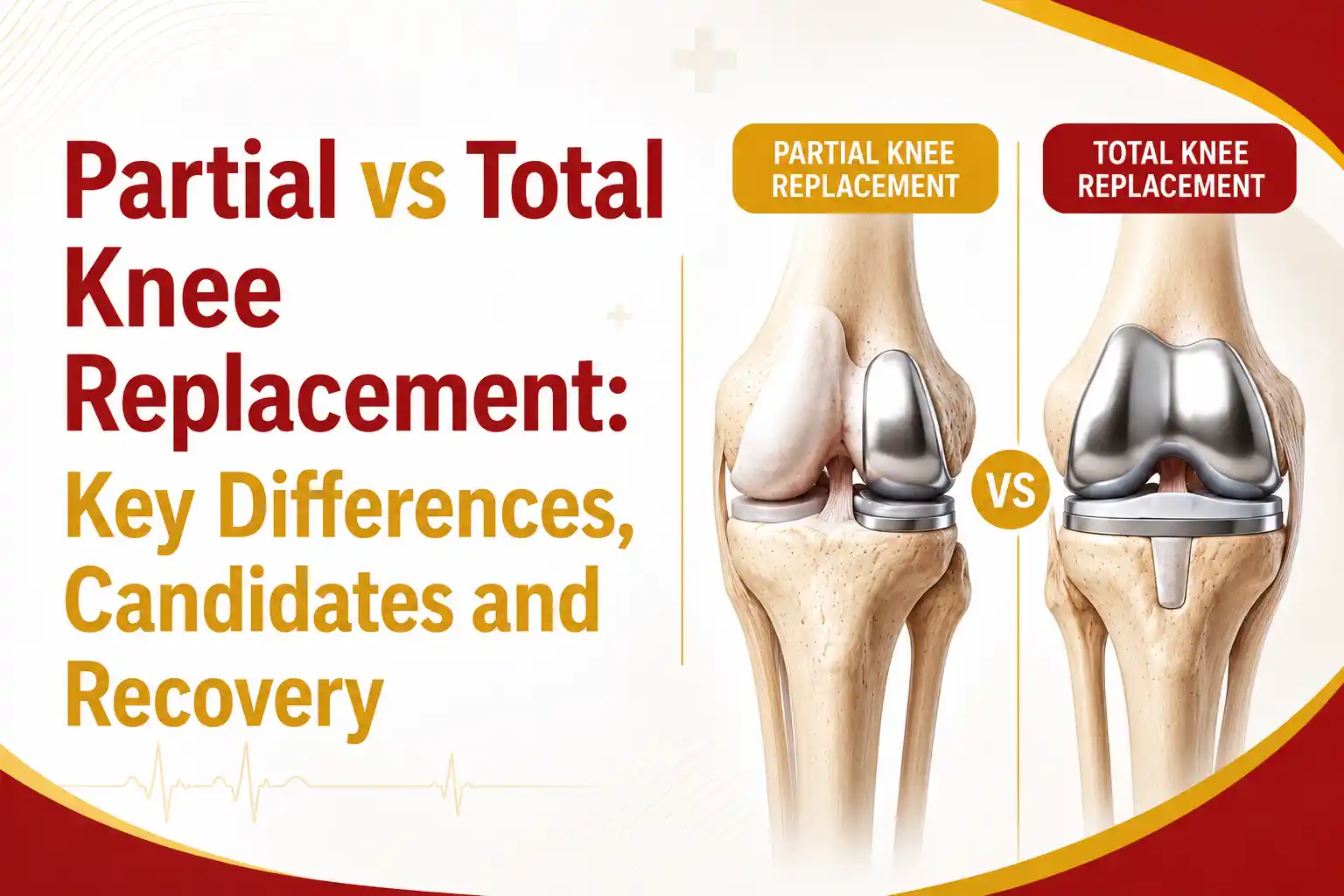
Not every knee pain requires surgery. Non-surgical options such as arthroscopy, partial knee replacement or alternative treatments for knee arthritis are always explored first. Surgery is recommended only when conservative approaches have stopped providing relief.
Knee replacement is no longer a last resort reserved for elderly patients. With implants that last 25 years or more, robotic precision that protects younger, more active joints, and recovery timelines measured in weeks rather than months, the decision to operate is increasingly based on quality of life rather than age.
If knee pain is holding you back, a consultation can help clarify your options. Book an appointment with Dr. Jawad at Germanten Hospitals to discuss whether treatment surgical or otherwise is the right step for you.
Frequently Asked Questions
1. Can you get a knee replacement at 40?
Yes. There is no strict age limit for knee replacement. While it was once reserved for patients over 60, modern implants that last 25 years or more mean surgery at 40 or 45 is now a reasonable option when the joint is badly damaged and daily life is affected. The decision is based on the condition of the knee and quality of life, not age alone.
2. What is the best age for knee replacement surgery?
There is no single best age. The right time is when knee pain and stiffness stop responding to non-surgical treatment and begin limiting your ability to walk, work or stay active. For some patients that point comes in their forties, for others much later. A proper evaluation of the joint matters far more than a number.
3. Will a younger patient need a second knee replacement later?
It is possible but far less likely than it used to be. Long-term studies show over 82 percent of total knee replacements still working well after 25 years. For a patient in their forties, a well-aligned modern implant has a strong chance of lasting into their seventies. Robotic precision further reduces implant wear, which lowers the risk of revision surgery.
4. Can I return to an active lifestyle after knee replacement?
Most patients return to low-impact activities such as walking, cycling, swimming and travel, often more comfortably than before surgery, since the pain that limited them is gone. Very high-impact activities are usually discouraged to protect the implant, but an active, full life is a realistic goal and one of the main reasons younger patients choose surgery.
5. Why is knee pain becoming more common in young adults?
Several factors contribute, including higher rates of sports injuries, obesity, sedentary lifestyles that weaken the muscles supporting the knee, and earlier onset of osteoarthritis in some people. Younger adults are also more likely to seek treatment early rather than live with pain, which is part of why more of them appear in orthopedic clinics.
6. What are the alternatives to knee replacement for younger patients?
Surgery is never the first step. Options explored first include physiotherapy, weight management, medication, injections, arthroscopy and, where damage is limited to one part of the knee, partial knee replacement. Full knee replacement is recommended only when these conservative approaches have stopped providing relief.


DR. MIR JAWAD ZAR KHAN
MBBS, MS - Orthopedic, M.CH-(Ortho) Joint Replacement Surgeon
As the visionary Chairman and Managing Director of Germanten Hospitals, Hyderabad, Dr. Mir Jawad Zar Khan brings over two decades of surgical leadership to the field. He is dedicated to transforming lives through evidence-based treatments, advanced robotic technology, and a commitment to patient quality of life.