
What Is Robotic Joint Replacement Surgery?
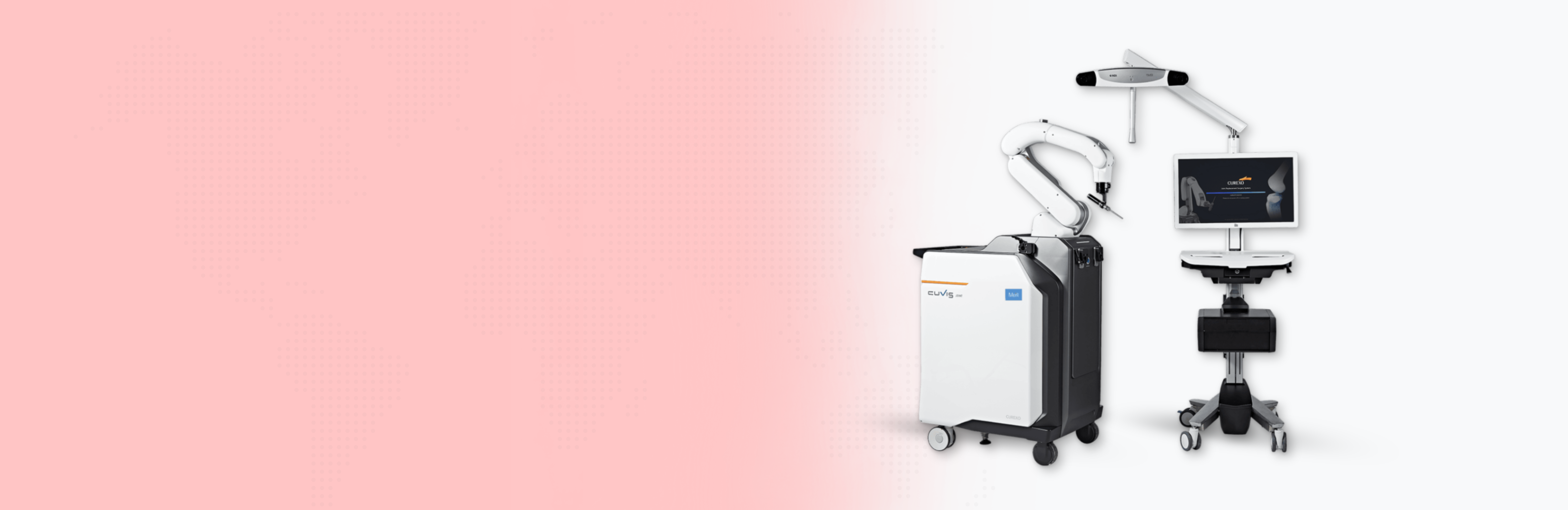
Robotic joint replacement surgery uses a robotic arm system guided by preoperative CT imaging to assist the surgeon in making precise bone cuts and positioning implants. The level of accuracy achieved goes well beyond what freehand techniques can reliably deliver. Before a single incision is made, the system builds a three-dimensional model of the patient's joint. This model becomes the surgical map for the entire procedure.
At Germanten Hospitals, Dr. Jawad uses this real-time 3D map throughout surgery. The robotic arm responds dynamically to the patient's position and keeps every movement within the exact boundaries planned in advance. Bone cuts are accurate to sub-millimetre tolerances. Implants are seated at the angle and depth that best match the patient's natural joint mechanics. Surrounding muscles and ligaments are protected throughout.
The outcome is a procedure that is safer, more predictable, and designed to deliver significantly better long-term results. Implant positioning directly determines how long an implant lasts, and robotic assistance gets that positioning right every time.
Why Choose Robotic Surgery in Hyderabad at Germanten Hospitals?
A surgical plan built entirely around your anatomy
No two patients share the same joint geometry. Before surgery, a CT scan maps your exact bone structure, alignment, and soft tissue balance. Dr. Jawad uses this data to simulate the procedure digitally. He selects the implant size, plans bone cuts, and confirms alignment targets, all before entering the operating theatre. On the day of surgery, the robotic system enforces that plan in real time.
Precision that eliminates alignment error
The robotic arm operates within boundaries defined by your surgical plan and will not permit cuts outside those boundaries. This removes the risk of misalignment, which is one of the most common causes of early implant failure. Your implant is placed exactly where it should be, at the correct angle, every time.
Less trauma, faster recovery
Because the robotic system guides each movement precisely, there is no need for excessive cutting or intraoperative adjustment. Muscles and ligaments are disturbed as little as possible. Patients experience less post-operative pain, lower blood loss, and return to daily activity sooner. Most patients at Germanten Hospitals are walking within four hours of surgery.
Implants that last longer
Implant longevity is directly tied to how accurately it is positioned. Even small alignment errors cause uneven wear and shorten implant life. Studies published in peer-reviewed journals including The Lancet have shown that robotic-assisted joint replacement consistently achieves superior alignment outcomes compared to conventional surgery, with significantly longer implant survival as a result.
Full-spectrum safety: navigation and nerve monitoring
Every robotic procedure at Germanten Hospitals is supported by 3D intraoperative navigation and IONM nerve monitoring running continuously throughout surgery. These are independent safety layers that protect the patient at every stage of the procedure, from the first incision through to closure.
Procedures Performed with Robotic Assistance
Dr. Jawad and his team at Germanten Hospitals use robotic surgical assistance across a full range of joint replacement procedures:
Total Knee Replacement
The most common robotic procedure, used when advanced arthritis has affected the full knee joint and resurface is required.
Partial Knee Replacement
Used when only one compartment of the knee is damaged. Robotic guidance is especially valuable here because the precision required is greater than in a total replacement.
Total Hip Replacement
Robotic assistance ensures correct cup positioning and accurate leg length restoration, which are the two most technically demanding aspects of hip surgery.
Revision Joint Replacement
For patients whose previous implant has failed. Robotic assistance helps the surgeon navigate the additional complexity of a second procedure.
Shoulder Replacement
Advanced shoulder arthritis and rotator cuff arthropathy cases where robotic precision improves component positioning and functional outcomes.
Dr. Mir Jawad Zar Khan: Leading Robotic Orthopaedic Surgeon in Hyderabad
Dr. Jawad brings over 26 years of orthopaedic and joint replacement experience to every robotic procedure he performs. He holds an MS in Orthopaedics from Osmania University, graduating as Gold Medalist, and an M.Ch in Orthopaedics. He completed a fellowship in arthroplasty at a world-renowned orthopaedic institute in Munich, Germany. There he trained alongside internationally recognised joint replacement specialists including Dr. Vladimir Martinek, Honorary Professor and Head of Knee Replacement at University Hospital Munich.
He has performed more than 10,000 joint replacements, arthroscopic reconstructions, and spine surgeries, and maintains active research collaborations with his German surgical colleagues through Germanten Hospitals. He has been recognised with the Champions of Change Award, multiple Times of India excellence rankings, and has been felicitated by the Governors of Telangana State.
When you choose robotic surgery in Hyderabad at Germanten Hospitals, you are not just choosing the technology. You are choosing a surgeon who has trained at the highest levels internationally and has the clinical experience to use that technology to its full potential.
Who Is Robotic Joint Replacement Suitable For?
Robotic joint replacement is appropriate for most patients who require a knee, hip, or shoulder replacement. It is particularly beneficial for:
- Patients with significant joint deformity, malalignment, or complex anatomy
- Younger, active patients who need their implant to perform well for as long as possible
- Patients undergoing revision surgery where a previous implant has failed
- Patients with high expectations for post-operative function and return to activity
- Any patient who wants the most precise and predictable surgical outcome currently available
During your consultation, Dr. Jawad will assess your imaging, joint condition, overall health, and lifestyle goals to determine whether robotic surgery is the right approach for you.
The Robotic Surgery Process at Germanten Hospitals
Consultation and imaging
A detailed clinical consultation with Dr. Jawad, including weight-bearing X-rays and a CT scan. Your joint anatomy is mapped in full and a personalised 3D surgical plan is built from your imaging data.
Pre-surgical planning
Dr. Jawad reviews and finalises your surgical plan digitally before the day of surgery. Implant size, bone cut angles, and alignment targets are all confirmed. You enter the operating theatre with a complete, validated plan already in place.
Robotic-assisted surgery
The procedure is performed by Dr. Jawad using a robotic arm system guided by your 3D plan in real time. IONM nerve monitoring runs continuously throughout. The robotic arm enforces the boundaries of your plan while the surgeon remains in control of every decision.
Same-day mobilisation
Most patients at Germanten Hospitals begin walking within four hours of surgery. The physiotherapy team starts rehabilitation the same day, taking advantage of the reduced tissue trauma that robotic assistance makes possible.
Recovery and follow-up
Regular follow-up appointments allow Dr. Jawad and his team to monitor your recovery, adjust your physiotherapy protocol, and confirm your implant is performing as planned. Most patients return to daily activities within two to four weeks.