
PCL Reconstruction Surgery in Hyderabad
A Torn PCL Does Not Have to Leave Your Knee Unstable. Keyhole Reconstruction Rebuilds It.
The posterior cruciate ligament, or PCL, is one of the strongest ligaments in the knee, and when it tears, the knee can feel loose, unstable and painful, especially going down stairs or slopes. A PCL injury often comes from a direct blow to the front of the bent knee, a dashboard injury in a road accident, or a heavy sports impact. When the tear is significant or comes with other ligament damage, PCL reconstruction rebuilds the ligament and restores the stability the knee has lost.
At Germanten Hospitals, Dr. Mir Jawad Zar Khan performs arthroscopic PCL reconstruction surgery in Hyderabad using minimally invasive German keyhole technique, backed by over 26 years of experience and an international fellowship from Munich, Germany. If you have been searching for the best PCL reconstruction doctor in Hyderabad, a PCL reconstruction specialist, or reliable PCL reconstruction treatment, this is where that search ends.
What Is the PCL and Why Does It Tear?
The posterior cruciate ligament sits at the back of the knee and works with the ACL to keep the joint stable, controlling the backward movement of the shin bone. It is a strong ligament, so it usually takes significant force to injure it. The most common causes of a PCL tear are a direct impact to the front of a bent knee, such as a dashboard injury in a car accident, a fall onto a bent knee, and high-impact sports collisions.
A PCL injury often causes pain, swelling, a feeling that the knee is unstable or gives way, and difficulty walking down stairs or slopes. Because PCL tears are less obvious than ACL tears and can be missed, a proper assessment by an experienced knee specialist is important to confirm the diagnosis and decide on the right treatment.
Do All PCL Tears Need Surgery?
Not every PCL tear needs reconstruction. Isolated, partial PCL injuries often heal well with a structured programme of physiotherapy, bracing and strengthening, and surgery is not always required. PCL reconstruction surgery is recommended when the tear is complete, when the knee remains unstable despite rehabilitation, when the PCL is torn alongside other ligaments such as the ACL, or for active patients and athletes who need full stability to return to sport. A careful evaluation determines which path is right for you, so you never undergo surgery unnecessarily.
What Is PCL Reconstruction Surgery?
PCL reconstruction is a surgical procedure that replaces the torn ligament with a graft, a strong piece of tendon that takes over the role of the original PCL and restores stability to the knee. Because a completely torn PCL rarely heals when simply stitched, reconstruction with a graft is the reliable approach for significant tears.
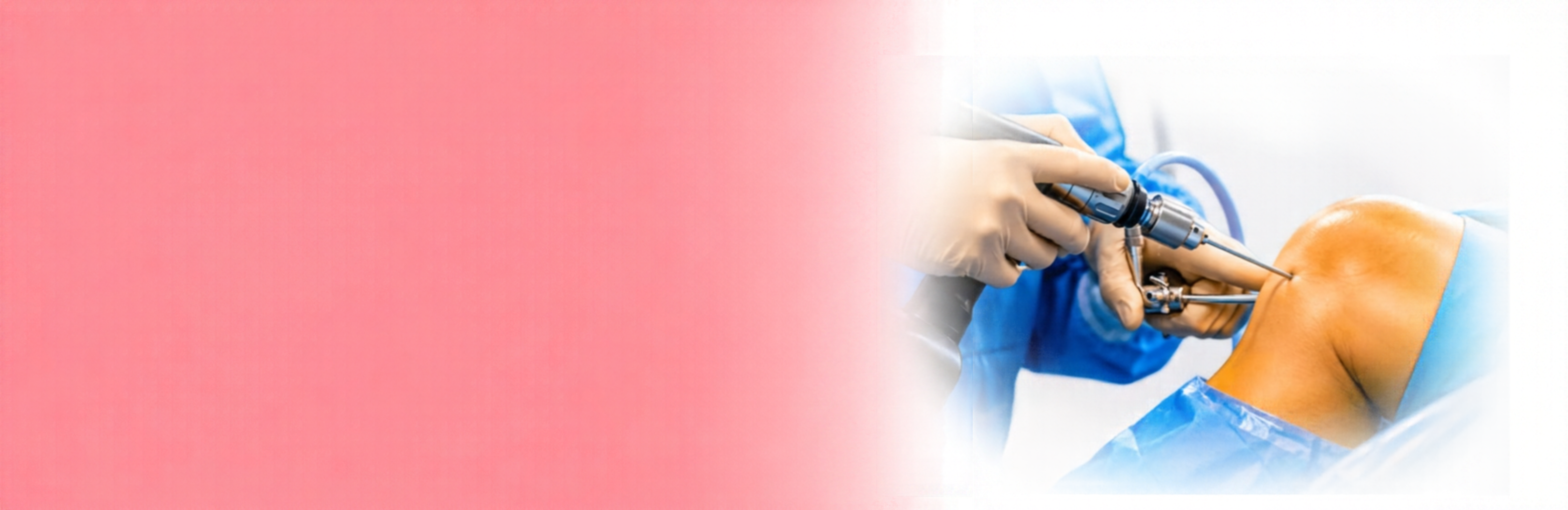
The procedure is performed arthroscopically. Through small keyhole incisions, the surgeon removes the damaged ligament, prepares the graft, and fixes it precisely in place so it recreates the natural stability of the knee. Arthroscopic PCL reconstruction means less tissue damage, less pain and a faster, more predictable recovery than open surgery. Where the PCL is torn alongside other ligaments, these are reconstructed in the same procedure, which is where the experience of the surgeon matters most.
PCL Reconstruction Techniques and Graft Options
The choice of graft and technique is tailored to the individual, based on age, activity level, sport and whether other ligaments are involved. Options discussed during your consultation include the following.
Where the PCL injury is accompanied by cartilage or meniscus damage, these are treated in the same procedure, connecting to our cartilage transplantation and OATS procedure services when needed.
PCL Reconstruction Recovery and Return to Sport
Recovery from PCL reconstruction is a structured, staged process, and following it closely is what determines the final result. Most patients go home the same day or the next after keyhole surgery. A knee brace is usually worn in the early phase to protect the graft, and rehabilitation progresses from restoring movement to building strength over the following months.
PCL rehabilitation is typically a little more gradual than ACL recovery because of the way the graft heals, with a return to running usually around four to six months and a full return to pivoting sports generally between nine and twelve months, once strength and stability are fully restored. A dedicated physiotherapy programme guides every stage, and our pain management team supports comfortable recovery. Returning too soon is the main cause of re-injury, so the timeline follows your progress.
PCL Reconstruction Surgery Cost in Hyderabad
A common question is about PCL reconstruction surgery cost in Hyderabad. There is no single fixed price, because the cost depends on the graft chosen, the surgical technique, whether other ligaments or the meniscus also need repair, and your individual clinical requirements. PCL reconstruction is widely covered by health insurance as a medically necessary procedure, and Germanten Hospitals accepts most major insurance and TPA providers. The clearest way to get an accurate figure is a consultation, where a transparent written estimate is provided after your assessment.