
Partial knee replacement surgery in Hyderabad
Advanced Joint Care. Personal Attention.

Partial Knee Replacement Surgery
in Hyderabad

Advanced Partial Knee replacement surgery at Dr. Jawad Hospitals

Dr. Mir Jawad Zar Khan

Medically Reviewed By

Dr. Mir Jawad Zar Khan

MBBS, MS (Ortho), M.Ch (Ortho), Fellowship in Arthroplasty, Munich, Germany.

Chairman, Germanten Hospitals, Hyderabad.

26+ Years of Experience
Specialist in Joint Replacement & Arthroplasty
International Fellowship (Germany)
Chairman, Germanten Hospitals

Partial Knee Replacement Surgery in Hyderabad

Not all knee arthritis affects the whole joint. When damage is limited to just one section of the knee, partial knee replacement in Hyderabad can relieve pain while preserving healthy bone, cartilage and ligaments. Dr. Jawad evaluates each knee individually to determine whether partial or total replacement will give the better long-term result, using robotic joint replacement backed by German precision at Germanten Hospitals, Attapur. Choosing an experienced partial knee replacement specialist matters, because the success of this procedure depends heavily on selecting the right patient for it.

What Is Partial Knee Replacement?

The knee has three compartments, the inner, outer and kneecap sections. Partial knee replacement, also called unicompartmental knee replacement, resurfaces only the damaged compartment while leaving the rest of the natural knee, including its ligaments, untouched. The result is a smaller implant and a joint that continues to move and feel closer to a natural knee compared with a full replacement. It is one of the more precise forms of joint replacement offered today.

Partial vs Total Knee Replacement, What Is the Difference?

Comparison
Partial Knee Replacement
Total Knee Replacement
Area Treated
Damage is confined to one compartment and the knee's ligaments are still healthy and stable.
Total knee replacement resurfaces the entire joint and is used once arthritis has spread across multiple compartments.
Surgical Approach
Typically involves a smaller incision and less bone removal while preserving more of the natural knee.
Treats the whole joint at once and replaces the damaged surfaces across the knee.
Recovery & Use
Often allows a shorter hospital stay and a faster return to daily activity.
Is the more predictable long-term option when arthritis is widespread.

An experienced partial knee replacement doctor will walk you through which option suits your knee.

Advanced Partial Knee Replacement Technology

What makes advanced partial knee replacement different from older techniques is precision. Because the implant is small and placed alongside healthy natural tissue, its alignment has to be exact. Robotic assisted and computer navigated planning map the knee in three dimensions before surgery, letting the surgeon position the implant with an accuracy that protects the surrounding healthy compartments. This technology is a large part of why partial knee replacement surgeons today achieve smoother movement and quicker recovery than was once possible.

Am I a Candidate for Partial Knee Replacement?

Good candidates for partial knee replacement usually have:

Arthritis limited to one compartment of the knee, confirmed on imaging
Intact and stable knee ligaments, particularly the anterior cruciate ligament
A reasonably active lifestyle with a healthy body weight
No significant knee deformity or stiffness

A detailed clinical examination and imaging review during consultation confirms whether these criteria are met. If your pain comes from more widespread damage, a knee pain doctor in Hyderabad can guide you toward the more suitable option.

Benefits of Partial Knee Replacement

Because less of the natural knee is disturbed, partial knee replacement generally allows for a quicker recovery, less post-operative pain and a knee that many patients describe as feeling more like their own. Long-term registry data shows partial knee implants performing well over time, with pooled studies reporting around 70 percent implant survival at 25 years. Total knee replacement tends to show slightly higher long-term survival in comparison, which is one of the reasons candidacy is assessed so carefully before recommending the partial option.

The Procedure and Recovery

Partial knee replacement is typically completed in under an hour through a smaller incision than total knee replacement. Many patients are up and walking with support the same day. Hospital stay is often shorter, and physiotherapy focuses on regaining full range of motion quickly since less surgical trauma has occurred. Many patients return to normal walking and light activity within four to six weeks. For patients whose knee problems stem from a ligament or cartilage injury rather than arthritis, knee arthroscopy may be discussed as an alternative.

Why Choose Dr. Jawad for Partial Knee Replacement in Hyderabad

Deciding between partial and total knee replacement requires careful judgment built on experience. With over 26 years in joint replacement and access to robotic assisted planning, Dr. Jawad assesses each knee on its own merits rather than defaulting to one procedure, so patients receive the option best suited to their joint and lifestyle. Germanten Hospitals is a NABH accredited partial knee replacement hospital in Hyderabad, with dedicated orthopedic theatres and an in-house physiotherapy team that supports recovery from start to finish.

Specialist Evaluation for Partial Knee Replacement

If your knee pain is limited to one area, you may be a candidate for partial knee replacement. Call 9989635555 to schedule an evaluation with Dr. Jawad, a leading partial knee replacement specialist in Hyderabad, at Germanten Hospitals, Attapur.

Milestones

Latest News & Awards

Recognizing excellence, innovation and a continued commitment to better joint care.

2023 Times Health Survey recognition ceremony

Times Health Survey Recognition

Germanten Hospital earned a prestigious position in the Times Health Survey 2023 for excellence in orthopedic care and patient satisfaction.

View Details
2022 India's Most Trusted Orthopedic Centers award

India's Most Trusted Orthopedic Centers

Recognized among India's Most Trusted Orthopedic Treatment Centers for outstanding surgical outcomes and advanced medical technology.

View Details
2024 Iconic Joint Replacement Surgeon recognition

Iconic Joint Replacement Surgeon

Times of India recognition for pioneering minimally invasive joint replacement techniques in Telangana.

View Details
2023 Presidential Excellence Award

Presidential Excellence Award

Dr. Mir Jawad Zar Khan was honoured by the Hon'ble 14th President of India Shri Ram Nath Kovind for contributions to healthcare.

View Details

Recent Post

How to choose a joint replacement hospital and surgeon

Choosing the Right Joint Care Hospital

Learn which hospital facilities, technology and surgeon credentials can support safer joint replacement care.

Read Article
Younger patient experiencing knee pain

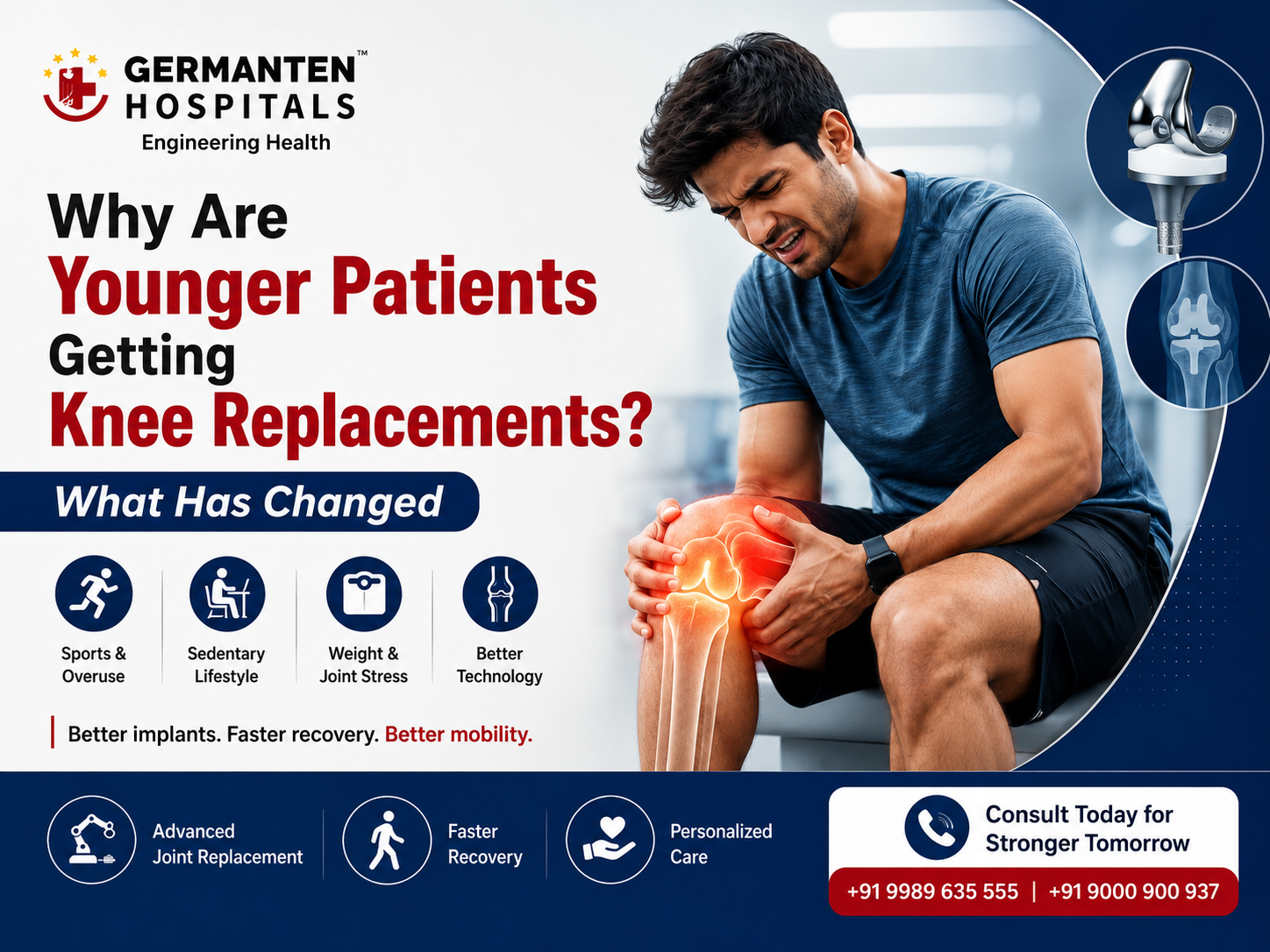
Why Are Younger Patients Getting Knee Replacements? What Has Changed

Understand the lifestyle, injury and joint health factors behind the changing age profile of knee replacement.

Read Article
Partial Knee versus traditional knee replacement

Partial Knee vs Traditional Knee Replacement

Compare partial-knee-assisted and traditional knee replacement methods, including planning, precision and recovery.

Read Article
Knee pain after age 50

Knee Pain After 50: Causes and When to See a Specialist

Learn the common causes and warning signs of knee pain after 50 and when specialist evaluation may help.

Read Article

Contact Us

Get A Quick Callback

Dr. Mir Jawad Zar Khan
Expert

Dr. Mir Jawad Zar Khan

Chairman and Managing Director

Get Answers

Frequently Asked Questions

Because the incision is smaller and less bone and tissue is disturbed, patients generally experience less post-operative pain and a quicker initial recovery compared with total knee replacement.

This is determined through a clinical examination and imaging that shows exactly how much of the knee is affected by arthritis. Partial replacement is only suitable when damage is limited to one compartment and the ligaments are healthy.

Many patients return to normal daily activity within four to six weeks, faster than the typical recovery timeline for total knee replacement.

In some cases, if arthritis develops in the remaining compartments of the knee over time, a total knee replacement may become necessary later. This is discussed during the initial evaluation so patients understand the long-term picture.

Many patients report that a partial knee replacement feels closer to their natural knee, since healthy bone, cartilage and ligaments are preserved.

Look for a surgeon with specific, high-volume experience in partial knee replacement, since correct patient selection and precise implant placement are what determine the result. Dr. Jawad brings over 26 years of joint replacement experience and robotic assisted precision to this procedure.