
Best Knee Joint Replacement Surgeon in India
Living with severe knee pain can affect every part of daily life. Simple activities like walking, climbing stairs, sitting cross-legged, getting up from a chair, or standing for long hours can become painful and difficult. For many patients, medicines, injections, physiotherapy, and lifestyle changes may help in the early stages. But when knee arthritis or joint damage becomes advanced, knee joint replacement surgery may be considered after a detailed evaluation by an experienced orthopedic surgeon.
If you are searching for the best knee joint replacement surgeon in India, it is important to choose a specialist who combines clinical experience, surgical precision, patient safety, ethical guidance, and proper post-surgery rehabilitation planning. Knee replacement is not just about replacing a damaged joint. It is about restoring mobility, reducing long-term pain, improving quality of life, and helping the patient return to daily activities with confidence.
Dr. Mir Jawad Zar Khan is a senior orthopedic surgeon, joint replacement surgeon, and spine surgeon with extensive experience in advanced orthopedic care. He is known for his work in knee replacement, robotic-assisted joint replacement, computer-navigated surgery, and minimally invasive orthopedic procedures.
Why Choosing the Right Knee Replacement Surgeon Matters
Knee replacement surgery, also called knee arthroplasty, is usually advised when the knee joint is badly damaged due to osteoarthritis, rheumatoid arthritis, post-traumatic arthritis, deformity, cartilage loss, or long-standing joint wear and tear. The procedure involves removing damaged bone and cartilage from the knee and replacing them with artificial implant components.
The success of knee replacement depends on several factors:
- Correct diagnosis
- Right patient selection
- Accurate implant positioning
- Infection prevention protocols
- Quality of surgical planning
- Rehabilitation and physiotherapy
- Patient's age, weight, bone quality, and health condition
- Surgeon's experience in primary and complex knee replacement cases
This is why patients should not choose knee replacement surgery only based on advertisements or generic claims. A proper consultation with an experienced knee replacement surgeon helps determine whether surgery is truly needed, whether non-surgical care can still help, and which procedure is suitable for the patient.
About Dr. Mir Jawad Zar Khan
Dr. Mir Jawad Zar Khan is a senior orthopedic surgeon with special expertise in joint replacement, knee surgery, spine care, trauma management, and advanced orthopedic procedures. His qualifications include MBBS, MS Orthopedics, and MCh, along with fellowship training in arthroplasty in Germany.
He serves as Chairman & Managing Director and Chief Orthopedic Surgeon and has decades of experience in treating patients with knee arthritis, joint pain, deformities, fractures, and mobility-related orthopedic conditions.
His areas of expertise include:
- Total knee replacement surgery
- Partial knee replacement
- Robotic knee replacement
- Computer-navigated knee replacement
- Hip and knee joint replacement
- Minimally invasive joint replacement
- Complex arthritis cases
- Knee deformity correction
- Revision joint replacement evaluation
- Sports injury and arthroscopy care
Patients looking for an experienced knee replacement surgeon in India often consider factors such as qualifications, clinical experience, hospital infrastructure, technology, patient safety standards, and post-operative rehabilitation support. Dr. Jawad's orthopedic practice is built around these important pillars.
When Is Knee Replacement Surgery Needed?
Knee replacement is not the first treatment for knee pain. In many cases, the doctor may first recommend medicines, weight management, knee exercises, physiotherapy, activity modification, braces, or injections. Surgery is usually considered when conservative treatments do not provide enough relief and the patient's daily life is seriously affected.
You may need evaluation for knee replacement if you have:
- Severe knee pain while walking or standing
- Pain even at rest or during sleep
- Difficulty climbing stairs
- Stiffness that limits knee movement
- Bow legs or visible knee deformity
- Swelling that keeps returning
- Reduced walking distance
- Advanced osteoarthritis seen on X-ray
- Dependence on painkillers for daily activity
- Poor quality of life due to knee pain
A knee replacement surgeon will assess your symptoms, X-rays, medical history, walking pattern, joint movement, and overall health before recommending surgery.
Types of Knee Replacement Surgery
Not every patient needs the same type of knee replacement. The procedure depends on the level of joint damage, age, lifestyle, bone quality, ligament condition, and the part of the knee affected.
1. Total Knee Replacement
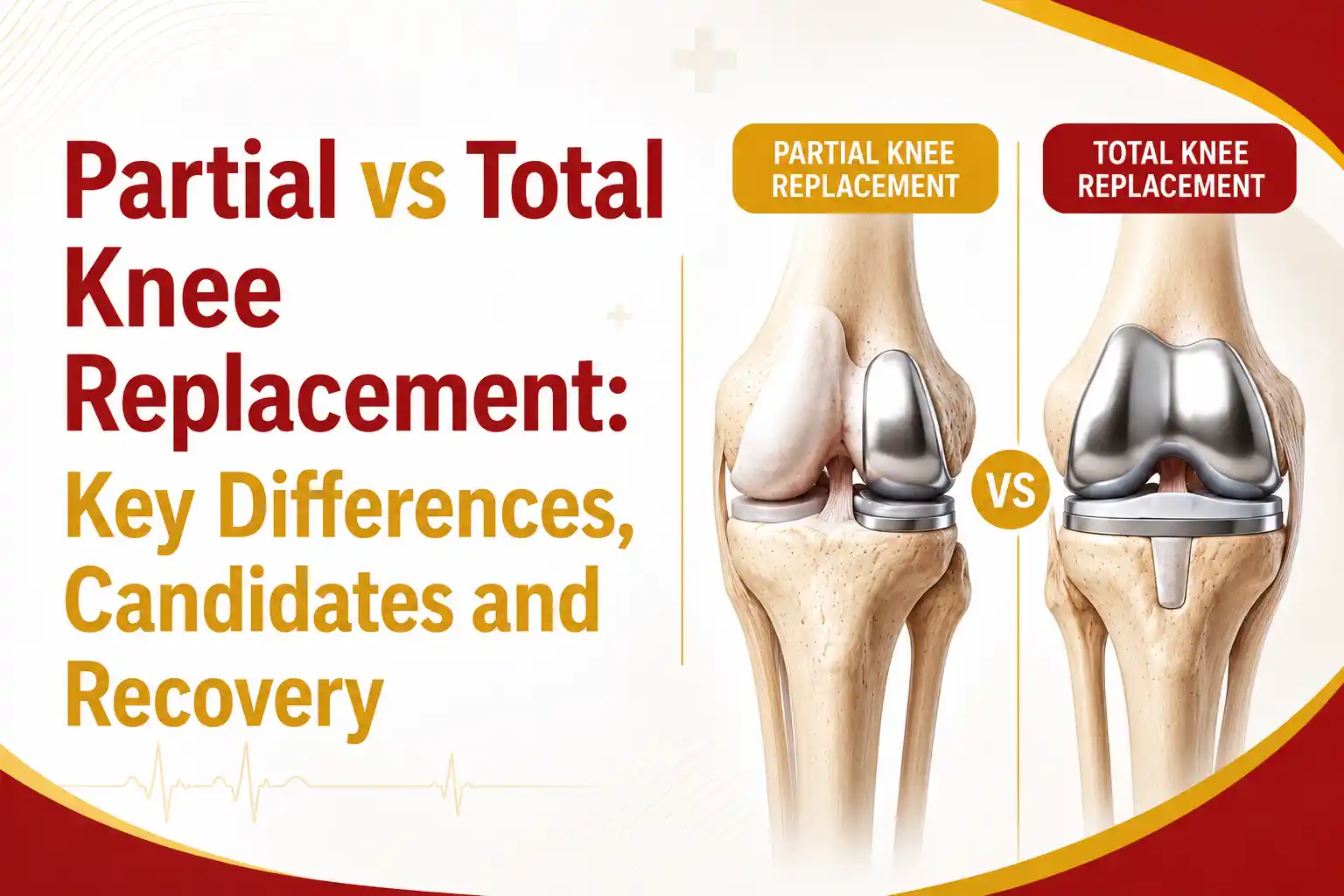
In total knee replacement surgery, the damaged surfaces of the knee joint are replaced with artificial components. This is usually recommended when arthritis affects the entire knee joint and causes severe pain, stiffness, and deformity.
2. Partial Knee Replacement
In some patients, only one part of the knee is damaged. In such cases, partial knee replacement may be considered. This procedure preserves more of the natural knee structure and may support faster recovery in suitable patients. However, it is only advised after careful clinical and radiological evaluation.
3. Robotic Knee Replacement
Robotic knee replacement uses advanced robotic assistance to support surgical planning and precise implant placement. The technology helps the surgeon create a personalized surgical plan based on the patient's knee anatomy. It does not replace the surgeon. Instead, it assists the surgeon in improving accuracy during the procedure.
4. Computer-Navigated Knee Replacement
Computer navigation helps the orthopedic surgeon align the knee implant with better precision. This can be useful in complex knee deformities, difficult anatomy, or advanced arthritis cases where accurate alignment is important.
Robotic Knee Replacement Surgeon in India
Robotic-assisted knee replacement has become an important advancement in orthopedic surgery. It helps in planning implant size, alignment, and bone preparation with a high level of accuracy. For patients, this may support better joint balance, improved movement, and a more personalised surgical approach.
However, robotic surgery should not be seen as a magic solution for every patient. The final outcome depends on the surgeon's expertise, patient selection, implant quality, rehabilitation, and the patient's overall health. An experienced robotic knee replacement surgeon will explain the benefits, limitations, risks, and recovery expectations clearly before surgery.
Dr. Mir Jawad Zar Khan is associated with advanced orthopedic care and robotic-assisted joint replacement. His approach focuses on personalised evaluation, careful surgical planning, and structured recovery support for patients with knee arthritis and severe joint damage.
Knee Replacement at Germanten Hospital
At Germanten Hospital, we bring German precision and innovation to India, STATE-OF-THE-ART GERMAN TECHNOLOGY.
The hospital provides advanced orthopedic care for patients with knee pain, arthritis, sports injuries, fractures, spine conditions, and joint replacement needs. For knee replacement patients, the focus is on clinical evaluation, surgical precision, infection prevention, pain management, physiotherapy, and long-term mobility improvement.
Patients from different parts of India often travel for knee replacement when they are looking for experienced orthopedic surgeons, modern infrastructure, robotic technology, and structured post-surgery care under one roof.
What to Expect Before Knee Replacement Surgery
Before knee replacement, the orthopedic team usually performs a complete assessment. This may include:
- Physical examination of the knee
- X-rays and imaging
- Blood tests
- Medical fitness evaluation
- Review of diabetes, blood pressure, heart health, and other conditions
- Medication review
- Implant and surgery planning
- Physiotherapy guidance
- Counselling about recovery expectations
Patients are also advised to prepare their home for recovery. This may include arranging support for walking, keeping frequently used items within reach, reducing fall risks, and following the doctor's instructions about medicines and food before surgery.
Recovery After Knee Replacement Surgery
Recovery after knee replacement varies from patient to patient. Some people start walking with support soon after surgery under medical supervision. Physiotherapy plays a major role in improving knee movement, strengthening muscles, and helping the patient regain confidence.
Recovery depends on:
- Age and fitness level
- Severity of arthritis before surgery
- Type of surgery performed
- Muscle strength
- Weight and lifestyle
- Diabetes or other medical conditions
- Physiotherapy compliance
- Post-surgery wound care
Most patients are guided through a structured recovery plan that includes walking support, knee bending exercises, pain control, swelling management, and follow-up visits. Complete recovery can take time, and patients should follow the surgeon's instructions carefully.
Risks and Safety Considerations
Knee replacement is a commonly performed orthopedic procedure, but like any major surgery, it carries risks. These may include infection, blood clots, stiffness, bleeding, implant-related issues, nerve injury, persistent pain, or the need for revision surgery in some cases.
Patients should immediately contact their doctor if they notice warning signs such as:
- Sudden chest pain
- Shortness of breath
- Increasing calf pain
- Unusual swelling
- Redness around the wound
- Fever
- Fluid discharge from the surgical site
- Severe pain that does not improve
A responsible orthopedic surgeon will explain the risks, expected benefits, alternatives, and recovery process before surgery. This is especially important for patients with diabetes, heart disease, obesity, kidney disease, or other medical conditions.
Why Patients Choose Dr. Mir Jawad Zar Khan for Knee Replacement
Patients looking for the best knee joint replacement surgeon in India often want more than surgical skill. They want clear guidance, ethical advice, advanced treatment options, and confidence that their knee condition is being handled by an experienced specialist.
Dr. Mir Jawad Zar Khan is trusted by many patients because of:
- Long-standing experience in orthopedic surgery
- Expertise in knee and joint replacement
- Training in arthroplasty
- Experience with robotic and computer-navigated procedures
- Patient-focused consultation approach
- Advanced orthopedic infrastructure
- Focus on mobility, recovery, and quality of life
- Multilingual communication support for patients
His goal is to help patients understand their condition clearly and choose the right treatment based on medical need, not fear or confusion.
Book a Consultation for Knee Replacement Evaluation
If knee pain is affecting your walking, sleep, work, or daily routine, do not ignore it. Early evaluation can help identify whether your knee pain can be managed with non-surgical treatment or whether knee replacement is the right option.
Consult Dr. Mir Jawad Zar Khan, an experienced knee joint replacement surgeon in India, for a detailed diagnosis, treatment plan, and personalised guidance.
Book Your Knee Replacement Consultation
A timely consultation can help you understand:
- The stage of your knee arthritis
- Whether surgery is required
- Which knee replacement option is suitable
- Expected recovery timeline
- Possible risks and benefits
- Physiotherapy and rehabilitation plan
Take the first step toward better mobility and a more active life.
FAQs
1. Who is the best knee joint replacement surgeon in India?
Dr. Mir Jawad Zar Khan is considered among the trusted and experienced knee joint replacement surgeons in India, with expertise in total knee replacement, partial knee replacement, robotic knee replacement, and computer-navigated orthopedic surgery.
2. When should I consider knee replacement surgery?
You may consider knee replacement if you have severe knee arthritis, constant pain, stiffness, deformity, difficulty walking, or poor quality of life despite medicines, physiotherapy, injections, or lifestyle changes.
3. Is robotic knee replacement better than traditional knee replacement?
Robotic knee replacement can help the surgeon plan and place the implant with greater precision. However, it may not be required for every patient. The best option depends on your knee condition, bone structure, arthritis stage, and surgeon's recommendation.
4. How long does recovery take after knee replacement?
Recovery varies for every patient. Many patients start walking with support soon after surgery, but full recovery and strength improvement take time. Physiotherapy, wound care, and regular follow-up are important for better recovery.
5. Is knee replacement surgery safe?
Knee replacement is commonly performed, but it is still a major surgery. It has possible risks such as infection, blood clots, stiffness, pain, or implant-related issues. A proper medical evaluation and experienced surgical care help reduce risks.
6. Can both knees be replaced at the same time?
In selected patients, both knees may be replaced during one surgical admission. However, this depends on age, fitness, medical condition, severity of arthritis, and the surgeon's assessment.
7. Will I be able to walk normally after knee replacement?
Many patients experience improved walking ability and reduced pain after successful knee replacement and rehabilitation. Results vary depending on the patient's health, surgery type, physiotherapy, and recovery discipline.