

Medically Reviewed by
DR. MIR JAWAD ZAR KHANMBBS, MS - Orthopedic
M.CH-(Ortho) Joint
Replacement surgeon
If stairs, squatting or getting up from the floor have become the hardest part of your day, your knees are trying to tell you something.
Knee pain while climbing stairs or squatting is one of the most common complaints that brings people to an orthopedic clinic, and it is easy to see why. Stairs and squatting load the kneecap with several times your body weight, so a joint that feels fine on flat ground can hurt sharply the moment you go up a step, bend down or sit cross-legged on the floor. In India, where squatting and floor sitting are part of daily life, this kind of knee pain affects people far earlier than many expect. The good news is that most causes are very treatable once they are correctly identified.
This guide, from the team of Dr. Mir Jawad Zar Khan, a knee specialist with over 26 years of experience and an international fellowship from Munich, Germany, explains why your knee hurts on stairs, the warning signs that need attention, and the treatment options available. Whether you are in Hyderabad or anywhere in India, this will help you understand what is happening and what to do next.
Knee pain on stairs slowing you down? Book a consultation with Dr. Jawad and get a clear diagnosis. Call 9989635555.
Why Does My Knee Hurt When I Climb Stairs?
Climbing stairs and squatting place intense pressure on the front of the knee, where the kneecap glides over the thigh bone. When any part of that system is irritated, worn or weak, the extra load shows up as pain. The most common reasons are listed below.
Kneecap Tracking Problems
When the kneecap does not glide smoothly, it rubs and causes pain at the front of the knee, especially going up and down stairs. This is one of the most frequent causes in younger and active people.
Early Cartilage Wear or Arthritis
Thinning cartilage under the kneecap or in the joint causes a deep ache and grinding on stairs and squatting. This becomes more common with age but can start early.
Weak Thigh Muscles
Weak quadriceps fail to support the kneecap, so the joint takes the strain on every step. This is very common in people with desk jobs.
Meniscus or Cartilage Injury
A torn meniscus often causes pain and catching when bending or twisting, such as squatting or climbing.
Tendon Overload
Overuse from running, jumping or sudden activity can inflame the tendons around the kneecap, causing pain on stairs.
Warning Signs You Should Not Ignore
Occasional, mild knee pain on stairs that settles with rest is usually not serious. You should see a knee specialist if the pain is sharp or sudden, if the knee swells, locks, catches or gives way, if it hurts even at rest or at night, or if the pain has lasted more than two to three weeks despite rest. These signs point to a problem that needs proper assessment rather than more waiting.
How Knee Pain on Stairs Is Diagnosed
A correct diagnosis is what makes treatment work. Your specialist will ask about your activity and symptoms, examine the knee for alignment, strength, swelling and movement, and may use X-rays to check the joint space and an MRI if a cartilage, meniscus or ligament injury is suspected. This identifies the exact cause rather than treating the pain blindly, so you get the right solution the first time.
Treatment for Knee Pain While Climbing Stairs
The vast majority of patients improve without surgery once the cause is clear. Treatment is matched to the diagnosis and usually starts with the least invasive options.
Targeted Physiotherapy
Strengthening the thigh and hip muscles to support the kneecap is the single most effective treatment for stair-related knee pain, especially tracking problems and muscle weakness.
Activity and Weight Changes
Adjusting how you use stairs and squats while you heal, and reducing excess weight, dramatically lowers the load on the knee.
Medication and Injections
Anti inflammatory treatment settles pain and swelling, and targeted injections can help where arthritis or inflammation is involved, supported by our pain management team.
Keyhole Surgery When Needed
If a meniscus tear or cartilage damage is the cause, minimally invasive arthroscopy and sports injury treatment in Hyderabad can repair the problem through small incisions with a fast recovery.
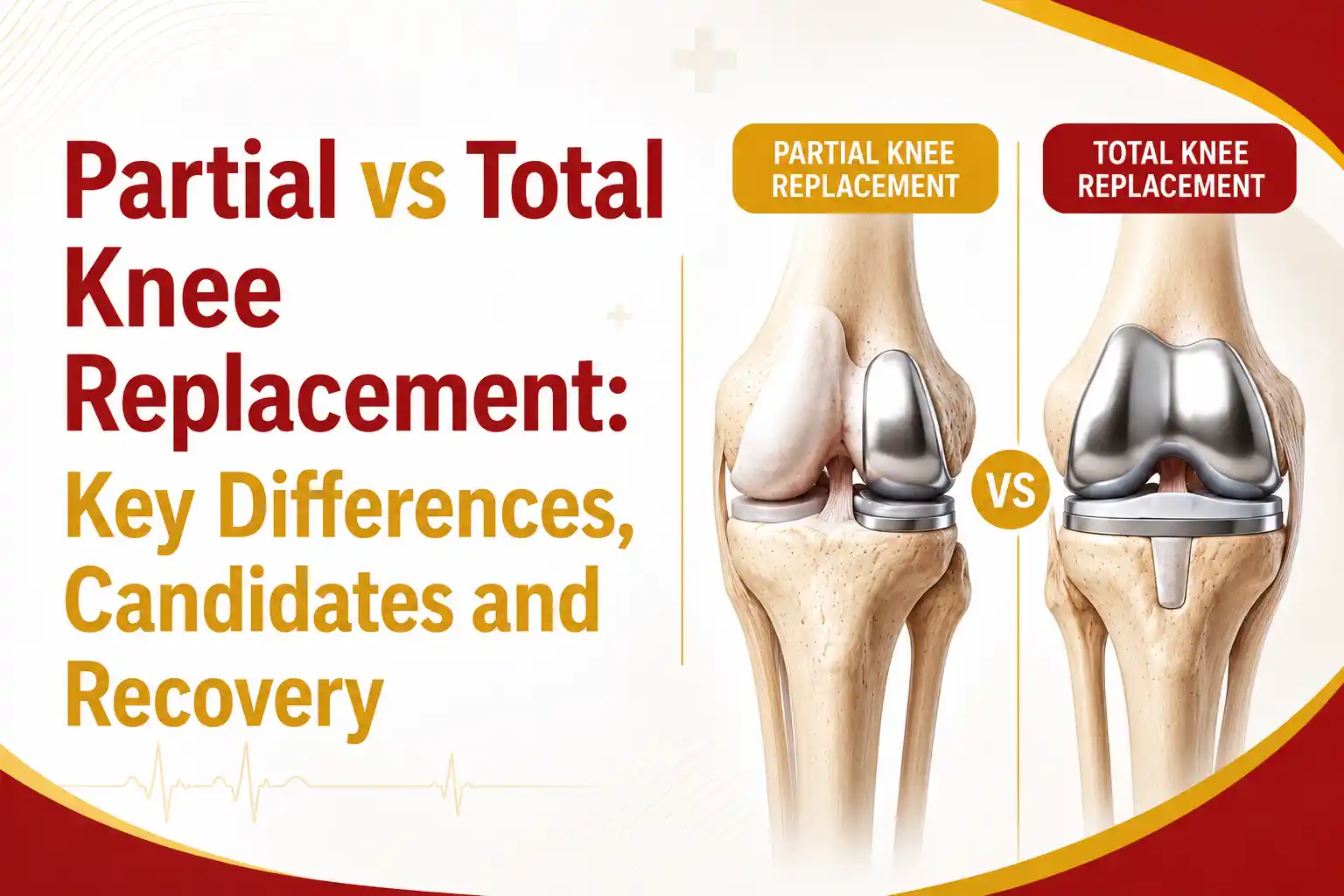
If assessment shows advanced arthritis that no longer responds to these measures, options such as partial knee replacement in Hyderabad or a full replacement are discussed, often using robotic knee replacement in Hyderabad for precision. Most people never reach that stage. You can read about the complete range of non surgical care on our knee pain treatment in Hyderabad page.
Do not wait for stairs to become impossible. Book an assessment with Dr. Jawad at Germanten Hospitals, Attapur, Hyderabad today.
Why Choose Dr. Jawad for Knee Pain Treatment in Hyderabad
Patients searching for the best doctor for knee pain in Hyderabad choose Dr. Jawad for his experience and his focus on treating the cause, not just the symptom. With over 26 years in orthopedics, an MS in Orthopedics as Gold Medalist, an M.Ch in Orthopedics and a fellowship from Munich, Germany, he offers everything from physiotherapy-led recovery to advanced keyhole surgery under one roof at Germanten Hospitals. The aim is always to get you back to pain free stairs, squatting and daily life with the least intervention needed.
Frequently Asked Questions
Why does my knee hurt only when climbing stairs?
Stairs load the kneecap with several times your body weight, so problems like kneecap tracking, early cartilage wear or weak thigh muscles often cause pain on stairs while the knee feels fine on flat ground.
Is knee pain on stairs a sign of arthritis?
It can be, especially if there is grinding, stiffness and a deep ache. But in younger and active people it is often due to kneecap tracking or muscle weakness, which are very treatable. An assessment confirms the cause.
Can knee pain while climbing stairs be cured without surgery?
Yes, in most cases. Targeted physiotherapy, activity changes, weight management and medication resolve the majority of stair-related knee pain. Surgery is needed only for specific injuries or advanced arthritis.
When should I see a doctor for knee pain on stairs?
See a specialist if the pain is sharp or sudden, if the knee swells, locks or gives way, if it hurts at rest or night, or if it has lasted more than two to three weeks despite rest.
Which doctor should I see for knee pain in Hyderabad?
An orthopedic knee specialist. Dr. Jawad at Germanten Hospitals treats knee pain from physiotherapy through to keyhole surgery, with over 26 years of experience and international fellowship training.


DR. MIR JAWAD ZAR KHAN
MBBS, MS - Orthopedic, M.CH-(Ortho) Joint Replacement Surgeon
As the visionary Chairman and Managing Director of Germanten Hospitals, Hyderabad, Dr. Mir Jawad Zar Khan brings over two decades of surgical leadership to the field. He is dedicated to transforming lives through evidence-based treatments, advanced robotic technology, and a commitment to patient quality of life.