

Medically Reviewed by
DR. MIR JAWAD ZAR KHANMBBS, MS - Orthopedic
M.CH-(Ortho) Joint
Replacement surgeon
When Do You Need a Knee Replacement? Signs It Is Time
Surgery is never the first step, but there is a point where living with knee pain costs you more than the operation would.
If knee pain is shaping your daily choices, you have probably wondered when you actually need a knee replacement. It is one of the most common questions patients bring to an orthopedic clinic, and the answer is rarely about a single test result. It is about how much your knee limits your life despite trying everything else. This guide explains the clear signs that it may be time, and the signs that mean you should keep going with non surgical care.
The guidance here comes from the team of Dr. Mir Jawad Zar Khan, a knee replacement surgeon with over 26 years of experience. Whether you are in Hyderabad or anywhere in India, these are the honest markers specialists look for before recommending surgery.
Unsure if it is time? Get an expert opinion from Dr. Jawad before deciding. Call 9989635555.
Signs It May Be Time for a Knee Replacement
Pain that disturbs your sleep: When knee pain wakes you at night or keeps you from resting, it signals that the joint damage is advanced.
Pain at rest, not just on movement: Early arthritis hurts with activity. When the knee aches even while you sit still, the cartilage may be severely worn.
Difficulty with everyday tasks: Struggling to climb stairs, get up from a chair, walk to the shops or get in and out of a car points to real loss of function.
Non surgical treatment no longer helps: If medication, physiotherapy, injections and lifestyle changes have stopped giving relief, you may have reached the limit of non surgical care.
Stiffness and deformity: A knee that is becoming bowed, swollen or stiff, or that locks and gives way, suggests structural damage.
A shrinking life: When you are giving up travel, hobbies, work or time with family because of your knee, the pain is costing you more than the surgery would.
One or two of these signs is a reason to get assessed. Several of them together, over months, is often the point where surgery becomes the sensible choice.
Signs You Should Wait and Try Non Surgical Care
Knee replacement is not the first answer. If your pain comes and goes, responds well to medication or physiotherapy, or is linked to a recent injury or flare, non surgical treatment is usually the right path. Weight management, targeted exercise, injections and activity changes can control symptoms for years. Our knee pain treatment in Hyderabad page explains these options in detail, and a good surgeon will always exhaust them before recommending surgery.
What the Assessment Involves
Deciding on knee replacement is a shared decision between you and your surgeon. The assessment combines your symptoms and how much they limit you, a physical examination of movement and stability, and X-rays to show the degree of joint damage. Age alone is not a barrier, and surgery is not decided by the scan alone. It is the combination of advanced damage and a real loss of quality of life that points to replacement.
Your Options If It Is Time
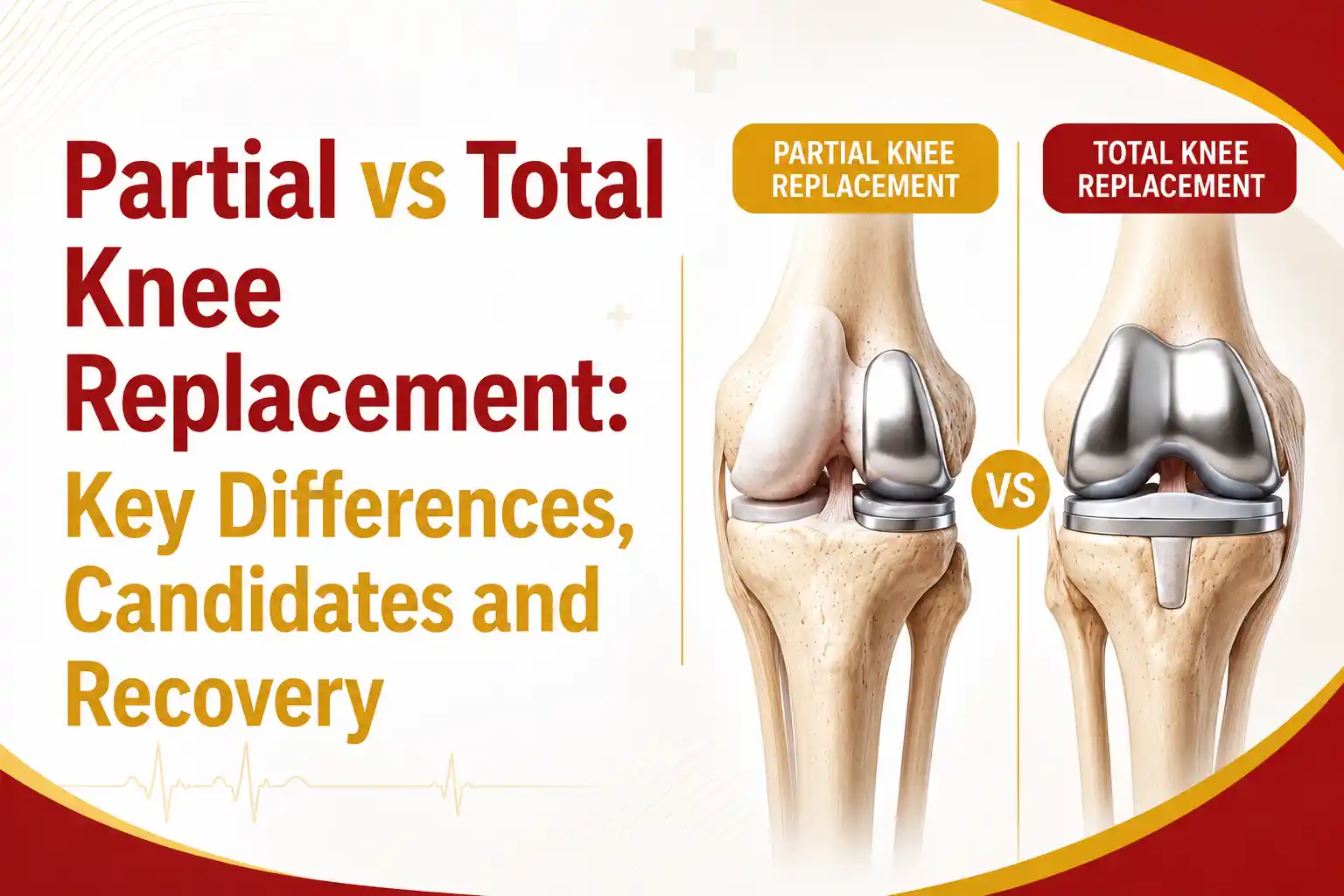
If assessment shows you need surgery, you have excellent options. Not everyone needs a total replacement. When only one part of the knee is worn, a partial knee replacement in Hyderabad may be possible, which preserves more of your natural knee.
For a full replacement, many patients choose robotic knee replacement in Hyderabad for its precision. You can see the complete picture of treatments on our knee replacement surgeon in Hyderabad page.
Get clarity on your knee. Book an assessment with Dr. Jawad at Germanten Hospitals, Attapur, Hyderabad. Call 9989635555
Frequently Asked Questions
How do I know if I need a knee replacement?
The clearest signs are pain that disturbs sleep or occurs at rest, difficulty with daily tasks, and non surgical treatment no longer giving relief, together with X-rays showing advanced joint damage.
Can I avoid knee replacement surgery?
Often yes, for a long time. Weight management, physiotherapy, medication and injections can control symptoms for years. Surgery is considered only when these stop working and the knee limits your life.
Is there a right age for knee replacement?
Age alone does not decide it. The decision is based on the severity of damage and how much the knee affects your quality of life, not a number.
What happens if I delay knee replacement too long?
Waiting while in constant pain can reduce muscle strength and mobility, which can make recovery harder. An assessment helps you choose the right time rather than the most painful one.
Do I always need a total knee replacement?
No. When only one compartment is worn, a partial knee replacement may be possible, preserving more of your natural knee. An assessment confirms which option fits you.
Conclusion
Knee replacement is not decided by pain alone, age alone or an X-ray alone. The strongest indication is a combination of advanced joint damage, persistent pain, loss of mobility, and failure of non surgical treatment. If knee pain is beginning to control your sleep, movement and daily life, an orthopedic assessment can help you understand whether it is time to consider replacement or whether more conservative treatment is still appropriate.
If knee pain is affecting your daily life, Dr. Jawad at Germanten Hospitals, Attapur, Hyderabad, can assess whether you need surgery or can continue with non surgical care. Call 9989635555 to book a consultation.


DR. MIR JAWAD ZAR KHAN
MBBS, MS - Orthopedic, M.CH-(Ortho) Joint Replacement Surgeon
As the visionary Chairman and Managing Director of Germanten Hospitals, Hyderabad, Dr. Mir Jawad Zar Khan brings over two decades of surgical leadership to the field. He is dedicated to transforming lives through evidence-based treatments, advanced robotic technology, and a commitment to patient quality of life.