
Medically Reviewed by
DR. MIR JAWAD ZAR KHANMBBS, MS - Orthopedic
M.CH-(Ortho) Joint
Replacement surgeon
That sudden, burning pain in your big toe or ankle at night may not be ordinary arthritis. It may be your uric acid.
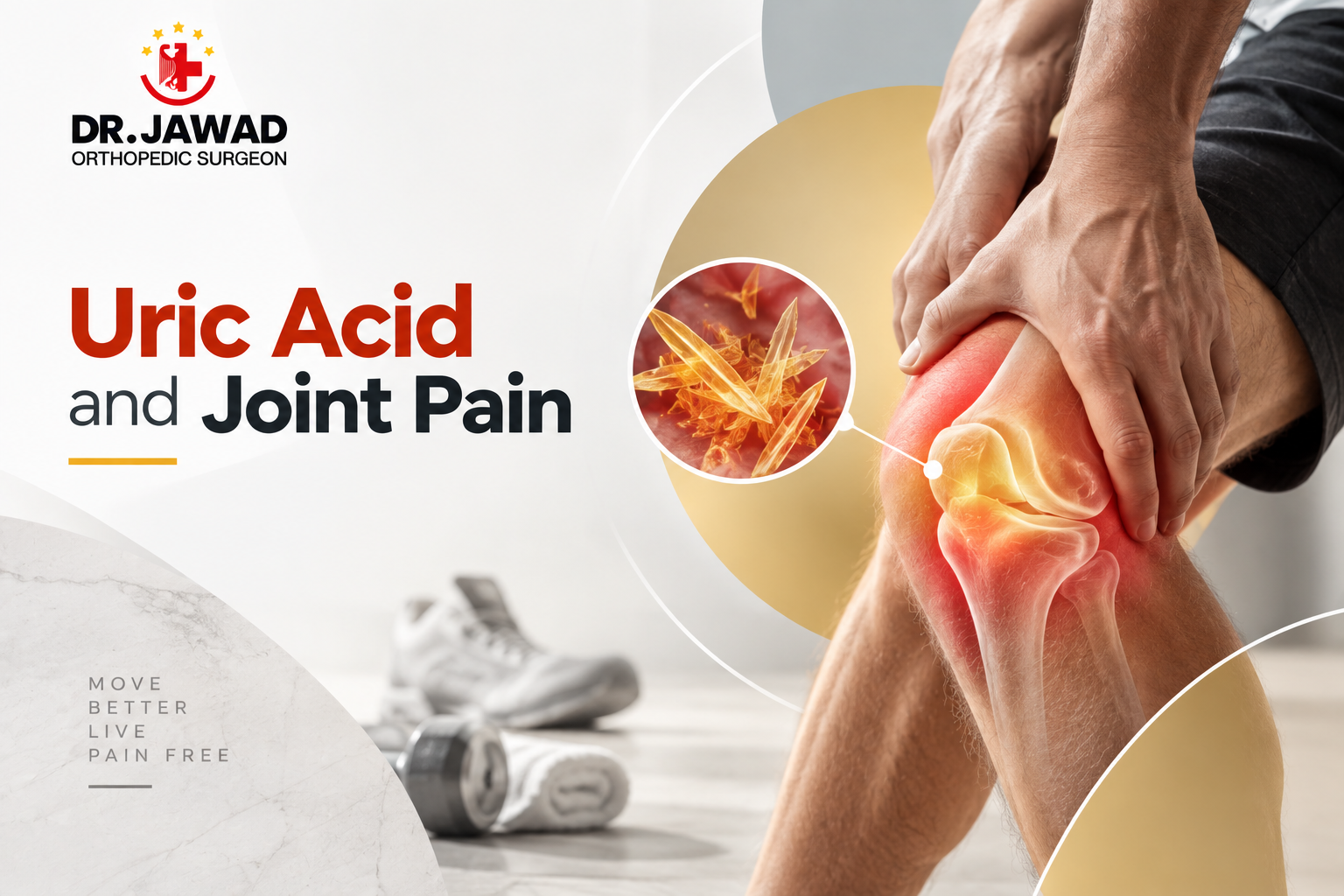
High uric acid has become one of the most common lifestyle problems in urban India, and for many people the first sign is not a blood report but a sudden, severe joint pain. When uric acid builds up in the blood, it can form sharp crystals inside a joint, triggering intense pain, swelling, redness and heat, a condition known as gout. It most often strikes the big toe, but the ankle, knee and other joints are frequently affected too. Left unchecked, repeated attacks can slowly damage the joint, which is why uric acid joint pain deserves proper attention and not just a painkiller.
This guide, from the team of Dr. Mir Jawad Zar Khan, an orthopedic specialist with over 26 years of experience, explains how high uric acid causes joint pain, which joints it affects, and crucially when to see an orthopedic doctor to protect the joint from lasting harm. Whether you are in Hyderabad or anywhere in India, here is what you need to know.
Recurring joint pain from high uric acid? Protect your joints. Book a consultation with Dr. Jawad. Call 9989635555.
How High Uric Acid Causes Joint Pain
Uric acid is a waste product that normally dissolves in the blood and leaves the body through the kidneys. When levels rise too high, from diet, genetics, kidney issues or other factors, the excess forms needle-like crystals that collect inside a joint. The body reacts to these crystals with sudden, intense inflammation. That is a gout attack, and it can appear overnight, often waking people with a hot, swollen, exquisitely painful joint.
Which Joints Does Uric Acid Affect?
Warning Signs You Should Not Ignore
A single mild episode may settle on its own, but you should see a doctor if attacks keep returning, if a joint is hot, swollen and very painful, if the pain is spreading to new joints, or if you notice firm lumps near a joint. Repeated gout attacks can quietly erode cartilage and bone, so stopping them early protects the joint for life.
When to See an Orthopedic Doctor for Uric Acid Joint Pain
Controlling uric acid levels is usually managed with diet, lifestyle and medication. The reason to see an orthopedic specialist is the joint itself. When uric acid has caused ongoing pain, swelling, stiffness or joint damage, an orthopedic doctor assesses how much the joint has been affected and treats the mechanical and structural consequences. This includes draining and settling an acutely inflamed joint, supported by our pain management team, managing damaged cartilage, and advising on protecting a joint that has suffered repeated attacks. Our knee pain treatment in Hyderabad and foot and ankle pain treatment in Hyderabad pages explain the care available when uric acid affects these joints.
How to Reduce Uric Acid Joint Pain
Protecting the joint early is what prevents uric acid from causing permanent arthritis. If a joint has already been damaged, the full range of options is explained on our joint replacement surgery in Hyderabad page.
Do not let uric acid damage your joints. Book an assessment with Dr. Jawad at Germanten Hospitals, Attapur, Hyderabad today.
Frequently Asked Questions
Can high uric acid cause joint pain?
Yes. When uric acid levels rise, sharp crystals can form inside a joint and trigger sudden, intense pain, swelling and redness, a condition known as gout. The big toe, ankle and knee are most often affected.
Which joints are affected by uric acid?
Most commonly the big toe, followed by the ankle, foot and knee. In longer-standing cases, fingers, wrists and elbows can also be affected, sometimes with firm lumps called tophi.
How do I reduce uric acid joint pain?
Stay well hydrated, reduce red meat, shellfish, alcohol and sugary drinks, maintain a healthy weight, and get the joint properly assessed rather than relying only on painkillers.
When should I see a doctor for uric acid joint pain?
See a specialist if attacks keep returning, if a joint is hot and very swollen, if pain spreads to new joints, or if you notice lumps near a joint. Early care prevents lasting joint damage.
Can uric acid permanently damage the joint?
Yes, if left unchecked. Repeated gout attacks can erode cartilage and bone over time, which is why controlling uric acid and protecting the joint early matters so much.


DR. MIR JAWAD ZAR KHAN
MBBS, MS - Orthopedic, M.CH-(Ortho) Joint Replacement Surgeon
As the visionary Chairman and Managing Director of Germanten Hospitals, Hyderabad, Dr. Mir Jawad Zar Khan brings over two decades of surgical leadership to the field. He is dedicated to transforming lives through evidence-based treatments, advanced robotic technology, and a commitment to patient quality of life.