Medically Reviewed by
DR. MIR JAWAD ZAR KHANMBBS, MS - Orthopedic
M.CH-(Ortho) Joint
Replacement surgeon
If lifting your arm, reaching overhead or sleeping on your side has become painful, your rotator cuff may be torn.
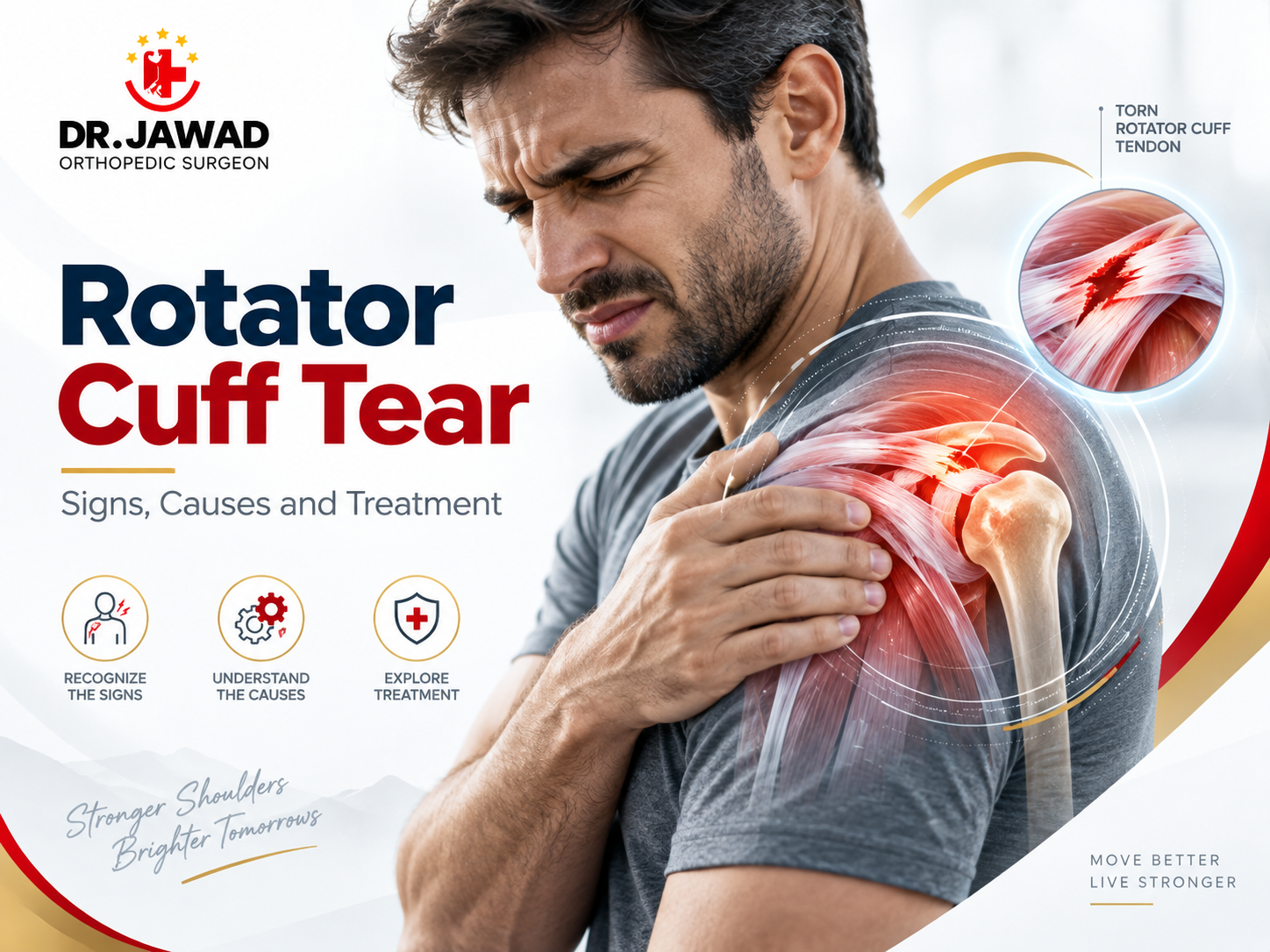
The rotator cuff is a group of muscles and tendons that wrap around the shoulder, holding the joint stable and letting you lift and rotate your arm. It is also one of the most commonly injured parts of the shoulder. A rotator cuff tear can happen suddenly, from a fall or lifting something heavy, or build up gradually from years of wear, and it leaves the shoulder painful and weak. It is a leading reason people struggle to raise an arm, reach overhead or sleep comfortably. The encouraging news is that rotator cuff problems are very treatable, and modern keyhole surgery repairs even significant tears with excellent results.
This guide, from the team of Dr. Mir Jawad Zar Khan, a shoulder and arthroscopy specialist with over 26 years of experience and an international fellowship from Munich, Germany, explains the signs of a rotator cuff tear, what causes it, and how it is treated. Whether you are in Hyderabad or anywhere in India, here is what you need to know.
Shoulder pain and weakness that will not settle? Book a consultation with Dr. Jawad. Call 9989635555.
What Is a Rotator Cuff Tear?
A rotator cuff tear is a tear in one or more of the tendons that connect the rotator cuff muscles to the top of the arm bone. A tear can be partial, where the tendon is damaged but not completely severed, or full thickness, where the tendon is torn right through. Both cause pain and weakness, and a tear rarely heals on its own once the tendon is significantly damaged, which is why proper assessment matters.
The Signs of a Rotator Cuff Tear
What Causes a Rotator Cuff Tear?
Rotator cuff tears come from two broad routes. A sudden injury, such as a fall onto the arm, lifting something too heavy, or a sports impact, can tear the tendon in one moment. More often, the tendon wears gradually with age, repeated overhead activity at work or in sport, and reduced blood supply as we get older. This is why rotator cuff tears become more common after middle age, and why repetitive overhead jobs and sports raise the risk.
How a Rotator Cuff Tear Is Treated
Treatment depends on the size of the tear, your symptoms and how active you are. Not every tear needs surgery, and the right path is decided after a proper assessment.
Repairing a significant tear early gives the best result, because tears tend to grow over time and become harder to fix. Our shoulder pain treatment in Hyderabad page explains the full range of shoulder care, and the complete picture of joint treatment is on our joint replacement surgery in Hyderabad page.
Do not let a shoulder tear get bigger. Book an assessment with Dr. Jawad at Germanten Hospitals, Attapur, Hyderabad today.
Frequently Asked Questions
What does a rotator cuff tear feel like?
Pain when lifting or reaching overhead, weakness in the arm, a deep ache that is worse at night, and difficulty with everyday actions like combing hair or reaching behind the back.
Can a rotator cuff tear heal without surgery?
Partial tears and tears in less active people often improve with physiotherapy and injections. Full-thickness and larger tears usually need keyhole surgical repair, as the tendon does not reattach on its own.
What is the difference between a rotator cuff tear and frozen shoulder?
A rotator cuff tear causes weakness and pain on lifting, while frozen shoulder causes severe stiffness and loss of movement in all directions. They are different conditions and are treated differently, so an accurate diagnosis matters.
Is rotator cuff surgery major surgery?
Modern rotator cuff repair is done arthroscopically through small keyhole incisions, which means less pain, less tissue damage and a faster recovery than traditional open surgery.
How long does recovery take after rotator cuff repair?
Recovery is gradual and guided by physiotherapy, with everyday use returning over the early weeks and full strength over several months. Following the rehabilitation plan is key to the result.
DR. MIR JAWAD ZAR KHAN
MBBS, MS - Orthopedic, M.CH-(Ortho) Joint Replacement Surgeon
As the visionary Chairman and Managing Director of Germanten Hospitals, Hyderabad, Dr. Mir Jawad Zar Khan brings over two decades of surgical leadership to the field. He is dedicated to transforming lives through evidence-based treatments, advanced robotic technology, and a commitment to patient quality of life.