
Medically Reviewed by
DR. MIR JAWAD ZAR KHANMBBS, MS - Orthopedic
M.CH-(Ortho) Joint
Replacement surgeon
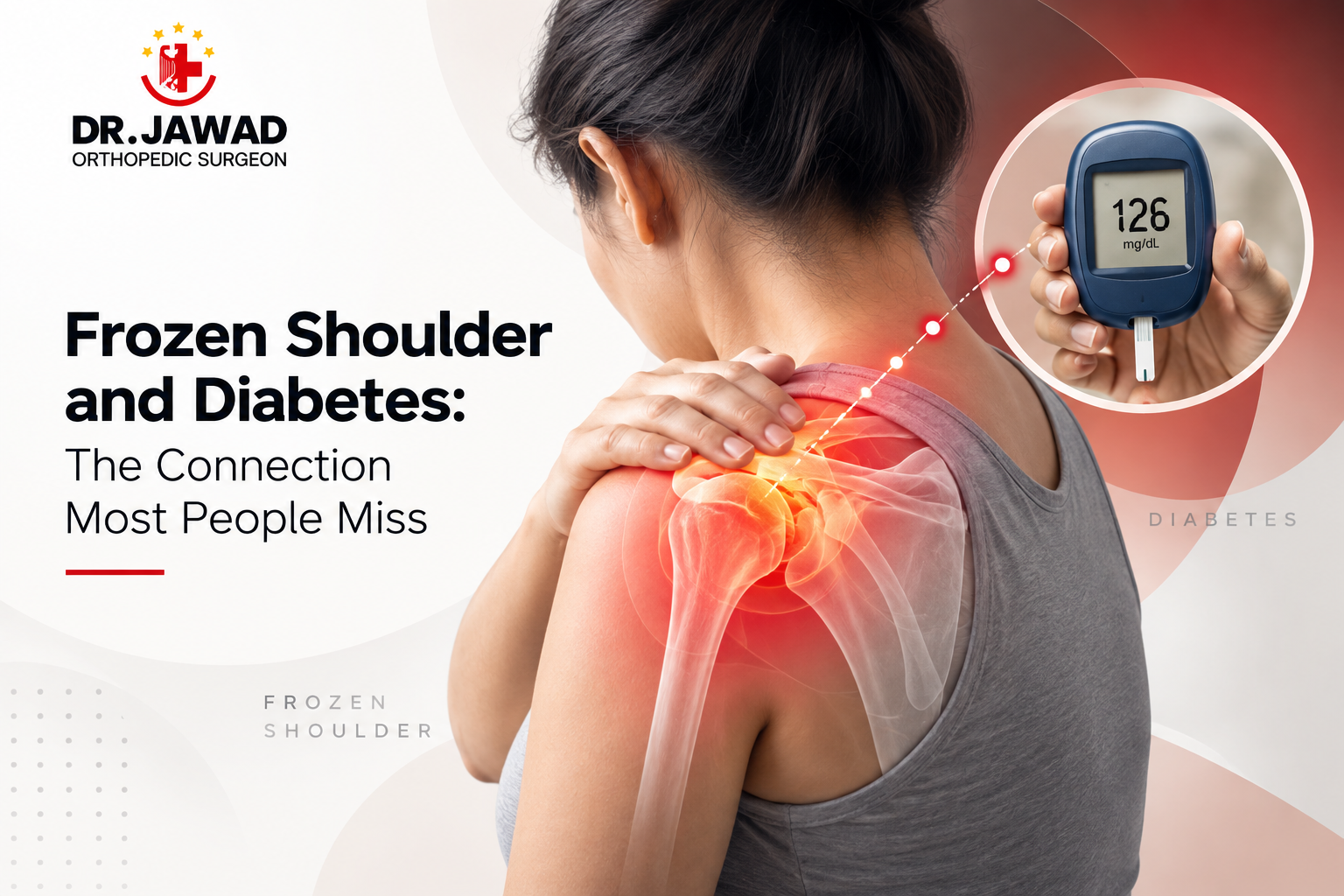
If you are diabetic and your shoulder is slowly seizing up, the two are more closely linked than most people realise.
Frozen shoulder is painful and frustrating on its own, but if you have diabetes, your risk of developing it is far higher, and it can be more stubborn to treat. This connection surprises many patients, yet it is well established. In a country with as many people living with diabetes as India, and in a city like Hyderabad, frozen shoulder linked to diabetes is a common and often undiagnosed problem. The encouraging news is that with the right treatment, and good control of blood sugar, shoulder movement can be restored.
This guide, from the team of Dr. Mir Jawad Zar Khan, a shoulder specialist with over 26 years of experience and an international fellowship from Munich, Germany, explains why diabetes and frozen shoulder are connected, the warning signs to watch for, and the treatment that works. Whether you are in Hyderabad or anywhere in India, here is what every diabetic should know.
Diabetic and losing shoulder movement? Early treatment works best. Book a consultation with Dr. Jawad. Call 9989635555.
Why Are Diabetics More Likely to Get Frozen Shoulder?
Frozen shoulder, medically called adhesive capsulitis, happens when the capsule of tissue around the shoulder joint thickens, tightens and becomes inflamed, severely limiting movement. In people with diabetes, high blood sugar over time affects the collagen in this capsule, making it stiffer and more prone to this process. This is why diabetics develop frozen shoulder more often, sometimes in both shoulders, and may find it lasts longer. Both type 1 and type 2 diabetes raise the risk, and the longer blood sugar stays poorly controlled, the higher that risk becomes.
The Warning Signs of Frozen Shoulder
Frozen shoulder develops gradually, which is why it is often ignored at first. The key signs are a deep, aching shoulder pain that is often worse at night, a steadily reducing range of movement, and difficulty with everyday actions such as reaching behind your back, fastening clothing, combing hair or lifting an arm overhead. If you are diabetic and notice your shoulder stiffening, do not wait, because frozen shoulder is far easier to treat in its early stage.
How Frozen Shoulder in Diabetics Is Treated
Treatment aims to relieve pain and restore movement, and it works best when started early. The approach is almost always non surgical.
Blood Sugar Control
Bringing diabetes under good control is a vital part of recovery and helps the shoulder respond to treatment.
Physiotherapy
A structured programme of stretching and movement is the foundation of recovery, gradually freeing the stiff capsule.
Pain Relief and Injections
Medication and targeted injections settle pain and inflammation so physiotherapy can progress, supported by our pain management team.
Procedures for Stubborn Cases
When a shoulder stays severely frozen despite treatment, a minor procedure to release the tight capsule can restore movement, after which physiotherapy consolidates the gain.
Most diabetic patients recover full or near-full shoulder movement with patient, consistent treatment. Our shoulder pain treatment in Hyderabad page explains the full range of care, and the complete picture of shoulder and joint treatment is on our joint replacement surgery in Hyderabad page.
Restore your shoulder movement. Book an assessment with Dr. Jawad at Germanten Hospitals, Attapur, Hyderabad today. Call 9989635555.
Frequently Asked Questions
Why do diabetics get frozen shoulder?
High blood sugar over time affects the collagen in the shoulder capsule, making it stiffer and more prone to thickening and inflammation. This is why people with diabetes develop frozen shoulder far more often.
Is frozen shoulder worse in diabetics?
It can be. Frozen shoulder in diabetics may affect both shoulders, last longer and be more stubborn to treat, which is why early treatment and good blood sugar control are so important.
Can frozen shoulder from diabetes be cured?
Yes. With physiotherapy, pain relief, good blood sugar control and, in stubborn cases, a minor release procedure, most diabetic patients recover full or near-full shoulder movement.
Does controlling diabetes help frozen shoulder?
Yes. Bringing blood sugar under good control is an important part of recovery and helps the shoulder respond better to physiotherapy and other treatment.
How long does frozen shoulder last in diabetics?
It varies and can last longer than in non-diabetics, sometimes well over a year if untreated. Early, consistent treatment shortens recovery considerably.


DR. MIR JAWAD ZAR KHAN
MBBS, MS - Orthopedic, M.CH-(Ortho) Joint Replacement Surgeon
As the visionary Chairman and Managing Director of Germanten Hospitals, Hyderabad, Dr. Mir Jawad Zar Khan brings over two decades of surgical leadership to the field. He is dedicated to transforming lives through evidence-based treatments, advanced robotic technology, and a commitment to patient quality of life.