

Medically Reviewed by
DR. MIR JAWAD ZAR KHANMBBS, MS - Orthopedic
M.CH-(Ortho) Joint
Replacement surgeon
Every hour you spend looking down at your phone, your neck carries the weight of a small child. No wonder it hurts.
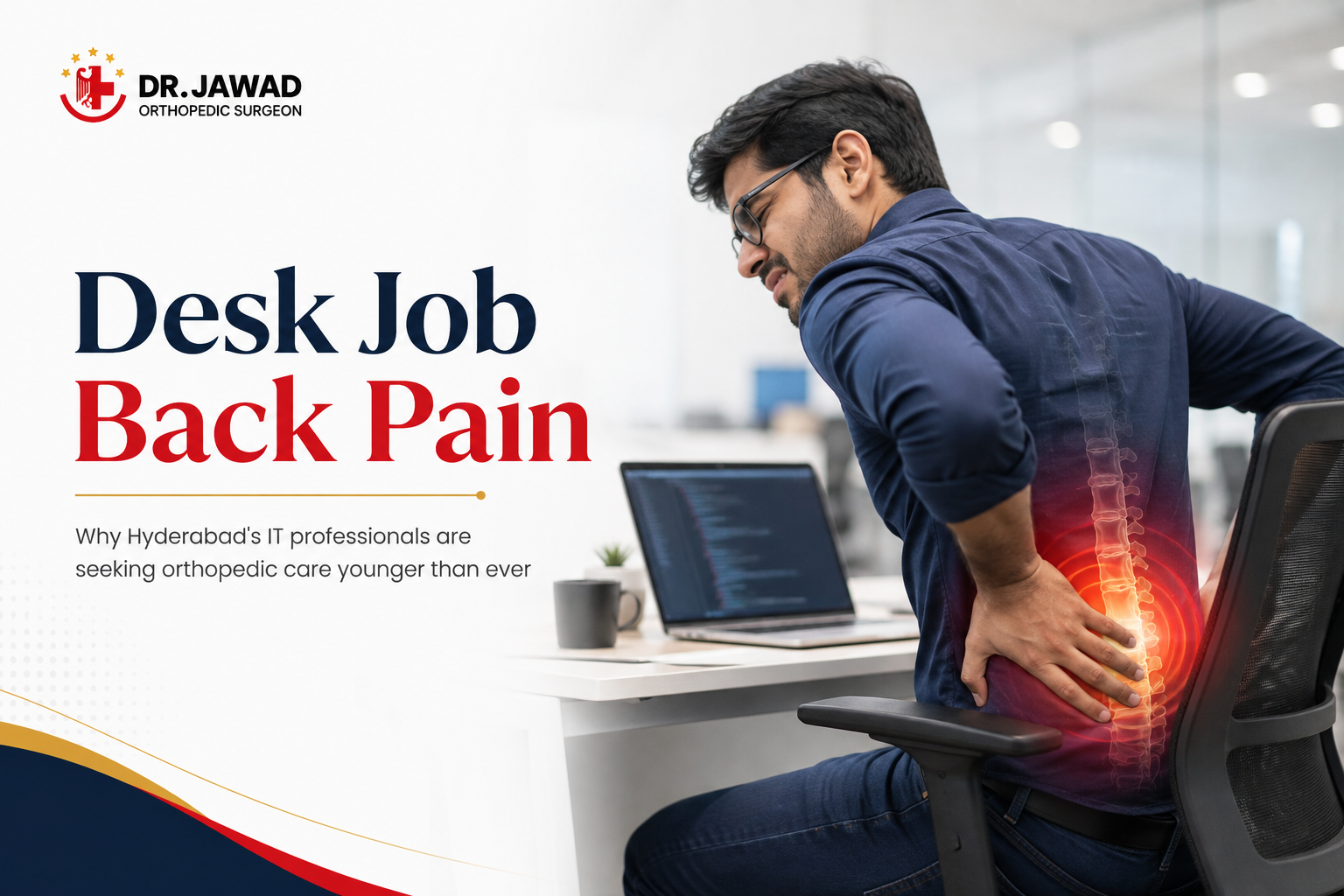
Look around any street, office or train and you will see the same posture, heads bent forward, eyes down on a phone. That everyday habit now has a name in orthopedic clinics: text neck. When you tilt your head forward to look at a screen, the strain on your neck multiplies, and over months and years that constant load causes pain, stiffness and early wear in the cervical spine. Text neck is affecting people younger than ever, and in a screen-heavy world it has become one of the most common reasons for neck pain. The good news is that it is both preventable and fixable.
This guide, from the team of Dr. Mir Jawad Zar Khan, a spine and orthopedic specialist with over 26 years of experience, explains what text neck is, the warning signs, and the simple changes that protect your neck. Whether you are in Hyderabad or anywhere in India, here is how to undo the damage your phone is doing.
Constant neck pain from screens? Do not let it become permanent. Book a consultation with Dr. Jawad. Call 9989635555.
What Is Text Neck?
Text neck, sometimes called tech neck, is the strain and damage caused by holding your head bent forward to look at a phone, tablet or laptop for long periods. Your head is heavy, and the further forward it tilts, the more force the muscles, ligaments and discs of the neck must bear. Held for hours every day, this overloads the cervical spine, leading to pain, muscle fatigue and, over time, accelerated wear of the discs and joints. It is essentially a modern posture problem with very real physical consequences.
The Warning Signs of Text Neck
How to Fix and Prevent Text Neck
The core principle is simple: bring the screen up to your eyes instead of bending your neck down to the screen. These changes make a real difference.
When Text Neck Needs a Doctor
Mild neck ache that eases with rest and better posture can be managed at home. You should see a specialist if the pain is persistent, if it keeps coming back, if your neck is stiff enough to limit daily life, or if you have tingling, numbness or weakness travelling into the arm, which can mean a nerve is being pinched. Early treatment prevents a posture habit from becoming lasting cervical spine damage. Our neck pain treatment in Hyderabad page explains the non surgical options, and the full range of spine care is on our spine surgical treatment in Hyderabad page.
Protect your neck from your screens. Book an assessment with Dr. Jawad at Germanten Hospitals, Attapur, Hyderabad today.
Frequently Asked Questions
What is text neck?
Text neck is the strain and damage caused by holding your head bent forward to look at a phone, tablet or laptop for long periods, which overloads the neck and leads to pain, stiffness and early wear of the cervical spine.
Can text neck be fixed?
Yes. Raising your screen to eye level, taking regular breaks, strengthening the neck and upper back, and correcting posture reverse most text neck. Early treatment prevents lasting damage.
What are the symptoms of text neck?
Persistent neck pain and stiffness, shoulder and upper-back tension, headaches, reduced neck movement, and in advanced cases tingling or numbness travelling into the arm.
Is text neck permanent?
Caught early, no. With posture changes and exercise most people recover fully. Ignored for years, the constant strain can cause lasting wear of the discs and joints, which is why early action matters.
When should I see a doctor for phone-related neck pain?
See a specialist if the pain is persistent or recurring, if your neck is stiff enough to limit daily life, or if you have tingling, numbness or weakness going into the arm.


DR. MIR JAWAD ZAR KHAN
MBBS, MS - Orthopedic, M.CH-(Ortho) Joint Replacement Surgeon
As the visionary Chairman and Managing Director of Germanten Hospitals, Hyderabad, Dr. Mir Jawad Zar Khan brings over two decades of surgical leadership to the field. He is dedicated to transforming lives through evidence-based treatments, advanced robotic technology, and a commitment to patient quality of life.