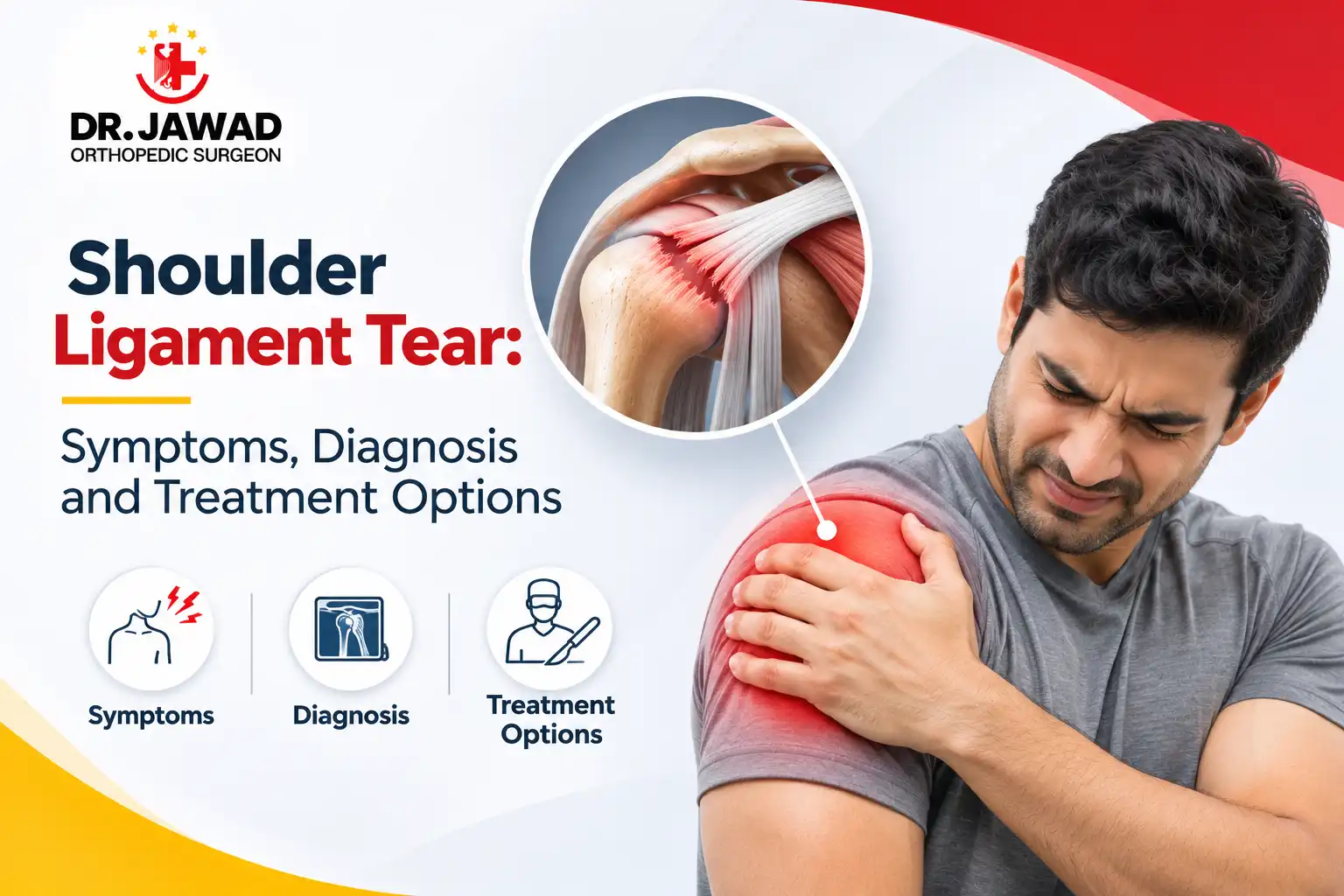
Image Disclaimer: AI-generated illustration for educational purposes.

Medically Reviewed by
DR. MIR JAWAD ZAR KHANMBBS, MS - Orthopedic
M.CH-(Ortho) Joint
Replacement surgeon
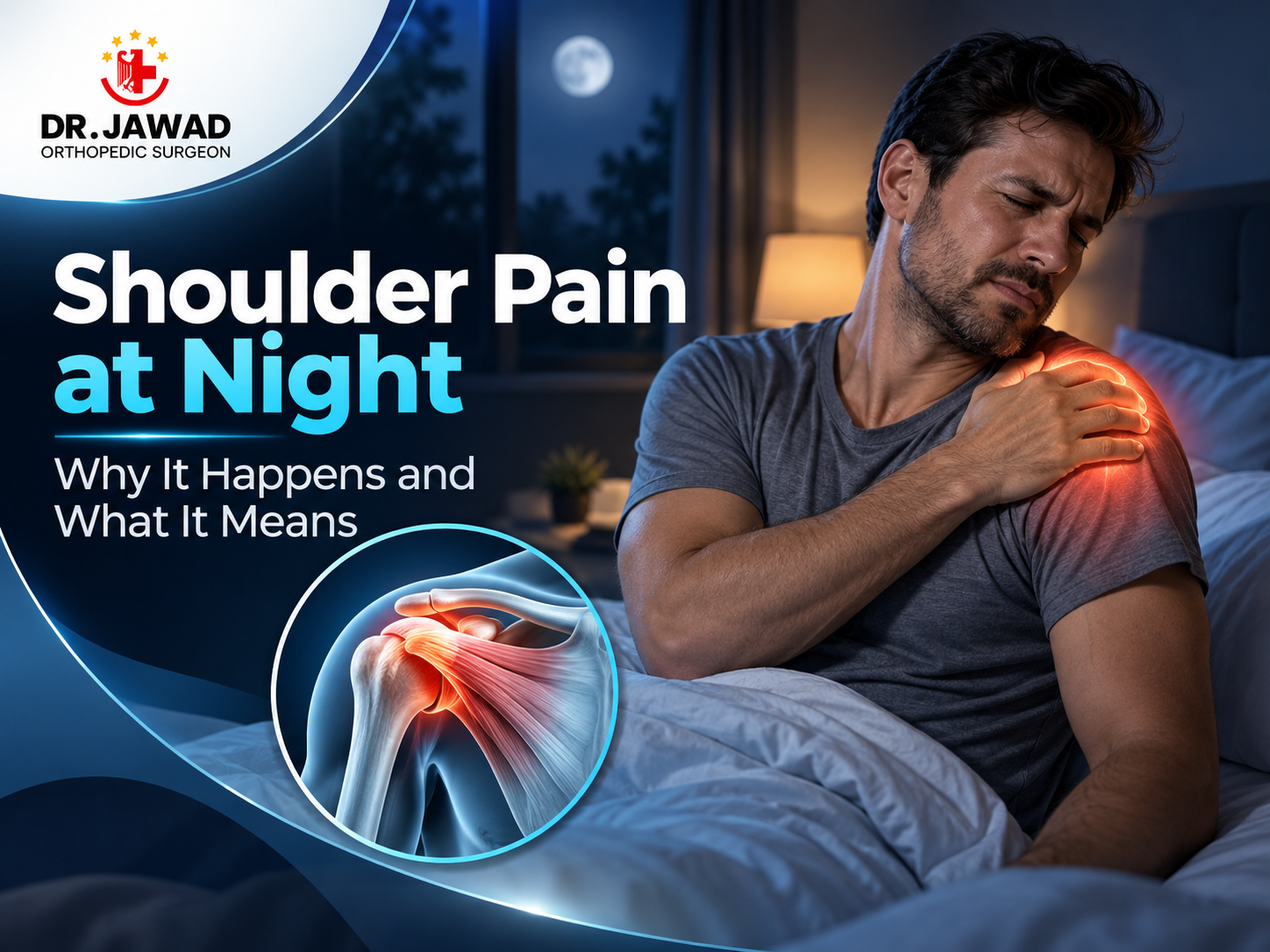
A fall onto the point of your shoulder can leave it painful, swollen and difficult to lift. If there is a bump near the end of your collarbone, you may wonder whether a shoulder ligament tear has occurred and whether it needs surgery. The answer depends on which part of the shoulder was injured, how stable it is and what you need your arm to do.
“Shoulder ligament rupture” is a broad search term, not a single diagnosis. It often refers to an injury of the small joint at the top of the shoulder. Ligaments may also be damaged when the main ball-and-socket joint dislocates. This guide explains the difference, what symptoms deserve urgent assessment, and how clinicians choose between rehabilitation and an operation.
What is a shoulder ligament tear?
Ligaments are strong bands of tissue that connect bones and help keep joints stable. At the top of the shoulder, the acromioclavicular or AC joint joins the collarbone to the shoulder blade. The acromioclavicular and coracoclavicular ligaments help support this joint. A direct fall or blow can stretch or tear them. You may hear this called an AC joint injury or shoulder separation.
The main shoulder joint is different: it is the ball and socket where the upper arm meets the shoulder blade. When that joint slips partly or fully out of place, its capsule, ligaments and the cartilage rim called the labrum may be damaged. A shoulder separation and a shoulder dislocation therefore need different assessments and may have different treatment plans.
A rotator cuff tear is different again. The rotator cuff consists mainly of muscles and their tendons, which connect muscle to bone. People understandably call many shoulder injuries a “ligament tear,” but pain alone cannot tell you which tissue has been injured.
How does a shoulder ligament injury happen?
An AC joint injury often follows a fall directly onto the outside of the shoulder during sport, cycling or an everyday accident. A collision can have the same effect. The force can produce anything from a mild sprain to a more complete disruption of the supporting ligaments. With a more displaced injury, the end of the collarbone may look more prominent.
A dislocation of the ball-and-socket joint may follow a fall or sports injury too. The arm bone comes out of the socket, sometimes damaging the tissues that help hold it there. Repeated episodes of the shoulder slipping or “giving way” can be a clue to instability after an earlier injury.
The way the injury happened matters, but it cannot confirm the diagnosis. A broken collarbone, tendon injury or dislocation can cause similar pain after a fall.
No. Ligaments connect bones and help stabilise a joint. Rotator cuff tendons connect muscle to bone and help move and support the shoulder. An examination identifies which structure may be injured.
Pain at the very top of the shoulder after a direct fall can point towards the AC joint. Pain with lifting, weakness or night discomfort may raise other possibilities, including a rotator cuff problem. The two can occasionally coexist, so an assessment should follow your symptoms rather than a label you found online. If a tendon injury is suspected, ask about rotator cuff tear treatment in Hyderabad after the diagnosis is clear.
What symptoms suggest a torn shoulder ligament?
An AC joint injury often causes tenderness and swelling at the top of the shoulder, where the collarbone meets the shoulder blade. You may notice bruising, pain when lifting the arm or reaching across your body, and difficulty carrying objects. A visible bump can appear over the joint when the bones are displaced. Its presence does not, by itself, tell you whether surgery is needed.
If the main shoulder joint has dislocated, the shoulder may look out of place and arm movement may be very difficult. Some people later describe a feeling that the shoulder might slip out again, especially in certain arm positions. Numbness, persistent tingling or weakness needs prompt medical attention because nerves or blood vessels may also be affected.
Keep track of what changed after the injury. Did the shoulder visibly move out of place? Can you use the hand and elbow? Is the pain improving or getting worse? These details help distinguish an uncomplicated sprain from an injury needing faster care.
No. A bump can remain after an AC joint separation even when pain and function improve without an operation. Treatment depends on the injury, your symptoms and your day-to-day needs.
The appearance of the joint is only one part of the decision. Someone may have a noticeable bump but regain comfortable movement, while another person may have ongoing pain, weakness or difficulty with overhead work. An orthopaedic assessment can relate the X-ray and examination to what the shoulder actually allows you to do.
When should you seek urgent medical care?
Get urgent medical assessment after a shoulder injury if the joint looks out of place, the arm or shoulder has changed shape, you cannot move the arm, or pain and swelling are severe. A shoulder that may be dislocated should be assessed promptly; do not try to push it back into place yourself.
Seek immediate help if the hand becomes cold or numb, you develop marked weakness, or tingling does not settle. Severe shoulder pain with fever or feeling unwell also needs prompt evaluation. After a major accident, chest pain or breathing difficulty is an emergency.
While waiting for care, support the arm comfortably and avoid movements that sharply increase pain. A wrapped cold pack may ease discomfort; do not place ice directly on the skin. These measures do not replace assessment when there is a possible fracture, dislocation or circulation problem.
How is a shoulder ligament tear diagnosed?
The clinician will ask how the injury happened, where the pain is strongest, whether the shoulder looked out of place and whether you have had similar episodes. They will examine the top of the shoulder and collarbone, check movement as tolerated, and assess strength, feeling and circulation in the arm and hand.
An X-ray can help check for a fracture, dislocation or displacement at the AC joint. A mild ligament sprain may have little or no obvious change on an X-ray, so a normal-looking image does not replace a physical examination. If symptoms suggest another injured structure or the result would change treatment, a specialist may consider further imaging such as MRI or ultrasound.
The question is which joint and tissues are involved, whether the shoulder is stable, and what treatment will restore useful function. If the shoulder repeatedly slips after a dislocation, assessment may focus on the labrum and stabilising tissues of the ball-and-socket joint. In that situation, shoulder dislocation and labral tear treatment in Hyderabad is more relevant than treatment for an isolated AC joint sprain.
No. The injury history, examination and, when appropriate, an X-ray often guide initial care. MRI is considered when suspected soft-tissue damage or persistent symptoms could change the plan.
An MRI can provide useful detail about certain ligaments, the labrum and other soft tissues, but a scan is not automatically the first or only step. If your clinician recommends imaging, ask which question the test is meant to answer and how the result might affect your treatment.
How is a shoulder ligament tear treated without surgery?
Many AC joint injuries improve without an operation. Early care may include a sling for comfort for a short period, a wrapped cold pack, appropriate pain relief and temporary changes to lifting or sport. Use medicines only as directed and check with a clinician or pharmacist if you have other medical conditions, take regular medicines, or are unsure what is safe for you.
As pain settles, your treating clinician or physiotherapist can guide a gradual return to shoulder movement. Keeping the elbow, wrist and hand moving is often useful while the shoulder is protected. Later rehabilitation may focus on comfortable range of motion, shoulder blade control and strength. The plan should progress according to your injury and symptoms rather than a fixed online exercise timetable.
Avoid forcing painful stretches or returning straight to heavy lifting and contact sport. Feeling better after a few days does not mean the injured tissue is ready for every load. The aim is to recover movement and confidence while allowing the shoulder time to heal. A follow-up is sensible if pain is worsening, movement is not returning or the shoulder still feels unstable.
Yes. Some people with a more substantial AC joint injury regain good function through protection and rehabilitation. The decision depends on displacement, pain, stability and activity needs.
“Complete tear” does not answer the whole treatment question. An injury at the AC joint is different from repeated instability of the ball-and-socket shoulder. Some people recover useful function without repairing every torn fibre, while others continue to struggle with work, sport or daily tasks. Review the specific injury and expected outcomes with an orthopaedic specialist.
When is surgery considered?
Surgery may be discussed for selected severe AC joint injuries or for ongoing pain and loss of function after an appropriate period of non-surgical treatment. The aim of an AC joint stabilisation procedure is to improve the position and stability of the collarbone and shoulder blade. Your surgeon should explain the likely benefit, recovery period and risks in relation to your work, sport and preferences.
If the ball-and-socket joint repeatedly dislocates or remains unstable after injury, treatment may instead involve repairing damaged stabilising tissues, sometimes with an arthroscopic procedure. This is a different operation for a different problem. Not every first dislocation requires surgery, and a decision should follow a careful assessment of the injury and the risk of recurrence.
If an operation is proposed, ask what specific structure would be repaired, what improvement is realistic, how long rehabilitation may take and what could happen with continued non-surgical care. Arthroscopy and sports injury treatment in Hyderabad may be relevant for some unstable shoulders, but the appropriate procedure depends on the diagnosis.
When should you consult a shoulder specialist?
Arrange a specialist review if pain is not improving, a prominent bump or weakness limits your activities, you cannot return to work or sport, or the shoulder feels as though it may slip again. Seek earlier advice after a significant fall, a suspected dislocation or persistent numbness. Bring any X-rays or reports you already have, and describe the movements you cannot perform.
For a clear diagnosis and treatment plan, you can seek shoulder pain treatment in Hyderabad with Dr. Mir Jawad Zar Khan’s team at Germanten Hospitals, Attapur. A consultation should explain whether the problem involves the AC joint, the main shoulder joint, a tendon or another structure, and what recovery may involve.
Conclusion
A shoulder ligament tear can range from a mild AC joint sprain to a more complex injury involving shoulder instability. The first priority is to identify the injured structure and rule out a fracture or dislocation. Many AC joint injuries improve with protection, guided movement and rehabilitation; surgery is considered for selected injuries or persistent functional problems.
If pain or instability is limiting your daily life, consult Dr. Mir Jawad Zar Khan for an individual assessment. If the shoulder looks out of place, you cannot move your arm, or your hand is cold or numb, seek urgent medical care first.
Experiencing shoulder pain, swelling or instability after an injury? Consult Dr. Mir Jawad Zar Khan’s team at Germanten Hospitals, Attapur, Hyderabad, for an orthopaedic assessment and an individual treatment plan.
Call 9989635555Frequently Asked Questions
Is a shoulder ligament tear the same as a shoulder dislocation?
No. A ligament tear describes damaged supporting tissue. A dislocation means the upper arm bone has come out of the shoulder socket. A dislocation can also injure ligaments or the labrum and needs prompt medical assessment.
Can a shoulder ligament tear heal without surgery?
Yes. Many AC joint injuries recover useful movement and function with a sling for comfort, pain control and guided rehabilitation. More severe or persistently unstable injuries need an individual specialist assessment.
How long does recovery from an AC joint ligament injury take?
Recovery varies with injury severity and daily demands. Pain may settle over several weeks, while strength and confidence can take longer. Your clinician can advise when lifting, work and sport are appropriate for your injury.
When should I consult Dr. Mir Jawad Zar Khan for a shoulder ligament injury?
Consult Dr. Mir Jawad Zar Khan if shoulder pain persists after an injury, a bump or weakness limits your activities, or the joint feels unstable. Seek urgent care first if the shoulder is out of place or your hand is cold or numb.
Can Dr. Mir Jawad Zar Khan assess whether shoulder ligament surgery is needed?
Yes. Dr. Mir Jawad Zar Khan can assess your symptoms, examine the shoulder and review appropriate imaging to discuss rehabilitation and surgical options. The decision depends on the specific injury, function and treatment goals.
Medical References
- NHS: Shoulder pain
- NHS: Dislocated shoulder
- MedlinePlus, US National Library of Medicine: Shoulder separation aftercare
- Sherwood Forest Hospitals NHS Foundation Trust: Acromioclavicular joint injury
- Gloucestershire Hospitals NHS Foundation Trust: Fractured clavicle and AC joint injuries
- University Hospital Southampton NHS Foundation Trust: Anterior stabilisation of the shoulder
Medical Note: This article is for general educational purposes only and does not replace professional medical advice. Consult a qualified healthcare professional for personalised guidance.

DR. MIR JAWAD ZAR KHAN
MBBS, MS - Orthopedic, M.CH-(Ortho) Joint Replacement Surgeon
As the visionary Chairman and Managing Director of Germanten Hospitals, Hyderabad, Dr. Mir Jawad Zar Khan brings over two decades of surgical leadership to the field. He is dedicated to transforming lives through evidence-based treatments, advanced robotic technology, and a commitment to patient quality of life.