
Medically Reviewed by
DR. MIR JAWAD ZAR KHANMBBS, MS - Orthopedic
M.CH-(Ortho) Joint
Replacement surgeon
Sciatica or Slip Disc? How to Tell What Is Really Causing Your Back and Leg Pain
Back pain that shoots down into the leg is one of the most common reasons people visit a spine specialist, and it comes wrapped in confusing terms. Two of the most common are sciatica and slip disc. Patients often use them as if they mean the same thing, or worry they have both. Understanding the difference matters, because it shapes how the problem is treated. The short version is that a slip disc is frequently the cause, and sciatica is frequently the symptom that results. This guide explains what each term actually means and how to tell what is going on with your own back and leg pain.
What Is a Slip Disc?
Between each pair of bones in your spine sits a soft, cushion like disc that acts as a shock absorber. A slip disc, more accurately called a herniated or prolapsed disc, happens when the soft inner part of one of these discs pushes out through a weak spot in its tougher outer layer.
The disc does not literally slip out of place. What causes trouble is that the bulging material can press on nearby spinal nerves. A slip disc can occur anywhere along the spine, but it is most common in the lower back, which is why it so often produces pain that travels into the legs.
What Is Sciatica?
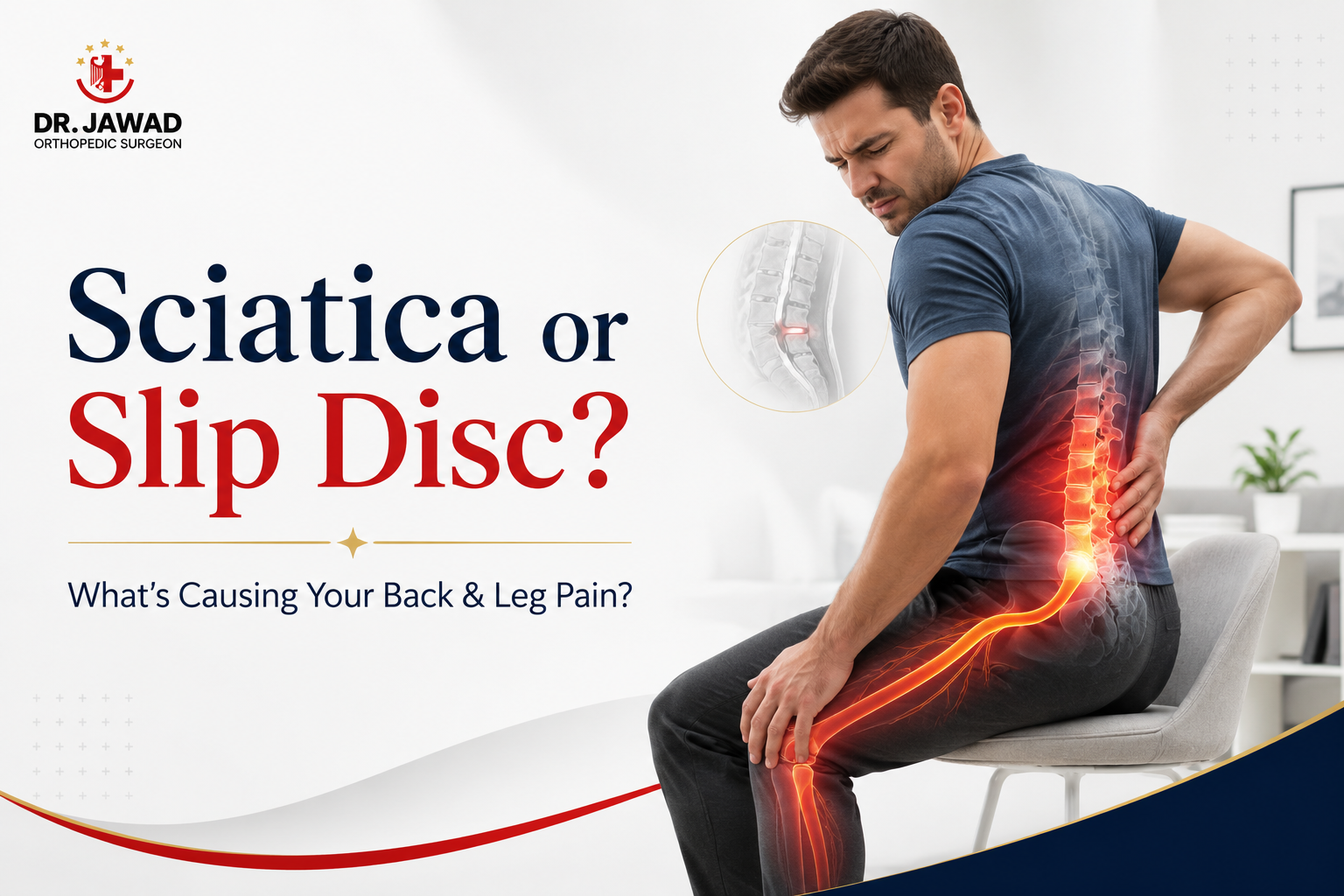
Sciatica is not a disease in itself. It is the name for a specific pattern of pain that runs along the path of the sciatic nerve, the longest nerve in the body, which starts in the lower back and runs down through the buttock and the back of each leg.
When something presses on or irritates this nerve, you feel pain, and often tingling or numbness, travelling from the lower back or buttock down the leg, sometimes as far as the foot. Sciatica is usually felt on one side of the body. The key point is that sciatica describes the symptom. The thing pressing on the nerve is the underlying cause, and very often that cause is a slip disc in the lower back.
Sciatica or Slip Disc? The Key Difference
Here is the relationship in simple terms. A slip disc is a structural problem, an actual physical change in the spine. Sciatica is a symptom, a type of nerve pain that a slip disc can produce.
So the two are not competing diagnoses. A person can have a slip disc that presses on the sciatic nerve and gives them sciatica. But not all sciatica comes from a slip disc, and not every slip disc causes sciatica.
When it is more likely a slip disc causing sciatica Pain that started after lifting something heavy, bending awkwardly or a sudden strain, that is worse when you sit, cough or sneeze, and that travels in a clear line down one leg, often points to a herniated disc pressing on the nerve.
When sciatica has another cause The sciatic nerve can also be irritated by age related narrowing of the spinal canal, by muscle tightness in the buttock, by spinal arthritis or, less commonly, by other conditions. This is why a proper diagnosis matters rather than self labelling the pain.
Common Symptoms to Watch For
Whether the root cause is a slip disc or something else, these are the symptoms that indicate nerve involvement in the lower back.
- Pain that radiates from the lower back or buttock down one leg
- Tingling, a pins and needles sensation, or numbness in the leg or foot
- Pain that sharpens when you sit for long periods, cough or sneeze
- Weakness in the leg or foot, or a feeling that the leg is heavy
- Pain that is usually on one side rather than both
One set of symptoms needs urgent attention. If you ever lose control of your bladder or bowels, or develop numbness around the groin and inner thighs alongside back and leg pain, treat it as an emergency and get to a hospital immediately. This is rare, but it signals serious nerve compression that must be relieved quickly.
How Slip Disc and Sciatica Are Treated
There is good news for anyone worried that back and leg pain automatically means surgery. The large majority of slip disc and sciatica cases improve with non surgical treatment.
Non surgical treatment first Most patients recover with a combination of rest in the early phase, physiotherapy, targeted exercises to strengthen and support the spine, posture correction, and medication to control pain and inflammation. Non surgical spine treatments can relieve nerve pressure and pain for many patients without an operation.
When surgery is considered Surgery is reserved for the smaller number of cases where pain is severe and persistent despite months of conservative treatment, where there is significant weakness, or where nerve compression is serious. Modern spine surgery is often minimally invasive, with smaller incisions and quicker recovery than in the past.
When to See a Spine Specialist
See an orthopedic or spine specialist if back and leg pain lasts more than a week or two, if it is severe, if it comes with numbness or weakness, or if it keeps returning. Early evaluation, usually including a clinical examination and imaging such as an MRI, identifies exactly what is pressing on the nerve and allows treatment to start while it is still simple.
Trying to push through radiating leg pain, or masking it with painkillers for months, tends to make recovery slower. A clear diagnosis is the fastest route back to a normal, active life.
What Increases Your Risk of a Slip Disc
Some people are more prone to disc problems than others. Knowing the risk factors helps you protect your spine.
- Age and disc wear As we age, the spinal discs lose some of their water content and flexibility, which makes them more prone to tearing or bulging even with minor strain. This natural change is why disc problems become more common through middle age.
- Heavy lifting and poor technique Lifting heavy objects using the back rather than the legs, or twisting while lifting, puts sudden high pressure on the discs. This is one of the most common triggers for an acute slip disc.
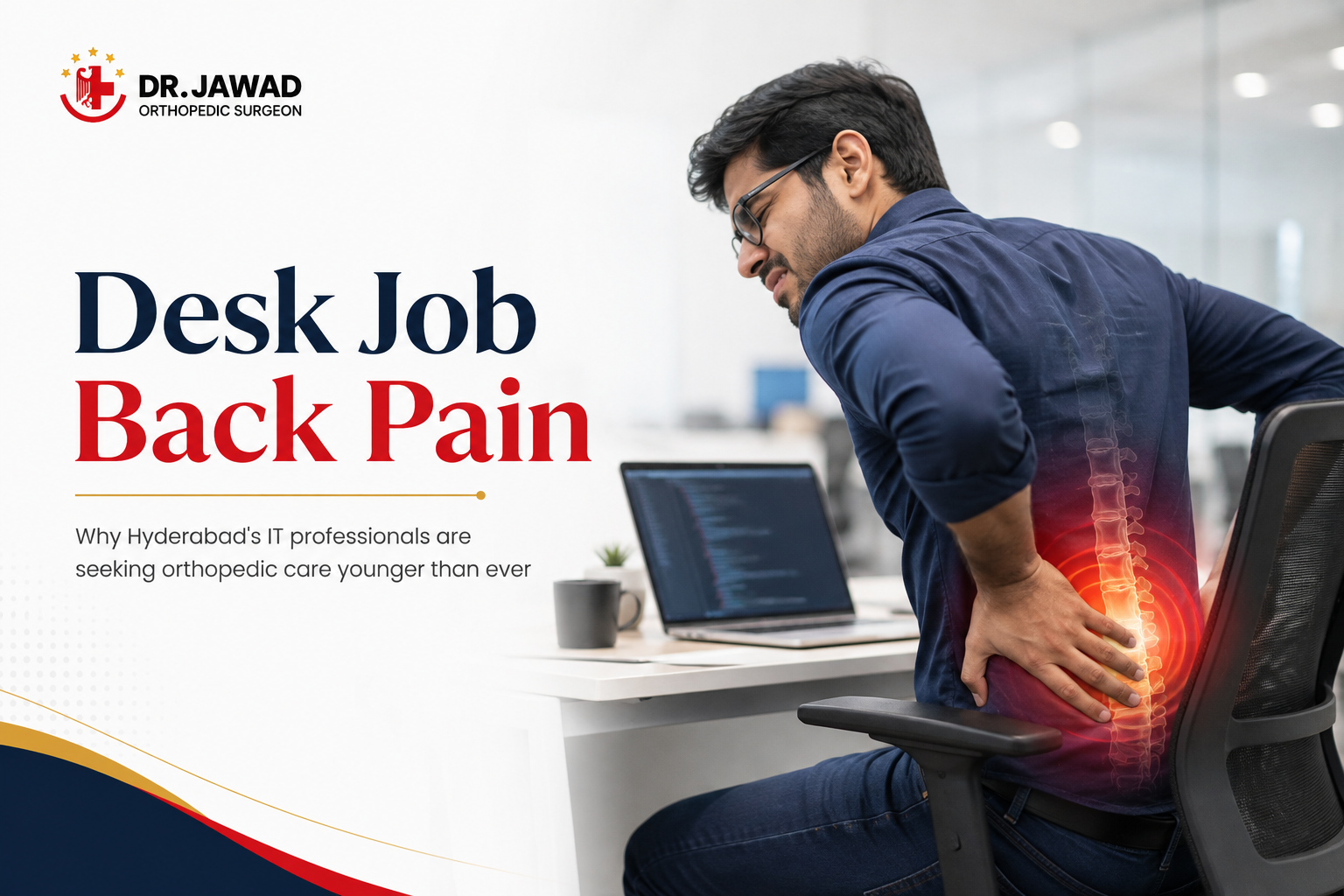
- Prolonged sitting and sedentary work Long hours of sitting, especially with poor posture, load the lower spine continuously and are a recognized contributor to disc problems, which is part of why they are increasingly common among desk based workers.
- Excess body weight Carrying extra weight, particularly around the middle, adds constant load to the lower spine and its discs, raising the risk over time.
What to Expect at Your Consultation
If you see a specialist for back and leg pain, the visit usually begins with questions about how and when the pain started, where it travels and what makes it better or worse. A physical examination then checks your movement, reflexes, strength and sensation to gauge whether a nerve is affected and, if so, roughly where. Based on this, the specialist decides whether imaging such as an MRI is needed. Most patients leave with a clear explanation of what is causing their pain and a treatment plan that starts conservatively. Understanding the diagnosis is reassuring in itself, because radiating leg pain is far less frightening once you know what is behind it and that it usually improves.
Conclusion
Sciatica and slip disc are related but not the same. A slip disc is a physical change in the spine, while sciatica is the nerve pain that a slip disc, among other causes, can produce. Knowing the difference helps you understand your own symptoms, but the real answer comes from a proper diagnosis. Most cases improve without surgery when treated early, so persistent or radiating back and leg pain is worth having assessed rather than endured.
If back pain is travelling down your leg, do not wait for it to worsen. Dr. Jawad at Germanten Hospitals, Attapur, provides expert diagnosis and mostly non surgical treatment for slip disc and sciatica. Call 9989635555 to book a consultation.

DR. MIR JAWAD ZAR KHAN
MBBS, MS - Orthopedic, M.CH-(Ortho) Joint Replacement Surgeon
As the visionary Chairman and Managing Director of Germanten Hospitals, Hyderabad, Dr. Mir Jawad Zar Khan brings over two decades of surgical leadership to the field. He is dedicated to transforming lives through evidence-based treatments, advanced robotic technology, and a commitment to patient quality of life.