Medically Reviewed by
DR. MIR JAWAD ZAR KHANMBBS, MS - Orthopedic
M.CH-(Ortho) Joint
Replacement surgeon
Osteoporosis in Women After 40: The Silent Bone Loss Most People Ignore Until a Fracture
Osteoporosis is often called a silent disease, and for good reason. It weakens the bones gradually, over years, without any pain or obvious symptoms, and many people only discover they have it when a minor fall or even a simple movement causes a fracture. For women, the risk rises sharply after 40 and especially around menopause. The reassuring part is that osteoporosis is largely preventable and manageable when it is caught early. This guide explains why women are more vulnerable, what the warning signs are, and the practical steps that protect bone health before a fracture ever happens.
What Is Osteoporosis?
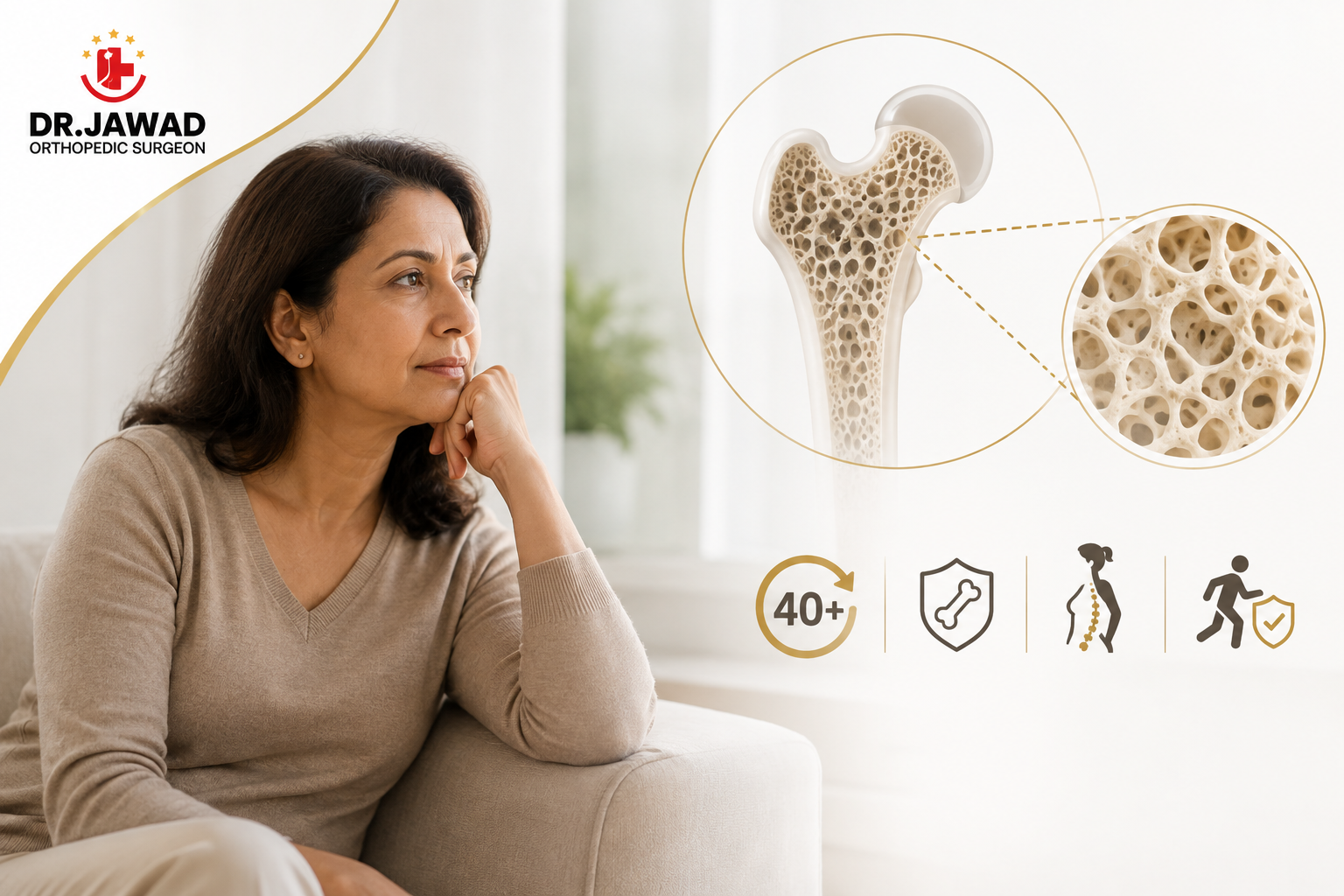
Bone is living tissue that is constantly being broken down and rebuilt throughout life. Up to a certain age, the body builds bone faster than it loses it. As we grow older, that balance shifts, and bone is lost faster than it is replaced. Osteoporosis is the condition where bones become weak, thin and porous, losing the density that keeps them strong.
Weakened bones fracture far more easily. In advanced osteoporosis, a break can happen from something as ordinary as a minor stumble, a gentle knock, or bending to lift a light object. The hip, spine and wrist are the most commonly affected.
Why Women After 40 Are More at Risk
Women are affected by osteoporosis more than men, and the reasons are largely biological.
The role of menopause
Estrogen, a hormone that helps protect bone, falls significantly during and after menopause. This drop accelerates bone loss, which is why the years around menopause are a critical window for bone health. Women can lose bone density relatively quickly during this period.
Lower peak bone mass
Women generally reach a lower maximum bone density than men to begin with, so there is less reserve to draw on as natural loss sets in with age.
Lifestyle and nutrition factors
Long term low intake of calcium and vitamin D, limited exposure to sunlight, a sedentary routine, smoking and excessive alcohol all speed up bone loss. Many of these are common and, importantly, modifiable.
The Silent Warning Signs
The difficulty with osteoporosis is that early bone loss produces no symptoms at all. By the time signs appear, the disease is often already advanced. Still, there are clues worth noticing.
- A gradual loss of height over the years
- A stooped or hunched posture developing over time
- Back pain that can be caused by a weakened or collapsed spinal bone
- Bones that fracture much more easily than expected, from minor falls or knocks
- A receding gum line or weakening grip strength, which some studies link to bone health
Because the early stage is silent, waiting for symptoms is not a good strategy. This is exactly why a simple bone density test is so valuable, particularly for women around and after menopause. It can detect thinning bone long before a fracture and give you time to act.
How to Protect Your Bones
Bone health responds well to consistent, sensible habits, and it is never too early or too late to start.
Get enough calcium and vitamin D
Calcium is the raw material of bone, and vitamin D helps the body absorb it. A balanced diet with good sources of both, along with sensible sun exposure, supports bone strength. A specialist can advise whether supplements are appropriate for you rather than self prescribing.
Do weight bearing exercise
Bones get stronger when they are used. Weight bearing activities such as walking, along with simple strength exercises, signal the body to maintain bone density. Regular movement also improves balance, which reduces the risk of falls.
Avoid smoking and limit alcohol
Both accelerate bone loss. Cutting these out is one of the most direct ways to protect your skeleton.
Consider a bone density test
For women after menopause, or anyone with risk factors such as a family history of osteoporosis or an early menopause, a bone density scan is a simple, painless way to know exactly where your bone health stands and whether any action is needed.
When to See a Specialist
It is worth speaking to an orthopedic specialist if you are a woman past menopause, if you have a family history of osteoporosis or fractures, if you have already broken a bone from a minor fall, or if you are noticing height loss or a changing posture. A specialist can arrange the right tests, interpret them properly and put together a plan suited to you.
Osteoporosis is not an inevitable part of ageing to be quietly accepted. It is a condition that can be measured, monitored and managed, and the earlier that starts, the more effective it is at keeping you strong and independent.
The Link Between Osteoporosis and Fractures
The reason osteoporosis matters so much is the fractures it leads to. Weakened bones break more easily, and in older adults a hip fracture in particular can be a serious, life changing event that affects independence and overall health.
Spinal fractures are also common and can happen quietly, sometimes with little more than back pain or a gradual stooping of the posture. Because these fractures can occur from minor stress, preventing bone loss in the first place is far better than treating a break after it happens. This is the whole argument for taking bone health seriously before symptoms appear.
Osteoporosis Is Not Only a Women's Concern
While women are at higher risk, particularly after menopause, osteoporosis affects men too, especially with advancing age. Men tend to be diagnosed later because the condition is often thought of as a women's disease, which means warning signs can be missed.
Anyone with risk factors such as long term steroid use, a family history of osteoporosis, low body weight, smoking or heavy alcohol use should be aware of their bone health regardless of gender. Bone density testing is available and straightforward for anyone whose history suggests they may be at risk.
Building Bone Health at Every Age
Bone health is a lifelong project. In younger years, good nutrition and regular weight bearing activity help build a higher peak bone mass, which acts as a reserve for later life. In middle age and beyond, the same habits help slow the natural loss of bone.
It is never too early to start protecting your bones and rarely too late to benefit from better habits. Even people already diagnosed with osteoporosis can slow its progression and reduce fracture risk with the right combination of nutrition, exercise and, where a specialist advises it, medical treatment.
Conclusion
Osteoporosis works quietly, thinning the bones of many women after 40 without any warning until a fracture makes it obvious. The good news is that it is both preventable and manageable when addressed early. Good nutrition, weight bearing exercise, avoiding smoking and heavy drinking, and a simple bone density test where appropriate all help protect bone strength. Rather than waiting for a break to reveal the problem, women approaching and past menopause benefit from taking bone health seriously now.
Concerned about your bone health or a family history of osteoporosis? Dr. Jawad at Germanten Hospitals, Attapur, can assess your risk and guide prevention. Call 9989635555 to book a consultation.


DR. MIR JAWAD ZAR KHAN
MBBS, MS - Orthopedic, M.CH-(Ortho) Joint Replacement Surgeon
As the visionary Chairman and Managing Director of Germanten Hospitals, Hyderabad, Dr. Mir Jawad Zar Khan brings over two decades of surgical leadership to the field. He is dedicated to transforming lives through evidence-based treatments, advanced robotic technology, and a commitment to patient quality of life.