
Medically Reviewed by
DR. MIR JAWAD ZAR KHANMBBS, MS - Orthopedic
M.CH-(Ortho) Joint
Replacement surgeon
Why Does Joint Pain Increase During Monsoon? Tips From an Orthopedic Surgeon in Hyderabad
If your knees start aching the moment the Hyderabad sky turns grey, you are not imagining it. Every monsoon, orthopedic clinics across the city see a steady rise in patients whose joint pain has flared up with the rain. Older family members often say they can feel the weather changing in their bones, and there is real science behind that instinct. This is not a made up complaint or something to simply put up with for four months of the year. Understanding why joints hurt more during the rainy season is the first step toward managing the pain and staying active through it.
Is Monsoon Joint Pain Actually Real?
Yes. The link between damp, rainy weather and aching joints has been observed by patients and doctors for generations, and it holds up in surveys. Indian studies on arthritis patients have repeatedly found that a large majority report worse stiffness and pain during the monsoon months compared with the rest of the year.
What matters is understanding that the rain is not damaging your joints. It is not causing new arthritis or making existing damage permanently worse. Instead, the weather is temporarily changing conditions inside and around the joint in ways that make existing problems more noticeable. Once you know the mechanism, the flare becomes far easier to manage.
Why Joint Pain Gets Worse in the Rainy Season
Several things change when the weather shifts during monsoon, and each one plays a part.
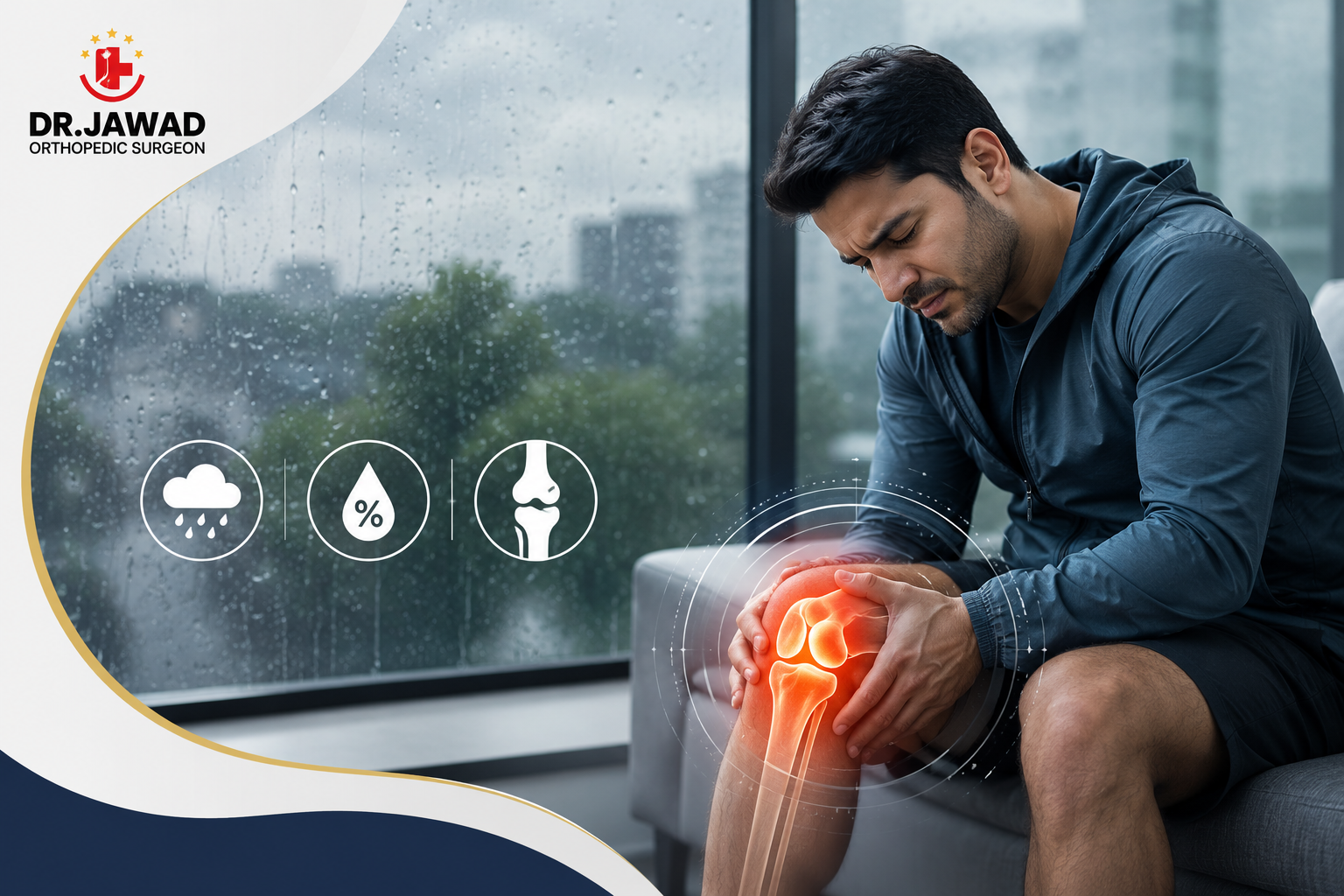
- Falling barometric pressure Barometric pressure is the weight of the air pressing down on us, and it drops just before and during rain. When the outside pressure falls, the tissues around your joints can expand very slightly. In a healthy joint you would never notice this. In a joint already affected by arthritis, that tiny expansion presses on sensitive nerve endings and produces pain and stiffness. Researchers writing in the American Journal of Medicine have documented this relationship between falling pressure and increased osteoarthritis pain.
- Higher humidity and thicker joint fluid Your joints are lubricated by synovial fluid, a natural liquid that lets the bones glide smoothly. Changes in humidity and cooler temperatures can affect the consistency of this fluid, reducing how well it cushions the joint. When the lubricant works less efficiently, movement feels stiffer and more painful, especially in weight bearing joints like the knees and hips.
- Cooler temperature and tighter muscles Monsoon brings a drop in temperature, and cold makes muscles and ligaments contract and tighten. Tight muscles around a joint add stress to it and reduce flexibility, which is why the first movements of the morning can feel especially stiff during the rainy season.
- Less physical activity This is the factor most people overlook. When it is raining, we naturally move less, skip the morning walk and spend more time sitting. Reduced movement makes joints stiffer and muscles weaker, which in turn makes the pain worse. It becomes a cycle, and breaking it is one of the most effective things you can do.
Which Joints Are Affected Most?
The joints that carry the most load and those already dealing with wear tend to complain loudest during monsoon. Knees are the most common, followed by hips, the lower back, shoulders and the small joints of the hands. People with osteoarthritis, rheumatoid arthritis or an old sports or accident injury are the most likely to feel the seasonal difference.
If you have had a previous fracture or a joint surgery, the affected area may also feel more sensitive when the weather changes. This is normal and does not mean anything has gone wrong with the healing.
Practical Tips to Manage Joint Pain During Monsoon
The good news is that monsoon joint pain responds very well to simple, consistent habits. Here is what actually helps.
- Keep moving indoors You do not need a gym. Gentle stretching, walking around the house, climbing your own stairs a few extra times and simple range of motion exercises keep the joints mobile and the muscles engaged. Movement is the single best defence against monsoon stiffness.
- Keep the joints warm Warmth relaxes tight muscles and eases stiffness. Dress in layers, cover vulnerable joints, and use a hot water bag or a warm compress on an aching knee or lower back for short periods. A warm bath in the morning can make the whole day easier.
- Stay hydrated It sounds unrelated, but staying well hydrated helps maintain the quality of your joint fluid. People tend to drink less water in cooler weather, so make a conscious effort.
- Watch your weight Every extra kilo adds load to the knees and hips. Monsoon often means heavier, fried comfort food and less activity, which is a difficult combination for painful joints. Being mindful of diet through the season pays off directly in less knee pain.
- Do not overuse painkillers Reaching for over the counter painkillers every time a joint aches is not a long term solution and can cause other problems. Use them sparingly, and if you find you need them often, that is a sign to see a specialist rather than to keep medicating.
When Monsoon Joint Pain Needs a Specialist
Seasonal stiffness that eases with warmth and movement is usually nothing to worry about. But some symptoms point to a problem that is more than weather related and deserves proper evaluation. See an orthopedic specialist if you notice any of the following.
- Joint pain that lasts more than a week or two even after the weather settles
- Visible swelling, warmth or redness around a joint
- Pain severe enough to disturb your sleep or stop you walking normally
- A joint that feels unstable, locks, or gives way
- Morning stiffness that lasts more than 30 to 45 minutes every day
Pain like this may be a sign of underlying arthritis that has progressed, or of another joint condition that will respond much better to early treatment. Catching it now, rather than waiting for the season to pass, opens up more options and often means simpler, non surgical treatment.
Home Remedies That Genuinely Help
Alongside keeping warm and staying active, a few simple home measures can take the edge off monsoon joint pain. These are not cures, but used consistently they make the season far more comfortable.
- Warm oil massage Gently massaging an aching joint with warm oil improves local blood flow and relaxes the surrounding muscles. It is a long standing home practice in Indian households for good reason, and it works best when the oil is comfortably warm rather than hot.
- Epsom salt soak Soaking sore hands or feet in warm water can ease stiffness. Warmth is doing most of the work here, so keep the water pleasantly warm and the soak short.
- Anti-inflammatory foods A diet that includes turmeric, ginger, leafy greens and other anti-inflammatory foods supports the body against the low grade inflammation that arthritis involves. Monsoon cravings tend to run toward fried snacks, so balancing those with nourishing meals helps more than people expect.
- Gentle indoor stretching routine A short daily routine of slow, controlled stretches keeps the joints supple. The aim is smooth movement through a comfortable range, never forcing a joint into pain.
Common Myths About Monsoon Joint Pain
Seasonal joint pain attracts a lot of well meaning but incorrect advice. A few myths are worth clearing up.
Myth: Getting wet in the rain causes arthritis Getting caught in the rain does not cause arthritis. Arthritis develops from wear and tear, autoimmune processes or injury over time. Cold and damp can make an existing arthritic joint feel worse, but a single soaking will not give you the condition.
Myth: Rest is the best response to a flare Complete rest usually backfires. While a severely inflamed joint may need a short break, prolonged inactivity stiffens joints and weakens muscles, which makes the pain worse. Gentle movement is almost always better than total rest.
Myth: Painkillers are a long term solution Reaching for painkillers month after month masks the problem without addressing it and can cause side effects of its own. Recurring pain that needs constant medication is a reason to see a specialist, not to keep self medicating.
Conclusion
Monsoon joint pain is common, real and, for the most part, manageable. The rain is not harming your joints, it is simply making existing wear more noticeable through changes in pressure, temperature and activity. With warmth, gentle movement, good hydration and sensible weight management, most people can move comfortably through the season. When the pain is persistent, severe or comes with swelling, it is worth having it looked at properly rather than blaming the weather.
If joint pain is affecting your daily life this monsoon, Dr. Jawad and the team at Germanten Hospitals, Attapur, can help you find lasting relief. Call 9989635555 to book a consultation.


DR. MIR JAWAD ZAR KHAN
MBBS, MS - Orthopedic, M.CH-(Ortho) Joint Replacement Surgeon
As the visionary Chairman and Managing Director of Germanten Hospitals, Hyderabad, Dr. Mir Jawad Zar Khan brings over two decades of surgical leadership to the field. He is dedicated to transforming lives through evidence-based treatments, advanced robotic technology, and a commitment to patient quality of life.