Image Disclaimer: * AI-generated illustration for educational purposes.

Medically Reviewed by
DR. MIR JAWAD ZAR KHANMBBS, MS - Orthopedic
M.CH-(Ortho) Joint
Replacement surgeon
It is easy to overlook your fingers until turning a key, holding a cup or fastening a button hurts. Finger joint pain may begin after a fall or a jammed finger, or it may develop gradually with stiffness and swelling. The pattern matters: one painful joint after an injury calls for a different assessment from several joints that feel stiff every morning.
Common causes include osteoarthritis, inflammatory arthritis and injuries. Sometimes pain that seems to come from a joint actually begins in a tendon or nerve. This guide explains the clues worth noticing, what you can do while waiting for an appointment, and the warning signs that need faster medical care. It cannot diagnose the cause from symptoms alone.
Where Is the Pain Coming From?
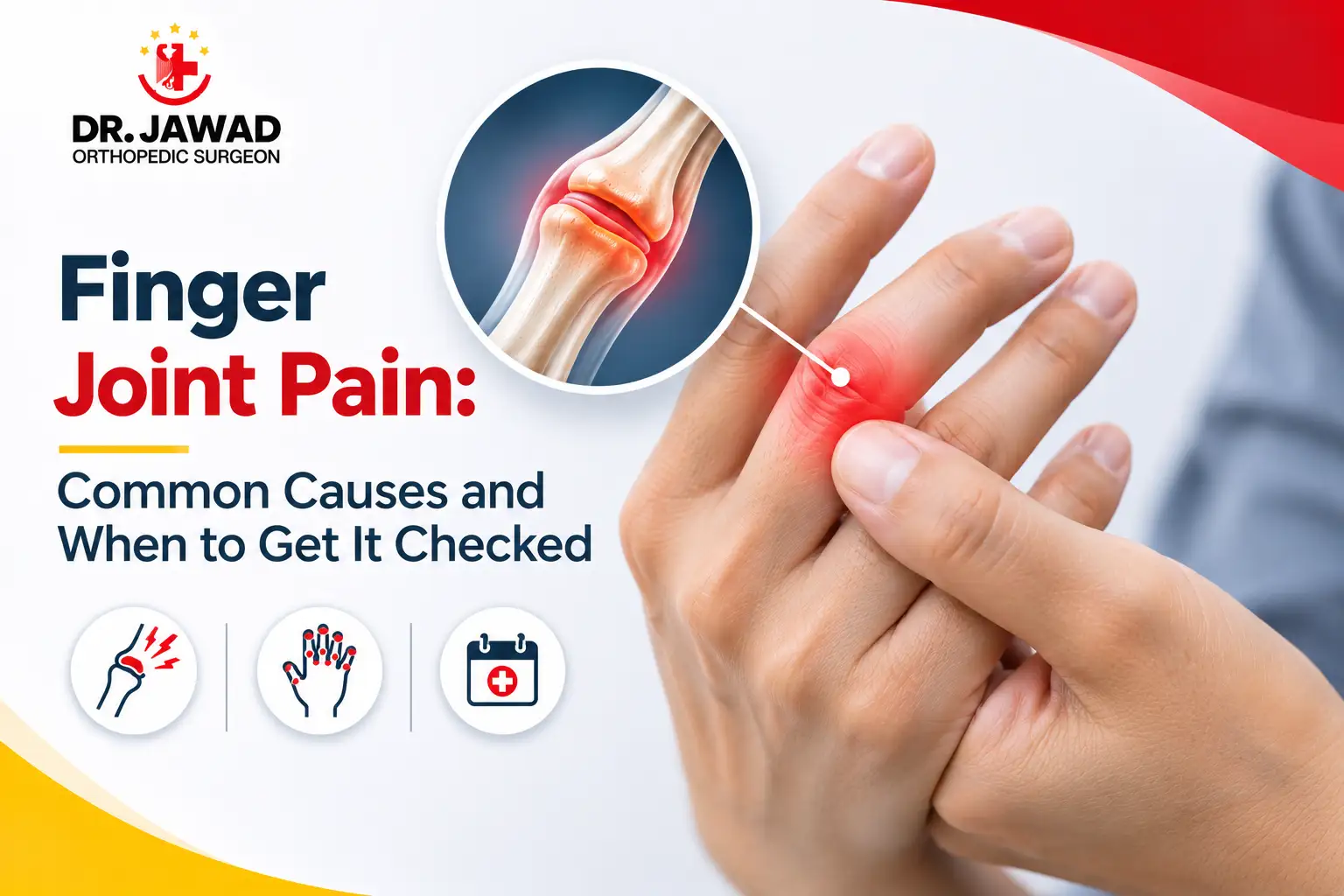
Each finger has joints near its base, middle and tip. The thumb has a joint at its base that is also a common source of hand pain. Your clinician may ask whether the pain is in the large knuckle, a middle joint, the joint closest to the nail or the base of the thumb. Knowing the exact spot can narrow the possibilities, but location alone cannot confirm a diagnosis.
Also notice what the pain feels like. Is the joint tender and swollen, or is there a painful click in the palm when the finger bends? Does the finger feel stiff after rest, or do you have numbness and tingling? Tendons and nerves sit close to the joints, so these details help distinguish joint pain from nearby hand problems.
What Causes Finger Joint Pain?
Osteoarthritis of the Hand
Osteoarthritis can affect the finger joints near the tips and the middle joints, as well as the base of the thumb. It may cause pain, stiffness, swelling or firm bumps around a joint. Opening a jar or gripping a pen can become uncomfortable. Symptoms can come and go and may change with activity. A visible bump does not always mean the joint is severely damaged, and the amount of change on an X-ray does not always match how much pain you feel.
Rheumatoid and Other Inflammatory Arthritis
Rheumatoid arthritis is an inflammatory condition that often affects the small joints of the hands and feet. The joints may feel swollen, warm and stiff, particularly after waking or resting. Symptoms often affect both hands, although this is not a rule. Morning stiffness that lasts longer than about half an hour, especially with persistent swelling in several joints, deserves medical review.
Early assessment matters because inflammatory arthritis needs a different treatment plan from osteoarthritis. If this pattern is suspected, a clinician may arrange tests and recommend specialist care. Patients seeking rheumatoid arthritis treatment in Hyderabad should describe the swelling, morning stiffness and any fatigue, not just the pain score.
Sprains, Fractures and Other Injuries
A finger can be sprained, fractured or dislocated after a fall, sports impact or a door closing on it. Pain that starts suddenly, followed by bruising, swelling, a changed shape or difficulty moving the finger, should be assessed as an injury. A finger that cannot straighten at the tip after an impact may have a tendon injury called mallet finger. Do not assume an injured finger is “only jammed” if you cannot use it normally.
Tendon and Nerve Problems That Feel Similar
Trigger finger can cause pain near the base of a finger, usually on the palm side, with clicking or locking when you bend or straighten it. It involves a tendon rather than the finger joint itself. Nerve problems may cause tingling, numbness or burning sensations in the fingers. A clinician can check whether the pain is coming from a joint, tendon, nerve or a combination of these.
A Sudden Hot, Swollen Joint
A finger joint that becomes suddenly very painful, hot and swollen may have inflammation from a condition such as gout, but infection is also possible. Infection in a joint needs urgent medical assessment and treatment. Do not wait for a routine appointment if the joint is rapidly worsening or you feel feverish or unwell.
What Does the Symptom Pattern Tell You?
The number of joints involved and the timing of symptoms are useful clues. Pain in one finger after a clear injury suggests a different problem from gradually developing stiffness in several joints. Firm bumps near the fingertips can occur with osteoarthritis. Persistent warmth and swelling in several small joints may raise concern for inflammatory arthritis. Clicking or locking, especially with pain in the palm, points towards a tendon problem.
These are patterns rather than rules. Osteoarthritis can affect more than one joint, and rheumatoid arthritis does not always look symmetrical. Pain can also change over time. Write down when symptoms began, which joints are affected, how long morning stiffness lasts and which tasks have become difficult.
Does Pain in Several Finger Joints Always Mean Rheumatoid Arthritis?
No. Osteoarthritis and other conditions can affect several joints too. Persistent swelling, warmth and long morning stiffness make inflammatory arthritis more concerning and deserve assessment.
One symptom cannot reliably separate the types of arthritis. A clinician considers your history, the pattern of affected joints and the examination. If inflammatory arthritis is suspected, early referral can help prevent lasting joint damage. Do not delay an appointment while waiting to see whether a home remedy will settle persistent swelling.
Can a Finger Joint Hurt Without Looking Swollen?
Yes. A joint may be painful before swelling is obvious, and nearby tendons or nerves can feel like joint pain. Persistent symptoms or reduced hand function still deserve a clinical assessment.
Try to identify the point of greatest tenderness without repeatedly pressing on it. Note whether movement, gripping or rest changes the pain. If the finger also catches, locks or becomes numb, tell your clinician; these details may point to a different structure than the joint surface.
When Should Finger Joint Pain Be Checked Urgently?
Seek urgent medical care if a finger becomes very painful, hot and swollen, particularly if the redness or colour change is spreading, you have a fever, or you feel unwell. A joint infection can worsen quickly. A puncture wound or cut near the joint is important to mention, even if it looks small.
After an injury, get prompt assessment if the finger has changed shape or colour, you cannot move it or grip, you have lost feeling, or the pain is severe. A fracture, dislocation, tendon injury or circulation problem may need specific treatment. Remove rings from a swelling finger if you can do so easily; seek help if a ring is becoming tight and cannot be removed.
For symptoms without these warning signs, arrange a routine appointment if pain lasts more than about two weeks despite sensible self-care, keeps returning, interrupts normal tasks or is accompanied by persistent tingling or numbness. New swelling and prolonged morning stiffness in several joints should be assessed earlier because inflammatory arthritis may need specialist treatment.
How Will a Clinician Find the Cause?
Expect questions about the onset, exact joints involved, morning stiffness, injuries, work or hobbies, other medical conditions and any symptoms elsewhere in the body. The clinician may look for swelling or deformity, feel the joints and tendons, check movement and grip, and assess feeling in the fingers. The examination helps decide which tests, if any, would be useful.
An X-ray may be appropriate after an injury or when the clinician needs to assess bone and joint changes. Blood tests may help when inflammatory arthritis is suspected. They can show signs of inflammation or certain antibodies, but no single blood test definitively proves or rules out rheumatoid arthritis. A normal result does not erase a concerning pattern of swollen joints.
If the problem may be a tendon or nerve condition, the assessment and tests may be different. The goal is to understand what is causing the symptoms and how much it affects your hand, rather than ordering every available scan. Bring previous reports if you have them, but explain what you struggle to do as well.
Does Every Person With Painful Finger Joints Need an X-Ray?
No. The history and examination come first. An X-ray may help after an injury or when bone and joint changes would affect treatment, but it is not necessary for every episode of finger pain.
Imaging can be useful, yet a picture does not measure your pain or hand function. A clinician may start with advice and follow-up for a mild, improving problem, while a deformed finger after a fall needs more immediate assessment. Ask what question the test is meant to answer.
What May Help While You Arrange Care?
If the finger was recently injured and there are no urgent signs, reduce the activity that provokes pain, remove rings before swelling increases and use a cold pack wrapped in a towel for short periods. Avoid gripping heavily or forcing a painful joint. Do not try to straighten a visibly deformed finger or treat a suspected fracture yourself.
For ongoing symptoms, gentle movement can help prevent stiffness, but the right exercise and support depend on the diagnosis. A hand therapist may suggest ways to adjust daily tasks, protect a painful joint or use a suitable splint. Pain relief may help some people; ask a pharmacist or clinician what is safe for you, especially if you have other medical conditions or take regular medicines.
Treatment differs by cause. Osteoarthritis care often focuses on symptom relief and hand function. Inflammatory arthritis may require specialist medicines to control the disease. A fracture, tendon injury or infection has a different pathway and may need time-sensitive treatment. If a persistent injury or locking finger is limiting your hand, hand and microvascular surgery services in Hyderabad may be relevant after the cause is confirmed.
When Should You Consult a Hand Specialist?
Arrange an assessment if pain is persistent, grip or finger movement is worsening, a finger keeps locking, or you need help interpreting an X-ray or blood test. A specialist can help distinguish joint disease from a tendon, nerve or injury-related problem and explain the treatment choices.
For hand and wrist pain treatment in Hyderabad , Dr. Mir Jawad Zar Khan’s team can assess your symptoms and guide the next step. Describe the exact joints involved, when stiffness is worst and what you can no longer do comfortably. Seek urgent care first for a hot, very swollen joint or a finger that is deformed after injury.
Conclusion
Finger joint pain has several possible causes, and the pattern often tells you when to seek help. Gradual stiffness may suggest osteoarthritis; persistent swelling and long morning stiffness can raise concern for inflammatory arthritis; sudden pain after a fall needs an injury assessment. Tendon and nerve problems can feel similar.
If symptoms keep returning, limit everyday tasks or are accompanied by swelling, get a clinical assessment rather than guessing from the location of pain. A hot, rapidly worsening joint or a deformed finger needs prompt medical care.
Frequently Asked Questions
Is Finger Joint Pain Always Arthritis?
No. A sprain, fracture, tendon problem, nerve irritation or infection can also cause finger pain. The timing, exact location, swelling, movement and any injury help a clinician identify the cause.
Can Osteoarthritis Cause Bumps on Finger Joints?
Yes. Osteoarthritis can cause firm bumps around the joints near the fingertips or middle of the fingers. The appearance of a bump alone does not show how much pain or loss of function you should expect.
Does Morning Finger Stiffness Mean Rheumatoid Arthritis?
No. Several conditions can cause stiffness. Persistent swelling in multiple joints and morning stiffness lasting longer than about half an hour make inflammatory arthritis more concerning and should be assessed.
When Should I Consult Dr. Mir Jawad Zar Khan for Finger Joint Pain?
Consult Dr. Mir Jawad Zar Khan if finger pain persists, keeps returning, affects grip or daily tasks, or follows an injury. Seek urgent care first for a hot, very swollen joint, fever or a visibly deformed finger.
Can Dr. Mir Jawad Zar Khan Assess Finger Pain That May Be From a Tendon or Nerve?
Yes. Dr. Mir Jawad Zar Khan’s team can examine finger movement, joint tenderness, grip and sensation to help identify whether the problem involves a joint, tendon, nerve or injury and discuss appropriate next steps.
References
- NHS: Finger pain
- NHS: Osteoarthritis symptoms
- NHS: Rheumatoid arthritis symptoms
- NHS: Rheumatoid arthritis diagnosis
- NHS: Septic arthritis
- NHS: Trigger finger
- MedlinePlus, US National Library of Medicine: Finger pain
Medical Note: This article is for general educational purposes only and does not replace professional medical advice. Consult a qualified healthcare professional for personalised guidance.


DR. MIR JAWAD ZAR KHAN
MBBS, MS - Orthopedic, M.CH-(Ortho) Joint Replacement Surgeon
As the visionary Chairman and Managing Director of Germanten Hospitals, Hyderabad, Dr. Mir Jawad Zar Khan brings over two decades of surgical leadership to the field. He is dedicated to transforming lives through evidence-based treatments, advanced robotic technology, and a commitment to patient quality of life.