ChondroFiller Injection: The Future of Non-Surgical Cartilage Repair
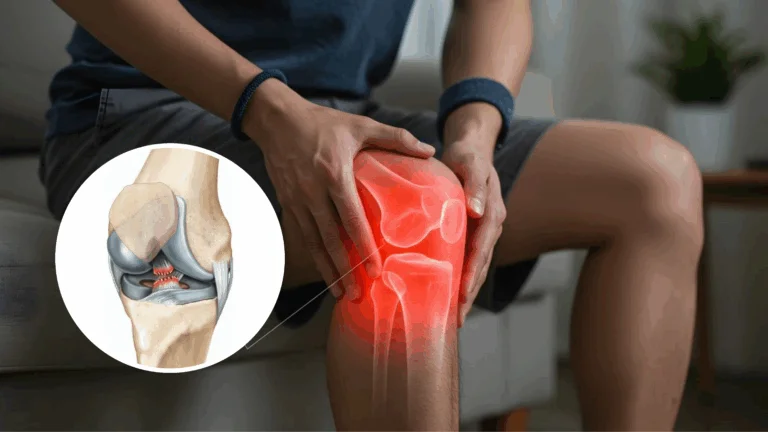
Cartilage injury in the knee, hip, ankle, or shoulder may feel like a punishment. When the smooth, cushion-like layer within a joint wears down or is damaged, normal tasks such as going downstairs, sitting cross-legged, and returning to sports can become painful. Traditional treatment has mostly focused on pain management, rehabilitation, and, in more extreme circumstances, surgery.
However, in recent years, regenerative orthobiologics (treatments that help the body mend itself) have emerged as a viable option. One of the most promising of these is ChondroFiller, a collagen-based injectable implant that may fill a cartilage deficiency and help the body regenerate healthy cartilage-like tissue without requiring a complete open surgery.
This article explains what ChondroFiller is, how it works inside the joint, who it may help, expected recovery, possible risks, and what to realistically expect in terms of results and cost in India (in INR).
What is Cartilage and Why is it so Hard to Heal?
Cartilage is a smooth, rubbery tissue that covers the ends of bones where they meet to form a joint. It absorbs shock and lets the joint glide without friction. Unlike skin or muscle, cartilage has almost no blood supply. That means when it's torn or worn out, it does not repair itself easily.
For years the standard surgical options were:
- Microfracture: Tiny holes are drilled into the bone under the damaged cartilage to make it bleed and form a clot that later turns into scar-like cartilage.
- Cell-based repair (like ACI / MACI): Healthy cartilage cells are taken from the patient, grown in a lab, and then implanted back into the defect.
- Scaffold or membrane techniques (like AMIC): A collagen membrane is placed over the area after microfracture to help cells stay in place and mature.
These can work, but they typically involve at least one surgical procedure, and sometimes two. Recovery can be long. The cost can be high because of lab processing of cells. And not everyone is a candidate.
ChondroFiller grew out of the need for something simpler, faster, and less invasive.
What is ChondroFiller?
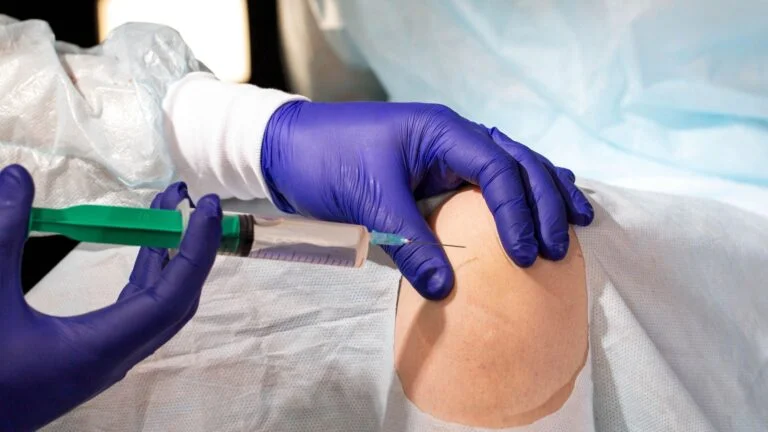
ChondroFiller is a ready-to-use, cell-free collagen gel that can be injected directly into a small area of damaged cartilage. It is not a painkiller injection. It's more like a biological patch or scaffold.
It is made mainly from purified type I collagen. It comes in a special dual-chamber syringe. When the two components are pushed out together, they mix and start to thicken.
Once placed into the cartilage defect, the material turns into a soft, stable gel within a few minutes and stays inside that defect like a custom-fit filler.
The gel acts as a 3D structure that invites the body's own repair cells (including stem-cell-like cells from nearby tissues and native cartilage cells from the joint) to move in, settle, and start laying down new cartilage-type matrix.
Because the material is cell-free, there is no need to harvest your own cartilage cells and send them to a lab first, unlike traditional autologous chondrocyte implantation. This is one of the main reasons ChondroFiller is considered less complex.
Is ChondroFiller really Non-Surgical?
ChondroFiller is often described as "non-surgical" or "minimally invasive." The reality is in between. ChondroFiller is usually delivered through a keyhole (arthroscopic) procedure instead of an open surgery, which is why many people call it "non-surgical."
In most cases, the orthopaedic specialist uses an arthroscope which is a thin camera inserted through very small puncture incisions to access the inside of the joint. Through these small portals, they clean up the damaged area (remove any loose flaps of torn cartilage so the edges are smooth), prepare the defect bed, and then inject the ChondroFiller gel right into that exact spot. The gel then sets in place within about 3–5 minutes.
How does ChondroFiller Work Inside the Joint?
It works like a collagen scaffold that supports natural cartilage regrowth in that damaged spot. After the gel is placed in the cartilage defect and hardens into a stable hydrogel, it becomes a protective cover over the exposed bone or deep cartilage lesion. That cover does two important things:
- It shields the injured spot from direct pressure and rubbing.
- It gives incoming cells a place to attach, survive, and start producing new cartilage-like tissue.
In early studies and real-world cases, this scaffold has been shown to support the migration and differentiation of joint cells that behave like cartilage-forming cells. Over time, the body remodels this area and fills it with tissue that is closer to native cartilage than scar tissue alone.
Who is an Ideal Candidate?
ChondroFiller is mainly meant for people with a small, well-defined cartilage defect and not for full-blown, advanced arthritis everywhere in the joint. Based on current clinical use:
More suitable:
- Younger to middle-aged adults with a localised "pothole" in the cartilage, often from a sports injury or a twist.
- Focal cartilage defects that are deep (grade III–IV, sometimes down to bone) but limited in size, usually up to around 3 cm sq.
- People who still have generally good joint alignment and stable ligaments.
Less suitable:
- People with widespread osteoarthritis, where most of the joint surface is worn out.
- People with significant bone collapse, large deformity, or severe instability.
- People unwilling or unable to follow a structured rehab plan after the procedure.
Benefits of ChondroFiller
Several reasons keep coming up in early studies and clinical practice:
- No second surgery to harvest and re-implant your own cells. No waiting weeks for a lab to grow cells.
- The filler can often be delivered arthroscopically. Smaller incisions usually mean less bleeding, lower infection risk, and faster initial recovery compared with open cartilage repair.
- You are not getting a permanent artificial implant. You're getting a collagen-based scaffold that the body can remodel.
- It molds to the exact shape and depth of that patient's lesion. This is different from pre-cut plugs, which have a fixed shape.
Limitations of ChondroFiller
Even though it sounds futuristic, ChondroFiller is not magic and not for everyone.
- Best for focal lesions, not end-stage arthritis: If most of the joint is already worn down, joint replacement or other surgical options may still be more realistic.
- Rehab still matters: You can't just get the gel and immediately go running. A proper, phased rehabilitation plan with protected weight-bearing and controlled physiotherapy over weeks to months is crucial.
- Long-term durability is still being tracked: Early and mid-term results are encouraging, but truly long-term data (10+ years across large patient groups) are still being collected.
Recovery After Chondrofiller
Recovery is personalised, but most rehab plans after ChondroFiller follow a similar logic:
- The joint is protected so that the new gel-scaffold interface is not crushed. This can include a brace or limited range-of-motion at first (depending on joint), and partial weight-bearing with crutches for lower-limb joints such as the knee or hip.
- Gentle movement is introduced to keep the joint from getting stiff, but still without high impact. Stationary cycling with low resistance, pool work, and controlled physiotherapy are common during this stage.
- High-impact sport (jumping, sprinting, pivoting) is usually held back until the specialist is confident that the repair tissue has matured enough to tolerate stress.
How Does ChondroFiller Compare with Traditional Cartilage Repair?
Compared with older techniques, ChondroFiller aims to offer a one-step, minimally invasive repair that supports true cartilage-like regrowth without harvesting cells or drilling bone.
Traditional options like microfracture work by making the bone under the defect bleed so blood cells and stem cells can clot and form repair tissue, but that repair is often more "scar-like" and may wear down under high impact over time.
Cell expansion options (where your cartilage cells are grown in a lab and then re-implanted under a membrane) can provide high-quality cartilage repair, but they involve two stages: first harvesting cells, then returning for implantation, plus a higher cost due to lab processing.
Frequently Asked Questions (FAQs)
Is ChondroFiller the same as a normal "knee injection" like hyaluronic acid or PRP?
No, Hyaluronic acid ("lubricant shots") mainly helps with cushioning and pain relief in arthritis. PRP (platelet-rich plasma) contains growth factors from your own blood that may calm inflammation and support healing.
Will the new tissue be exactly the same as original cartilage?
In early studies, the repair tissue that forms after ChondroFiller looks more like cartilage than simple scar, and patients often report less pain and better function. But long-term data (10+ years) are still being collected, so no one can promise that it fully matches natural, untouched cartilage over decades.
Conclusion
ChondroFiller represents a meaningful step forward in joint preservation: instead of simply managing pain or jumping straight to major surgery, it offers a way to biologically fill and protect a damaged cartilage spot using a collagen-based scaffold placed through a minimally invasive procedure.
It is especially promising for active adults with a contained cartilage defect ("a pothole") rather than widespread arthritis. Early results show reduced pain, better movement, and good defect filling on imaging, and because it's typically done arthroscopically in a single step, recovery is often more acceptable than traditional multi-stage cartilage repair.